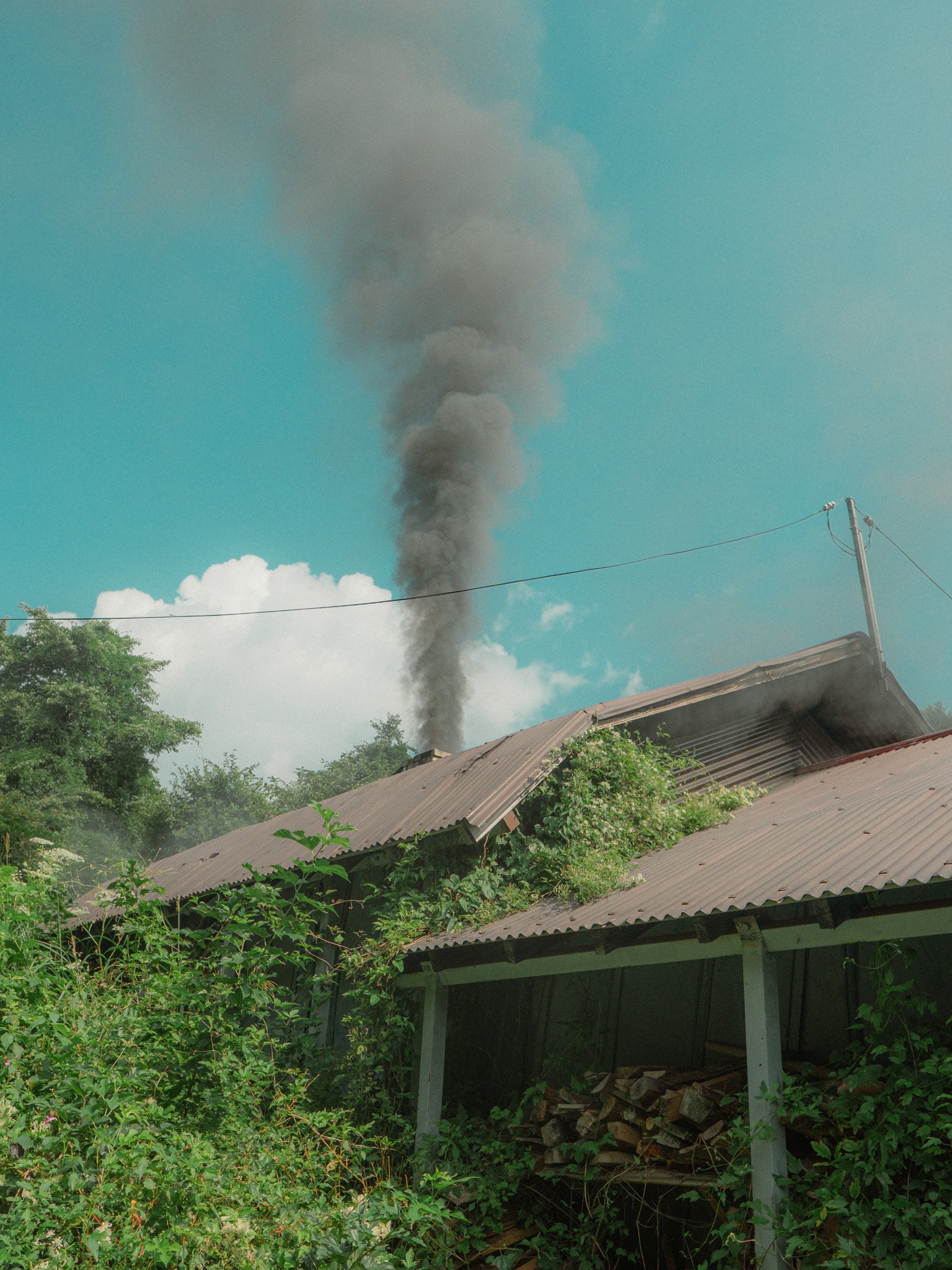
Welcome to my first journal post! I’ll be periodically posting my musings on here, perhaps to no readership for the foreseeable future! If you asked me to tell you honestly what I’ve been up to recently, this post would be about building this website, practicing kanji, and a few intermittent bouts of Silksong. That doesn’t make for a great first post though, so I’d like to jot down some reflections on my recent trip to Fukushima for my third annual anagama firing with my teacher, Dai-sensei.
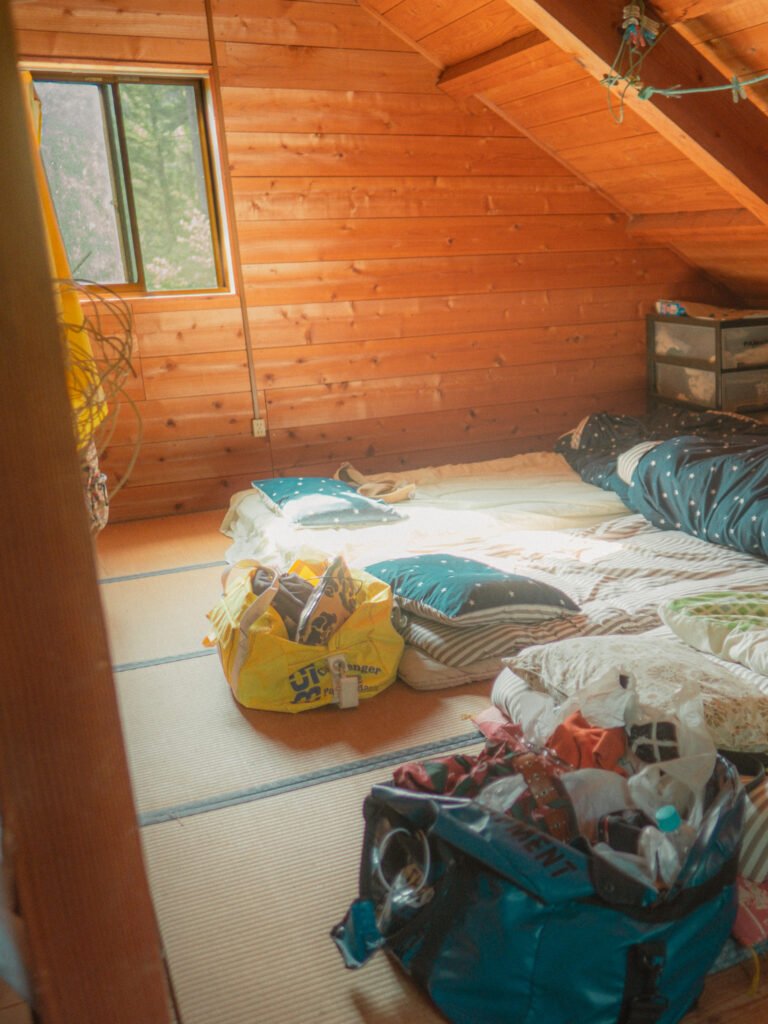
but kevin, just what the hell is an anagama?
You ask. For a very brief (and frankly inadequate) explanation: the word “anagama” is comprised of two kanji: 穴 (ana), which means “hole” in this case, and 窯 (kama), which means “kiln.” Basically, an anagama is a type of wood-burning kiln that has been used in Japan for well over 1,000 years; when the kiln reaches its maximum heat (usually around 1300 celsius/2400 fahrenheit) thermal expansion causes the bricks that comprise the kiln to swell. To mitigate this expansion, the anagama is built inside of a hole inset in the ground so that the earth itself can press against the bricks and hold them in place during the firing. This in turn creates a vacuum inside the kiln leading to a vortex of flame and ash that usually result in gorgeous, if unpredictable, pieces.
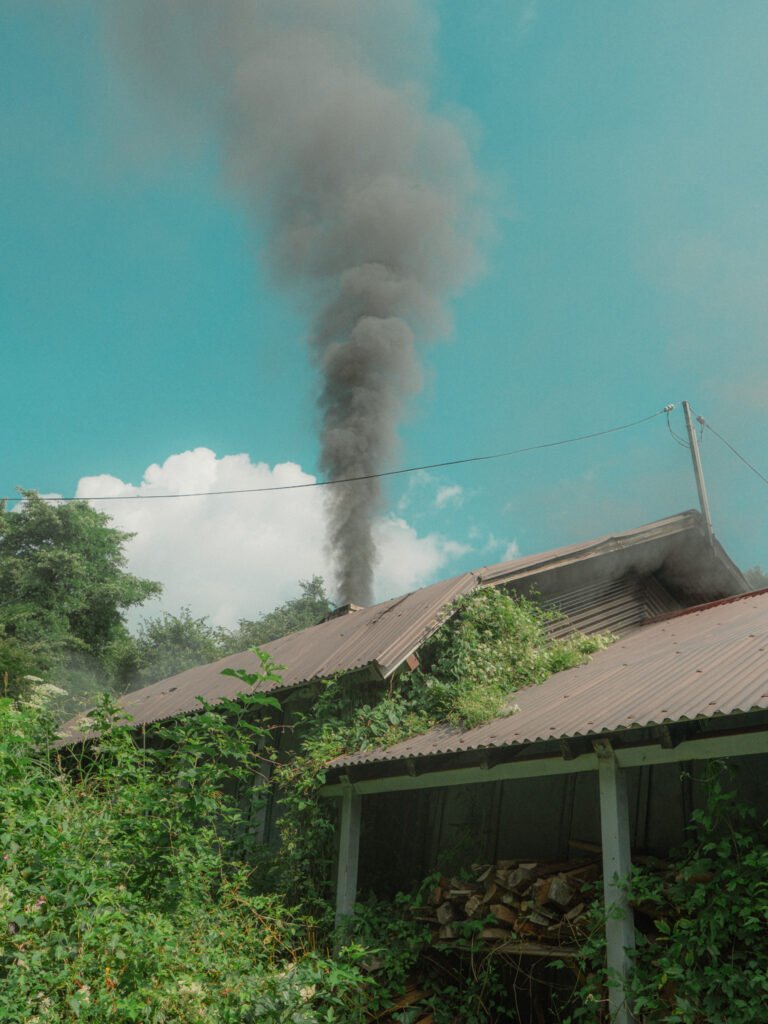
In any case, every year for the past three years, I’ve joined Dai-sensei and his cohort of well-seasoned potters for their trip to Fukushima, where one of the few anagama kilns that survived the 2011 Töhoku earthquake still billows smoke deep in the forested mountains. The kiln is called 無文窯 (mumongama), referencing a collection of 13th century zen buddhist riddles known as “the gateless gate,” and the master of the kiln is a man I affectionately call “Kamaji,” the name of the weird spider-guy who stokes the kiln in Spirited Away. You can guess the parallels for yourself.
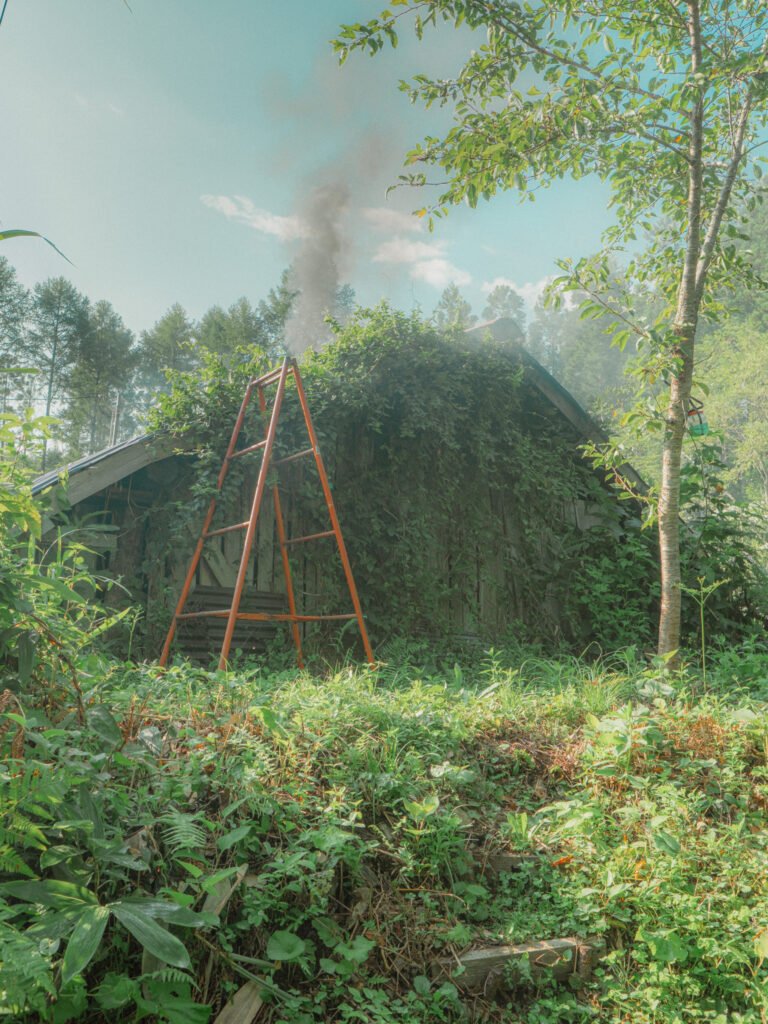
For my first two years, I always allocated most of my clay towards making large lighting fixtures for my apartment that were either too impractical or too expensive to be sold in normal stores or galleries, leaving me with only enough clay to scrap together a small sake flask or some tchotchke from the trimmings. This time, I went in with a mission to produce a more comprehensive set of smaller items: cortado sets with saucers, vases, sake ware, bowls, the like.
I’ll spare you the nitty-gritty details, but the firing takes three whole days. Those days aren’t spent passively twiddling our thumbs while the kiln churns along in the background; the beast needs to be fed chopped wood constantly, day and night, in order to reach the white-hot temperatures needed to turn ash and stone into molten glaze. It’s Japanese tradition to offer the god of the kiln an offering of sake, rice, and salt to keep him satiated throughout the firing. It’s also Japanese tradition to get sloshed off of this same sake while sitting in front of the kiln, watching in anticipation as the thermocouple rises, drops, and rises again with each insertion of wood. Needless to say we respected both traditions, though it’s hard to keep enough sake on hand to sustain 72 hours of constant indulgence.
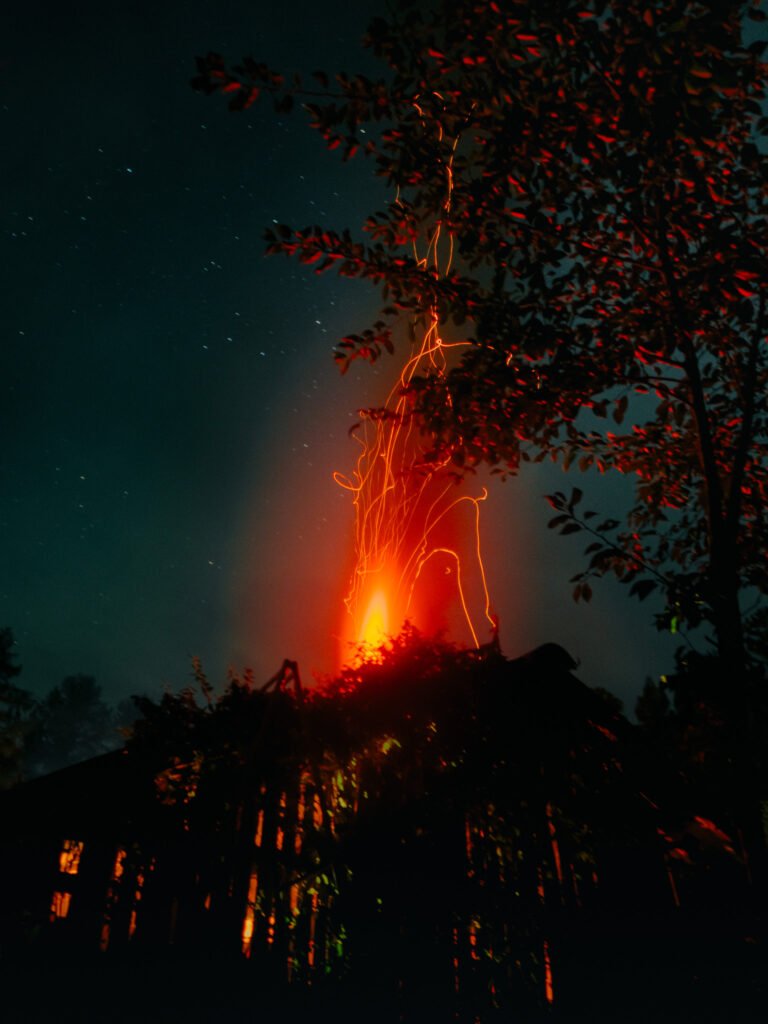
It’s no exaggeration to say that the kiln resembles an angry dragon at this point, blowing plumes of smoke and flame out from two holes above the opening after fresh wood has been thrown into its maw. I’m always amazed at how sensitive the kiln is; a seemingly imperceptible difference in the timing and placement of wood can mark the difference between the heat steadily climbing and falling suddenly. Of course, experience comes with age, and I was about 30 years behind my companions.
After three days of battling singed arm hairs, enormous beetles, and a pincer-attack of oppressive heat from the sun above and the kiln below, we sealed up the entrance of the beast and allowed the temperature to gradually fall over the next week. The results of an anagama firing are always highly dependent on where pieces are placed in the kiln, and I’m pretty happy to say that this year produced a winning bunch.
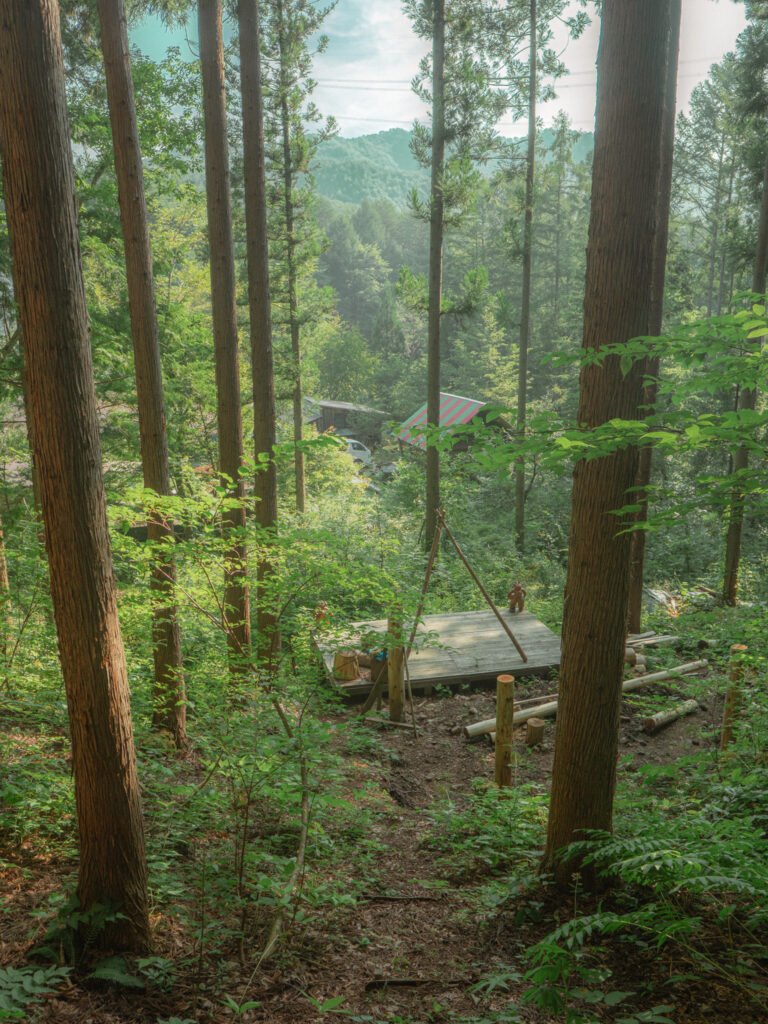
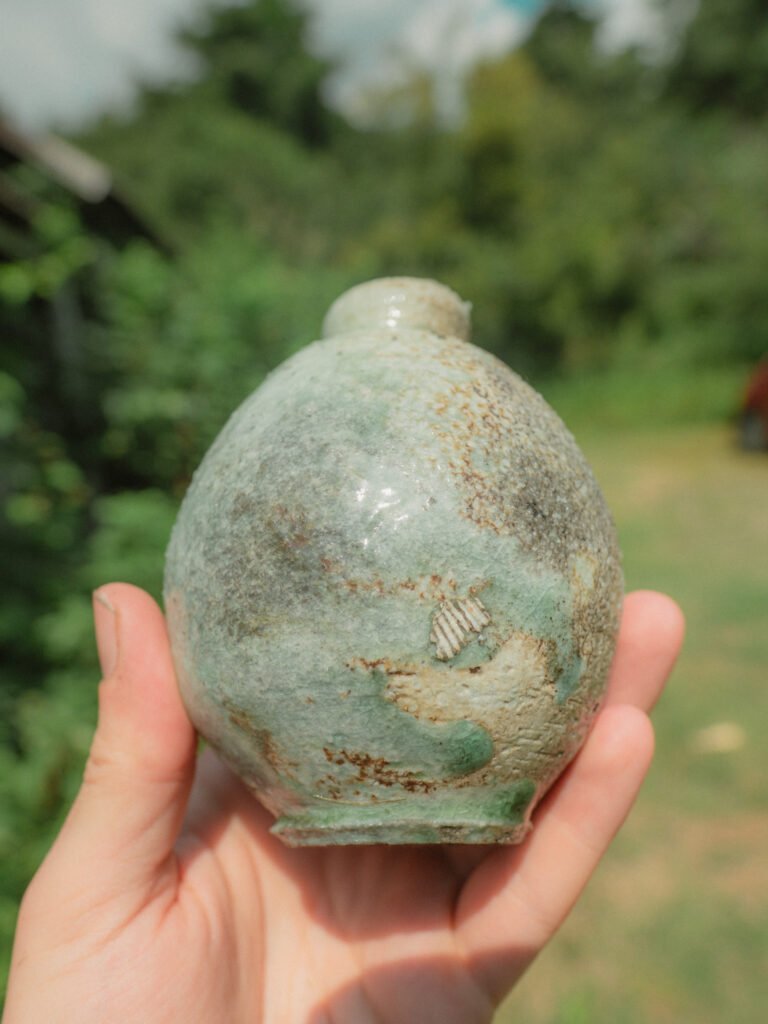
I haven’t had time to take a proper photo shoot of the pieces; once I do, you’ll likely find them in my portfolio (and perhaps the store?) For now, you can check the gallery above to see some of the sights of the kiln, as well as the sole hikidashi tokkuri (sake flask) that I pulled out of the kiln at peak temperature. Remember to tap the pictures in the gallery to view their uncropped version!
If you read this far, take care of yourself and see you next time.
Kevin


Leave a Reply to lucy Cancel reply