Description
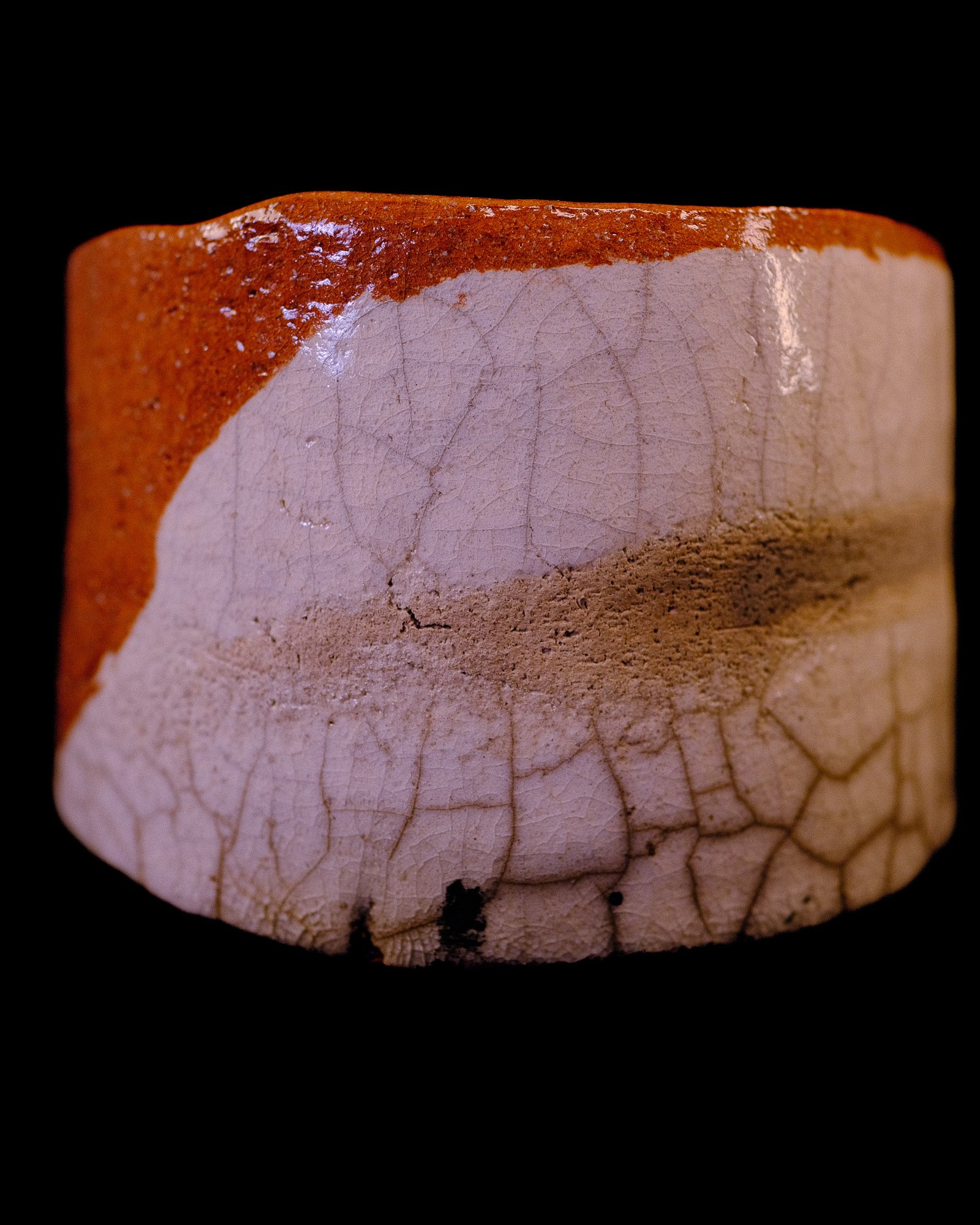
だるま (Daruma)
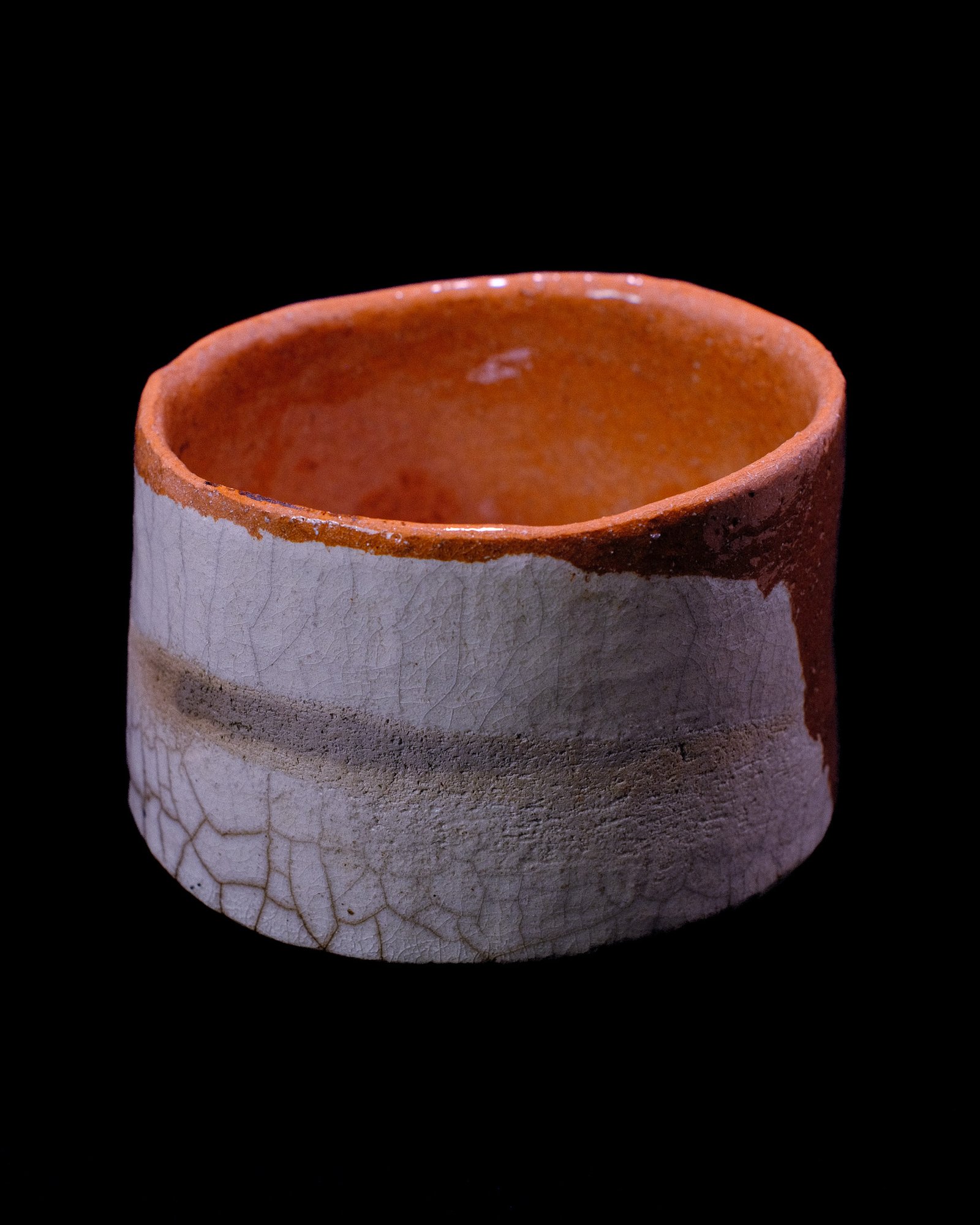
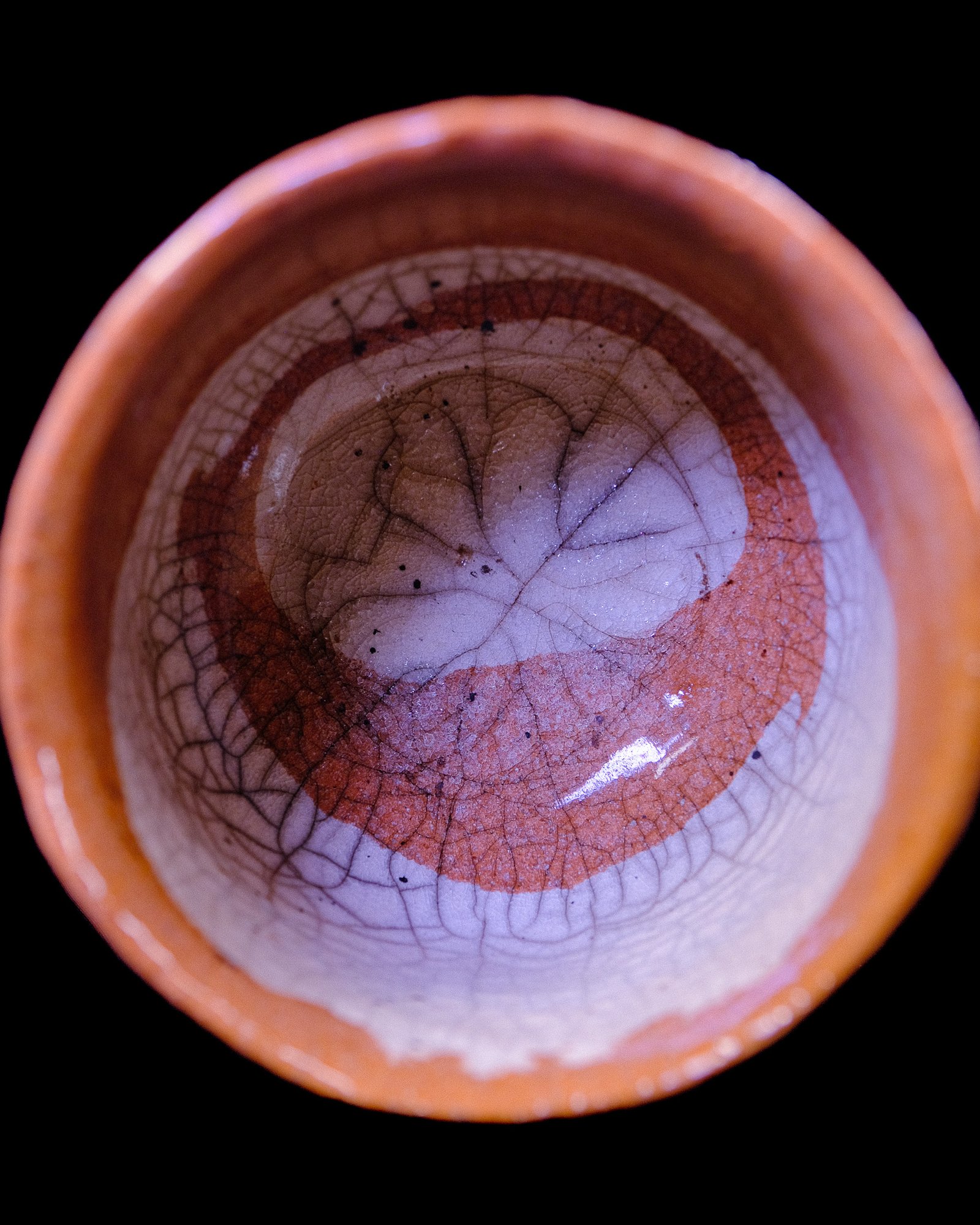
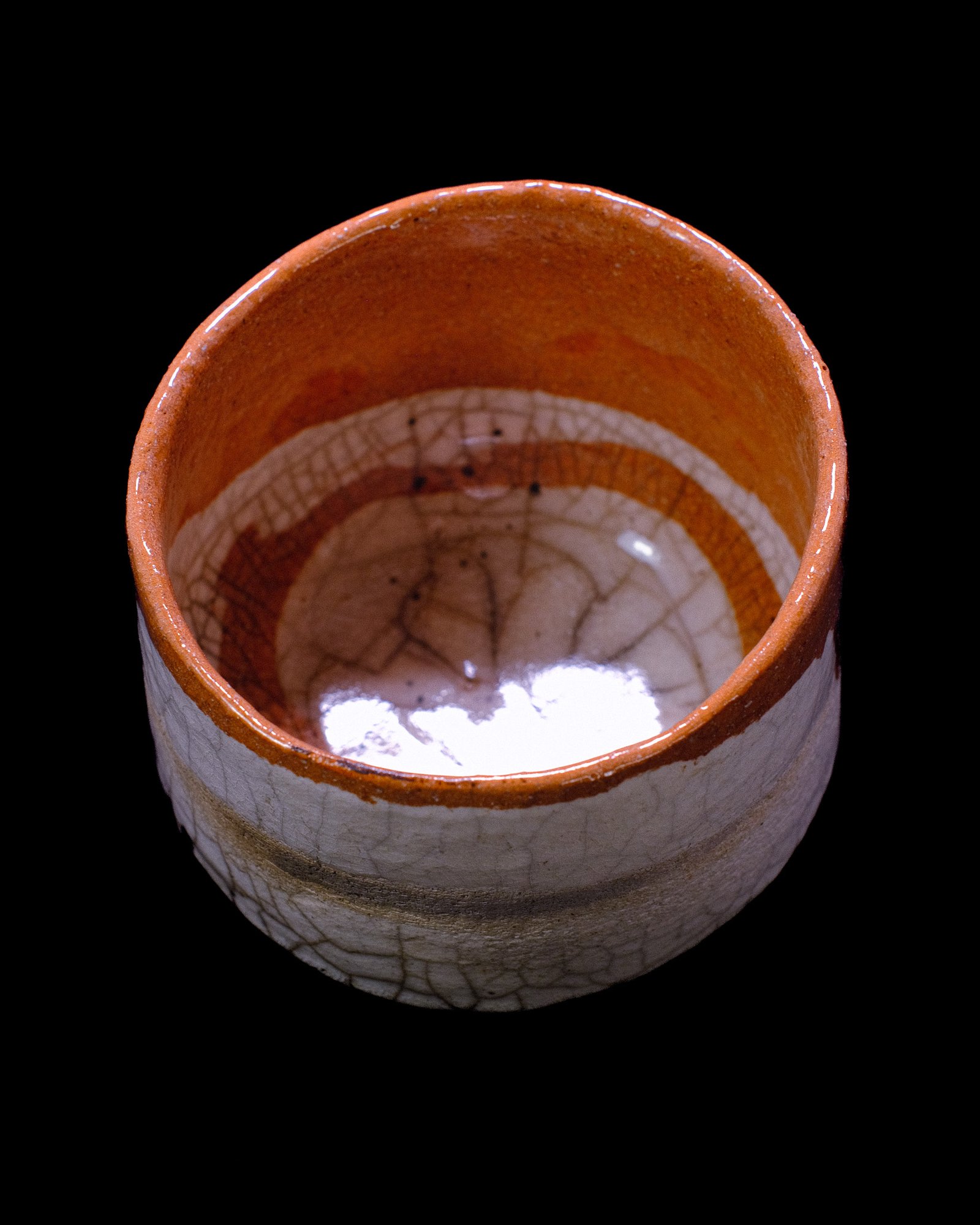
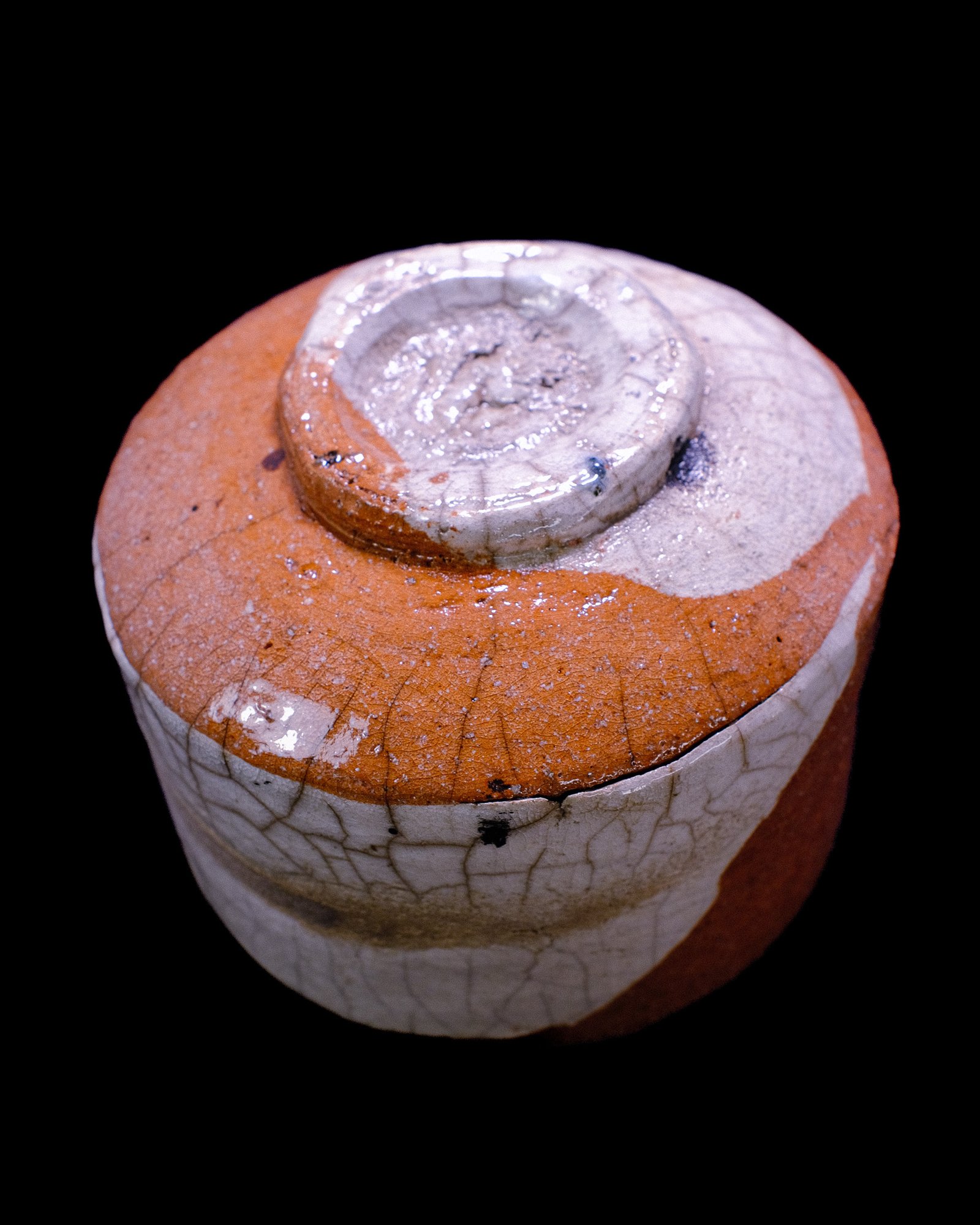
An experiment in applying the technique of nerikomi–where two or more colors of clay are methodically combined to create a distinct pattern–to a raku chawan, this piece combines two completely different clay bodies, one built for white raku and another for red raku. After combining the two clay bodies, the true pattern of the piece can only be revealed by trimming away at the outer layers that had become muddled by the building process to reveal the untouched clay underneath. As luck would have it, the bottom of this chawan revealed a perfect image of a Daruma, a Japanese doll that symbolizes wish-granting and good luck. The appearance of this piece varies widely between the white and red sections, with dark grey cracks appearing on the white landscape while the red areas maintain a relatively smooth appearance.
Raku-yaki
Raku-yaki is one of the most esteemed forms of pottery within the Japanese world of tea, having been developed under the guidance of tea master Sen no Rikyū in the 16th century and maintaining a consistent lineage of production through to the modern day. Raku chawan are hand built rather than wheel thrown, allowing for the unique distortions of each piece to shine through the subtle glazes. Raku pieces are fired quickly and at a lower temperature than ordinary ceramics, and removed from the kiln while still red-hot. As a result of the firing process, Raku pieces are particularly fragile and best suited for ceremonial or home use.
Reviews
There are no reviews yet.