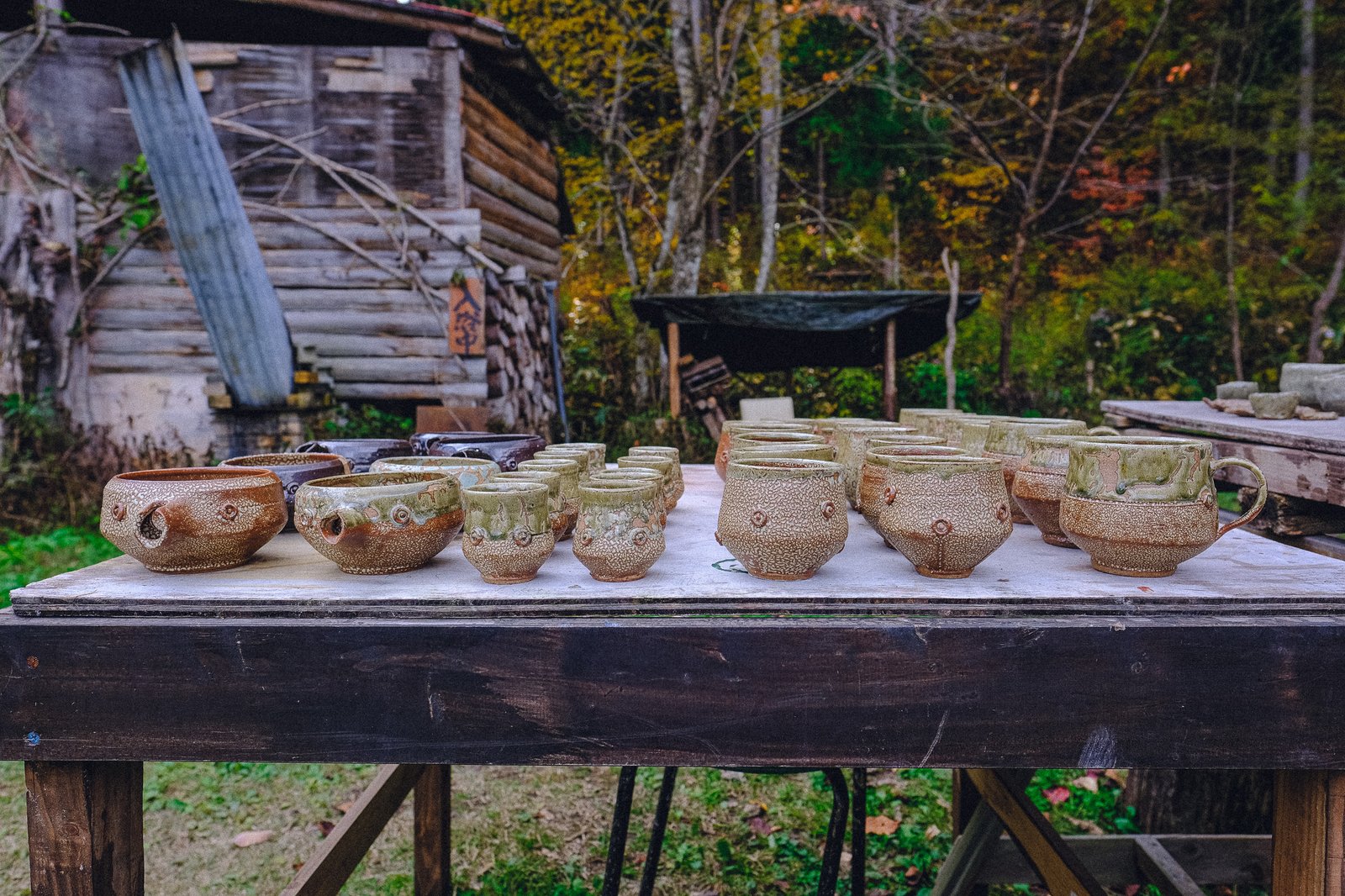
Well, y’all, it was a tumultuous Halloween weekend to say the least. I’d been waiting on tenterhooks to hear from Kamaji that my pieces were ready to be glazed and fired, since he’d be heading south for the winter once the snow began to fall in Fukushima. I got the text that we were good to go the day before Halloween, so I packed my duffel bag and cleared my schedule for the long weekend.
The schedule was a tight one: I would glaze my pieces and load the kiln as soon as I arrived on day one, light the kiln at the crack of dawn on day two, and (ideally) unload the kiln and head home on day three. There wasn’t any room to dawdle or make mistakes, so naturally, Murphy’s Law kicked in and caused a downpour of freezing rain while I was desperately trying to finish glazing the pieces into the evening.
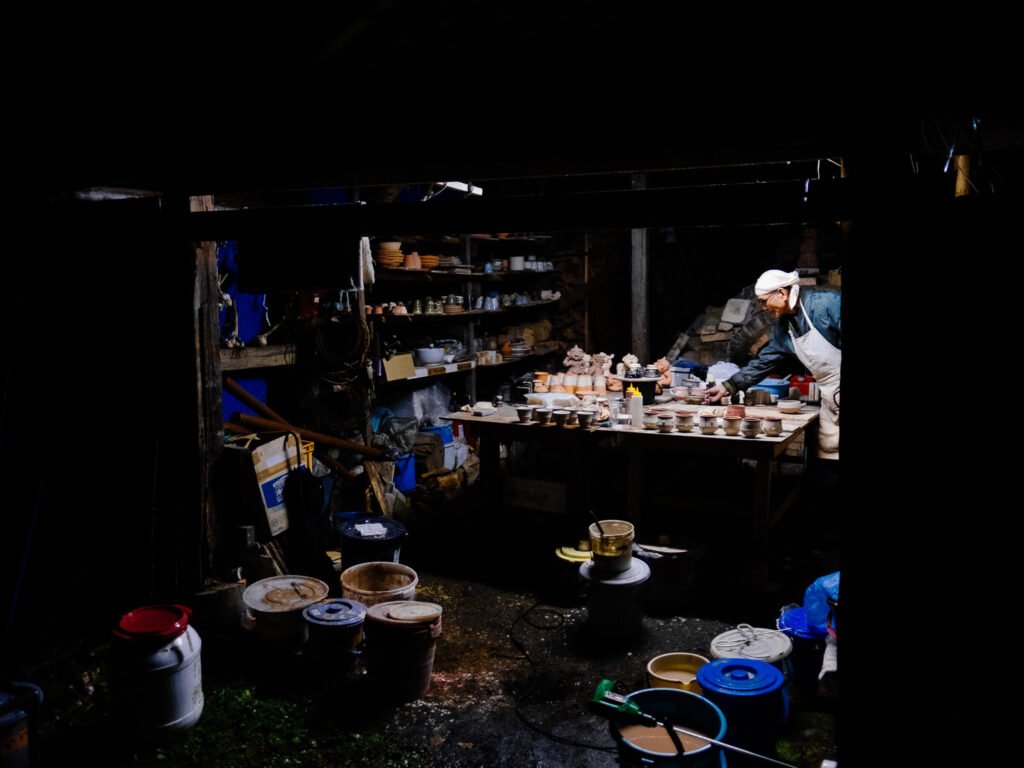
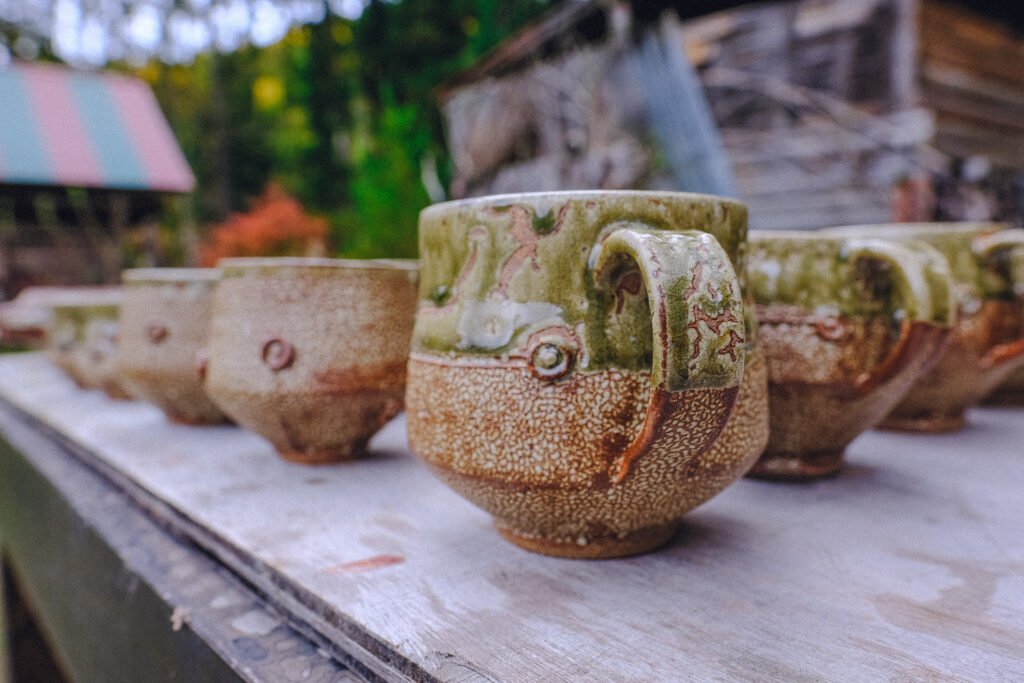
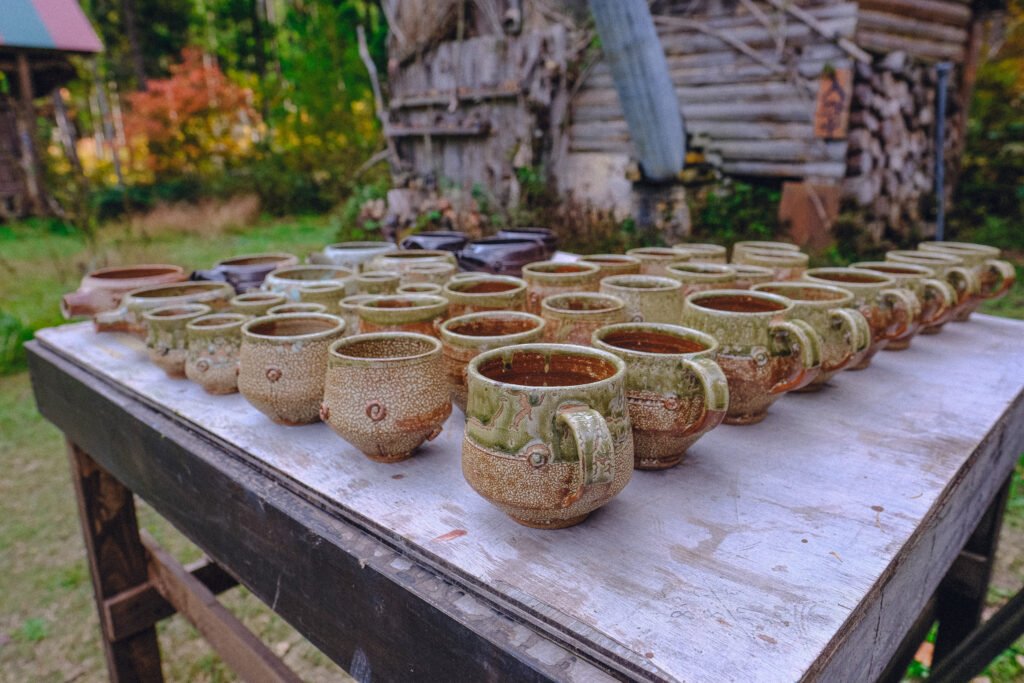
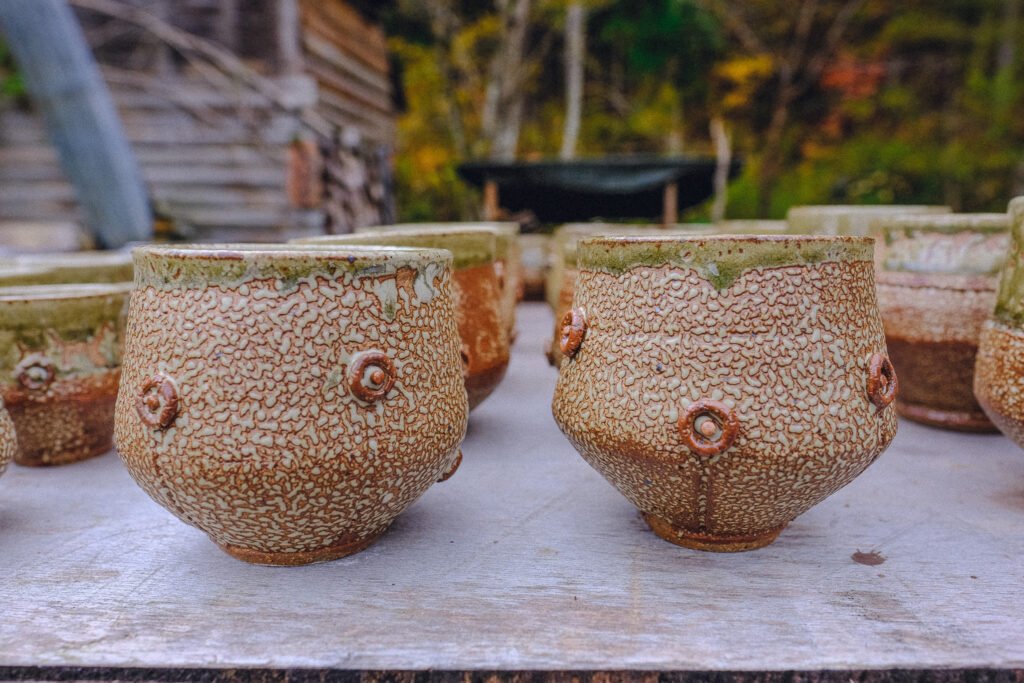
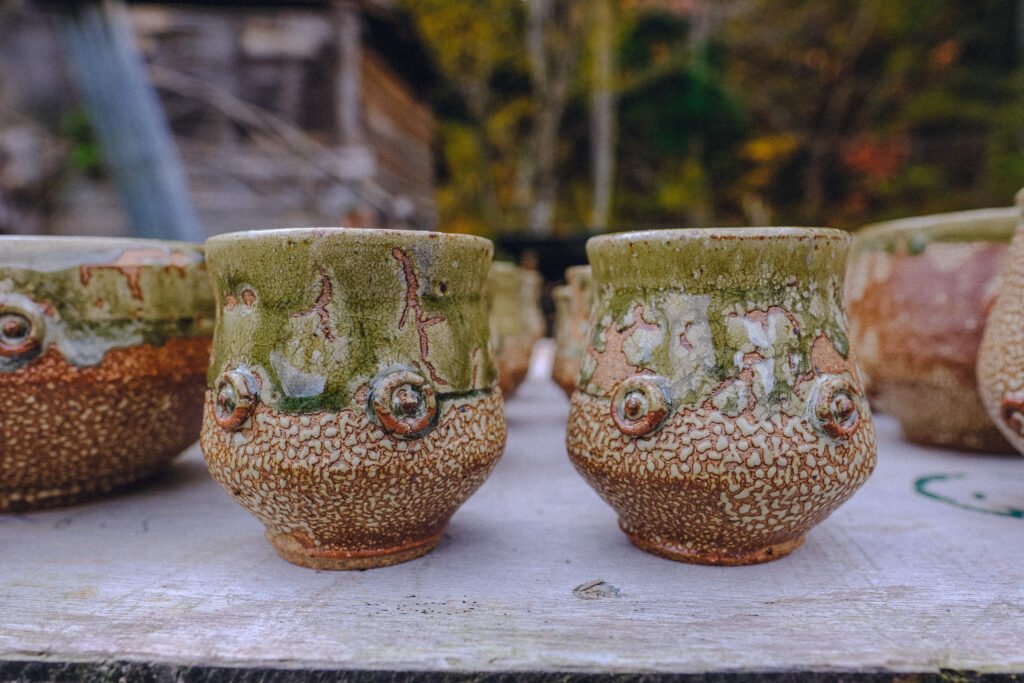
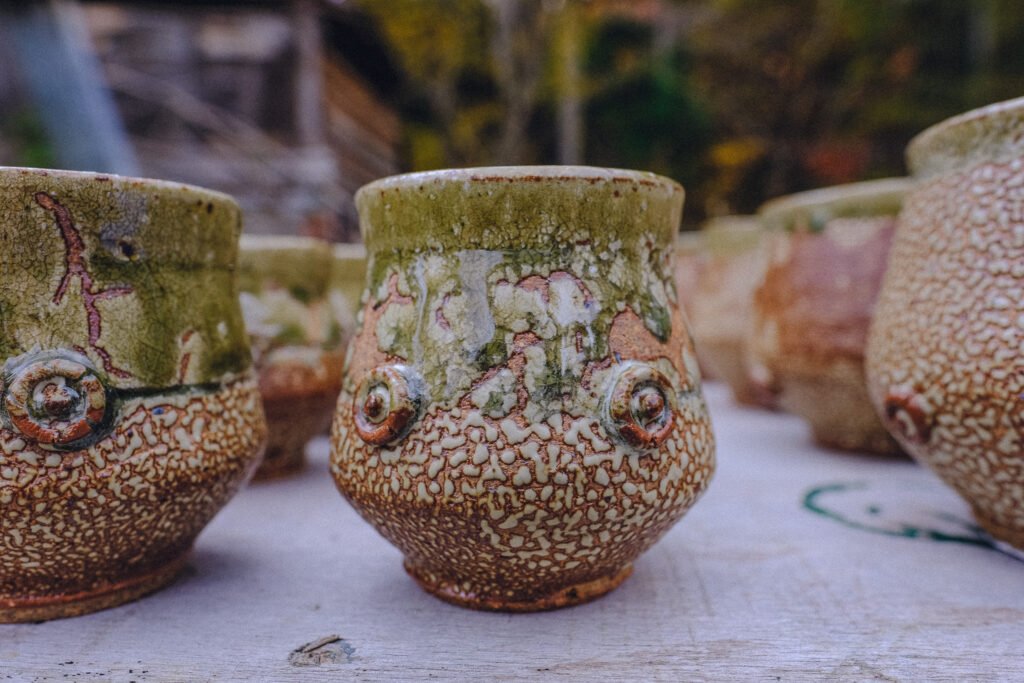
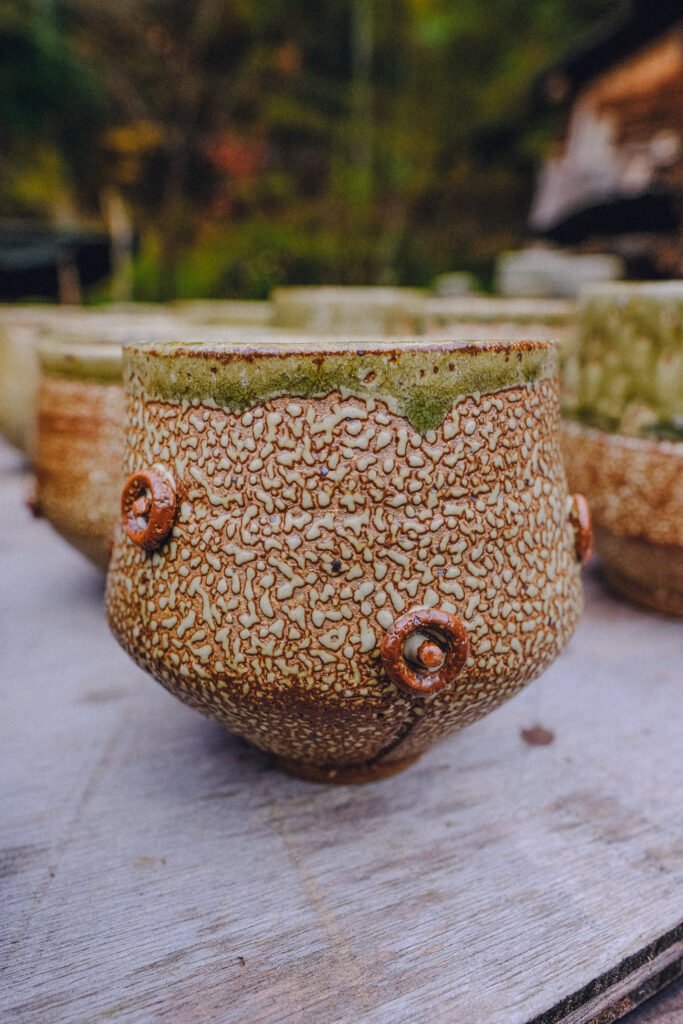
I had a few choices on how to glaze these pieces: I could play it safe with a nice, stable glaze, or I could take a risk and try some of the wild glazes Kamaji had quarantined in the back of his studio. I didn’t travel all that way to play it safe. For the cups, I used a gloopy, crawling white glaze as the base and a glassy green glaze on the top rim. Since the cups were all for a bulk order for a Tokyo-area café, I kept them consistent with the same glaze combination. The katakuchi chawan, however, were meant to be sold here on the site, so I got a bit more experimental with some one-off glaze combos.
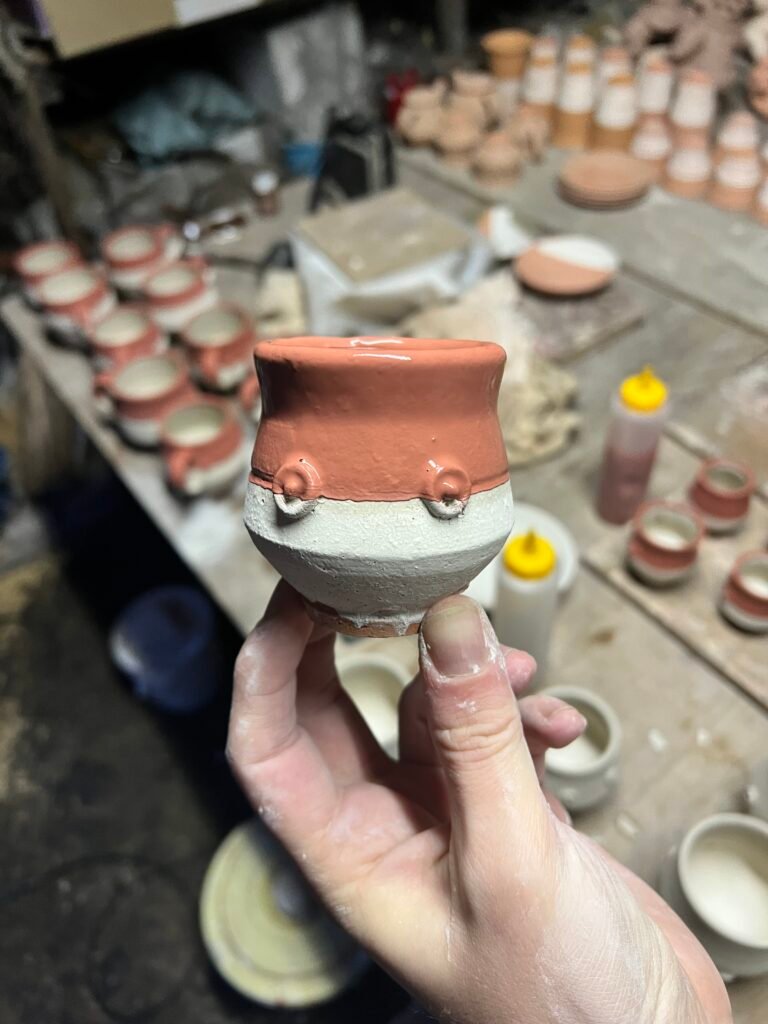
I really can’t understate how awful it was to glaze under cold rain. I could barely feel my fingers, and the pieces stayed wet for hours due to the humidity, slowing down the entire process. I absolutely hate having to work when the conditions are that bad and would’ve much preferred to wait for a sunny day—but we didn’t have the luxury of time. After loading my pieces into the kiln, I had a knot in my stomach. After working so hard to create this collection, it didn’t feel good to place them in the kiln still wet, and with an unpredictable glaze combination to boot.
That night, I could barely sleep from the anxiety of wondering whether I’d ruined the entire collection. It didn’t help that when I did finally fall asleep, a stinkbug landed in my (presumably) open mouth and I woke up choking. I’m pretty sure I swallowed it, by the way. Eventually, I gave up on the prospect of sleep and made my way downstairs to light the kiln. This was going to be a reduction firing to ~1260°C over the course of about 12 hours, with an extended hold at peak temperature to help the green glaze run through the crevices of the white glaze below while it was still molten.
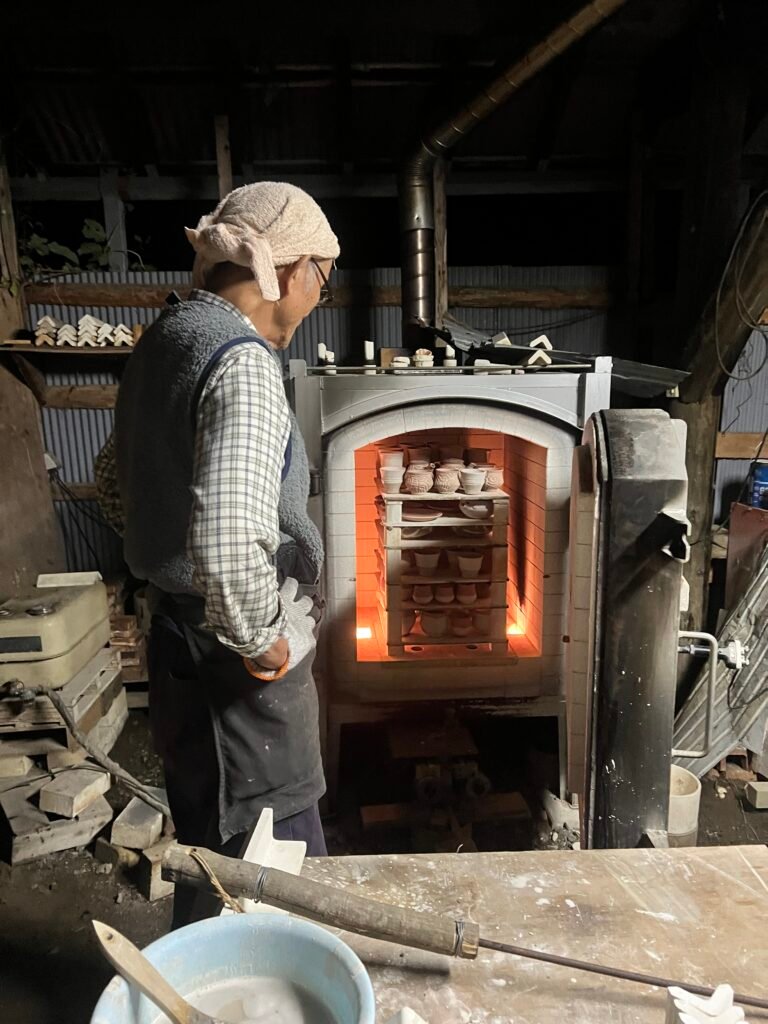
As the kiln was firing, Kamaji put me to work chopping red pine wood for his next anagama firing. That became the rhythm of day two: chop wood for an hour, check the kiln, jot down the temperature, adjust the airflow, repeat. The autumn air was crisp and delicious, with a faint smell of smoke drifting from the wood stove in the house to my right and the wood-burning bathhouse to my left. The kiln finished firing in the late afternoon, and since I’d barely slept the night before, I knocked out soon afterwards.
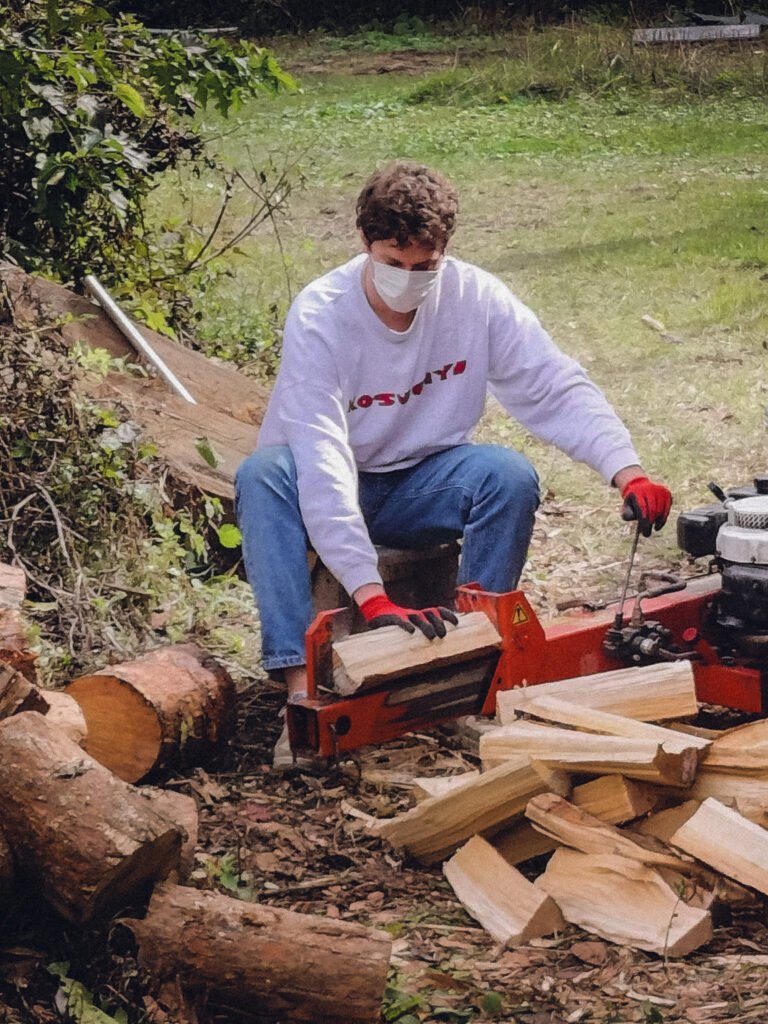
To nobody’s surprise, day three also consisted of a ton of wood chopping. I was happy to have something to keep my mind busy as the kiln temperature slowly declined. By early afternoon, it had cooled to a reasonable 40°C, and we were finally at the best part. Opening a kiln always feels like Christmas morning, but I’d never had such a quick turnaround between glazing, loading, and cracking it open.
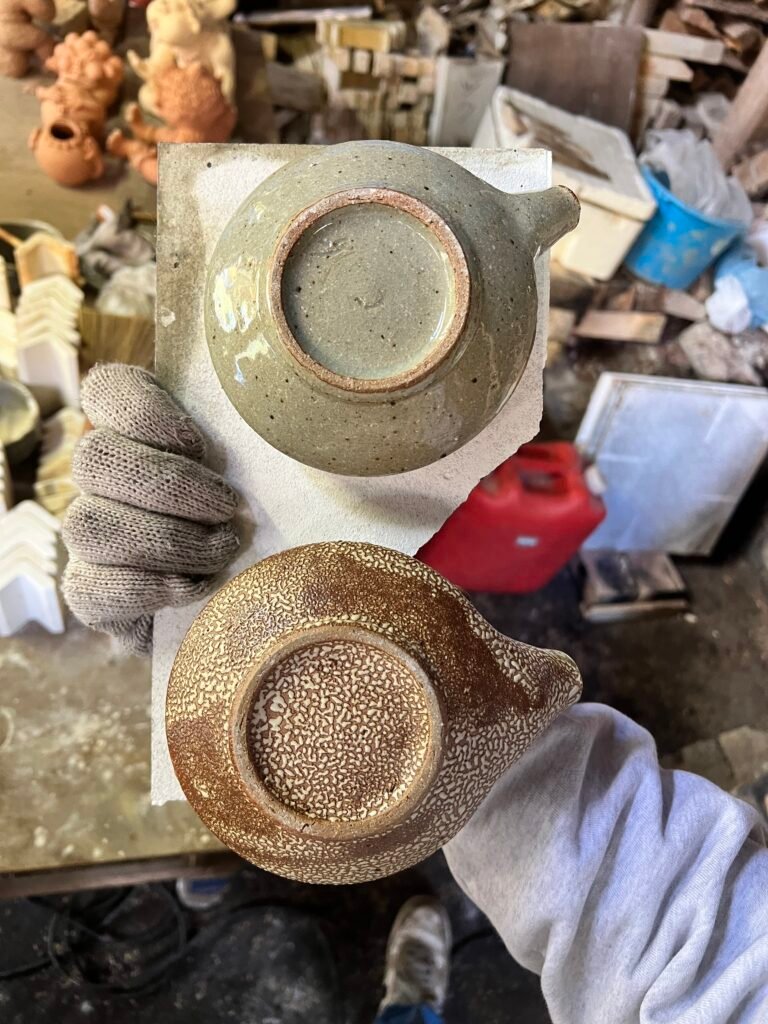
Unfortunately, one of the kiln shelves cracked during the firing, fusing to two of my katakuchi chawan—of course, my two favorite ones—and rendering them as rejects. Whatever, we’ll call it a sacrifice to the kiln gods. In exchange, every single one of the cups from this firing turned out breathtaking. All of my anxieties about the glazing and firing vanished instantly: they were fired beautifully, with greenish-blue deposits of glaze running through a finely crawling white surface that was addictive to run your hands over. Every single piece turned out stunning. I’ll quit running my mouth and let you see the results for yourselves:
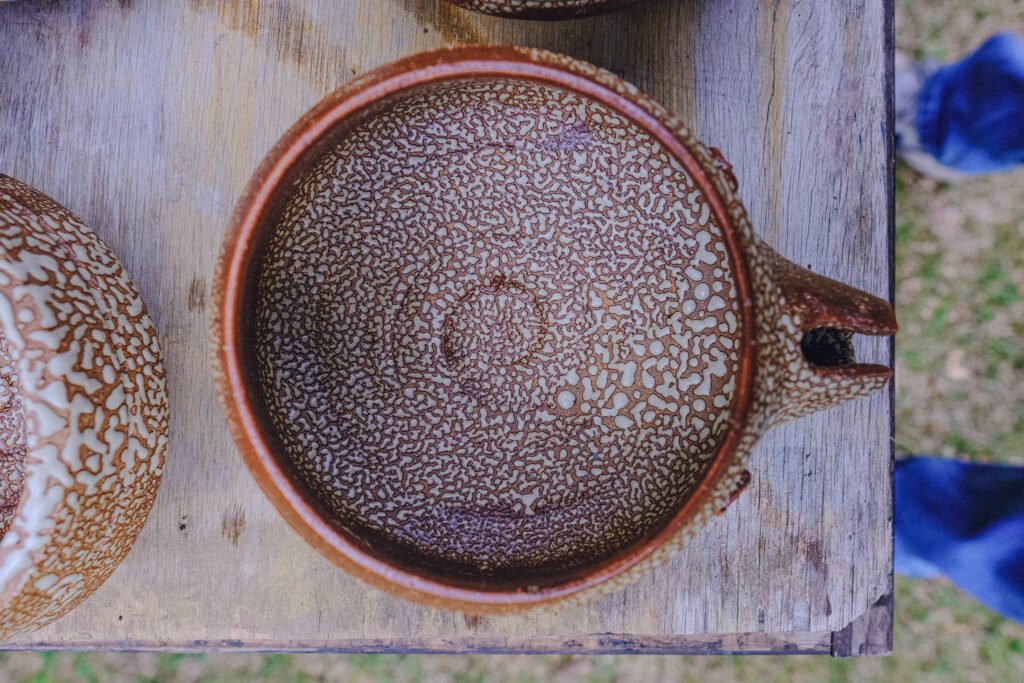
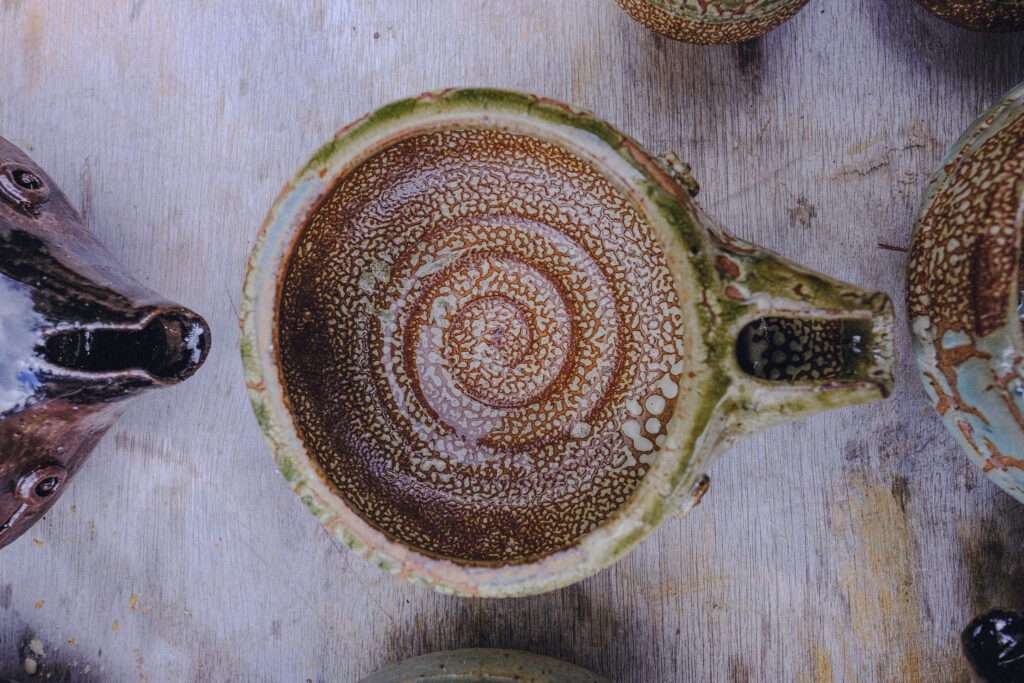
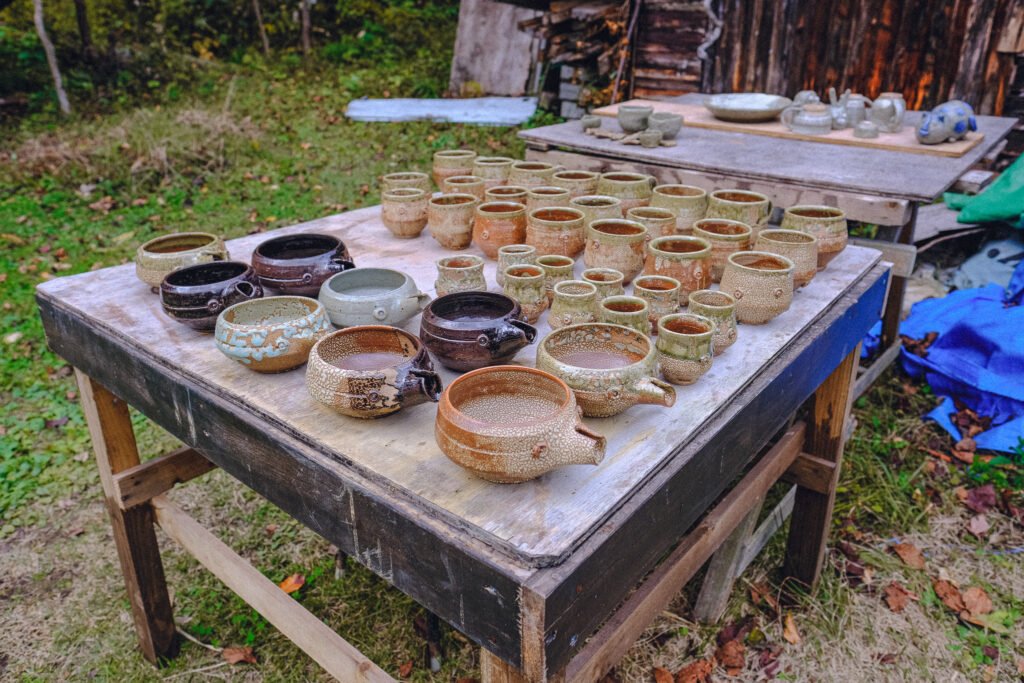
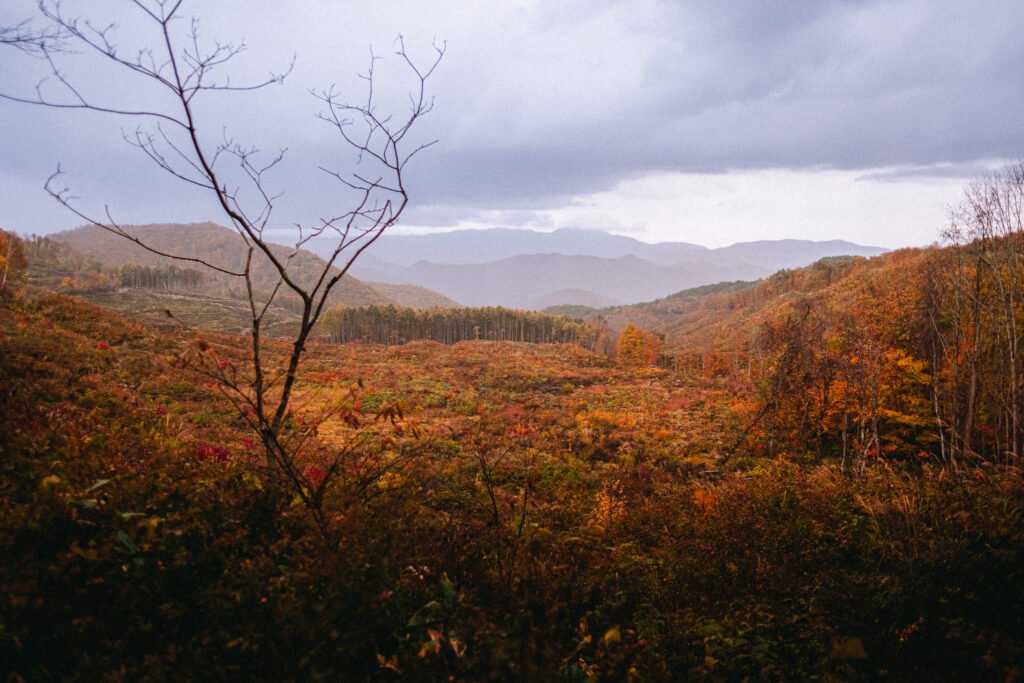
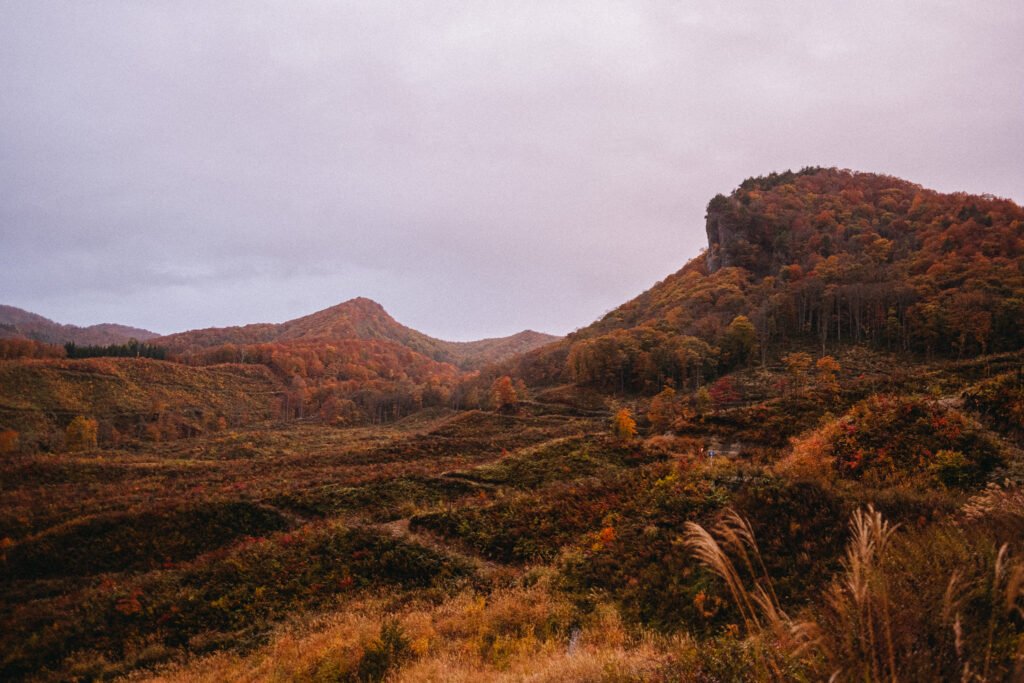
After polishing the bottoms of the pieces and loading them into my empty suitcase to take back to Tokyo, we still had a bit of daylight left before my train. Kamaji took me for a drive up the mountain to get a good view of the autumn 景色 (scenery), and we were greeted with this gorgeous sight.
Not long after, I was on the train heading home, suitcase full of still-warm pottery. Everything arrived safely, and I’ve been sorting and photographing the best pieces ever since. Once I’m done, they’ll be listed on the shop page. The rest will find their way into a very special coffee shop nearby, so keep an eye out. You’ll be seeing these pieces in action soon!

Leave a Reply