Category: Journal

  • Creating the Fukushima Collection: Part Two

    Creating the Fukushima Collection: Part Two

    Well, y’all, it was a tumultuous Halloween weekend to say the least. I’d been waiting on tenterhooks to hear from Kamaji that my pieces were ready to be glazed and fired, since he’d be heading south for the winter once the snow began to fall in Fukushima. I got the text that we were good to go the day before Halloween, so I packed my duffel bag and cleared my schedule for the long weekend.

    The schedule was a tight one: I would glaze my pieces and load the kiln as soon as I arrived on day one, light the kiln at the crack of dawn on day two, and (ideally) unload the kiln and head home on day three. There wasn’t any room to dawdle or make mistakes, so naturally, Murphy’s Law kicked in and caused a downpour of freezing rain while I was desperately trying to finish glazing the pieces into the evening.
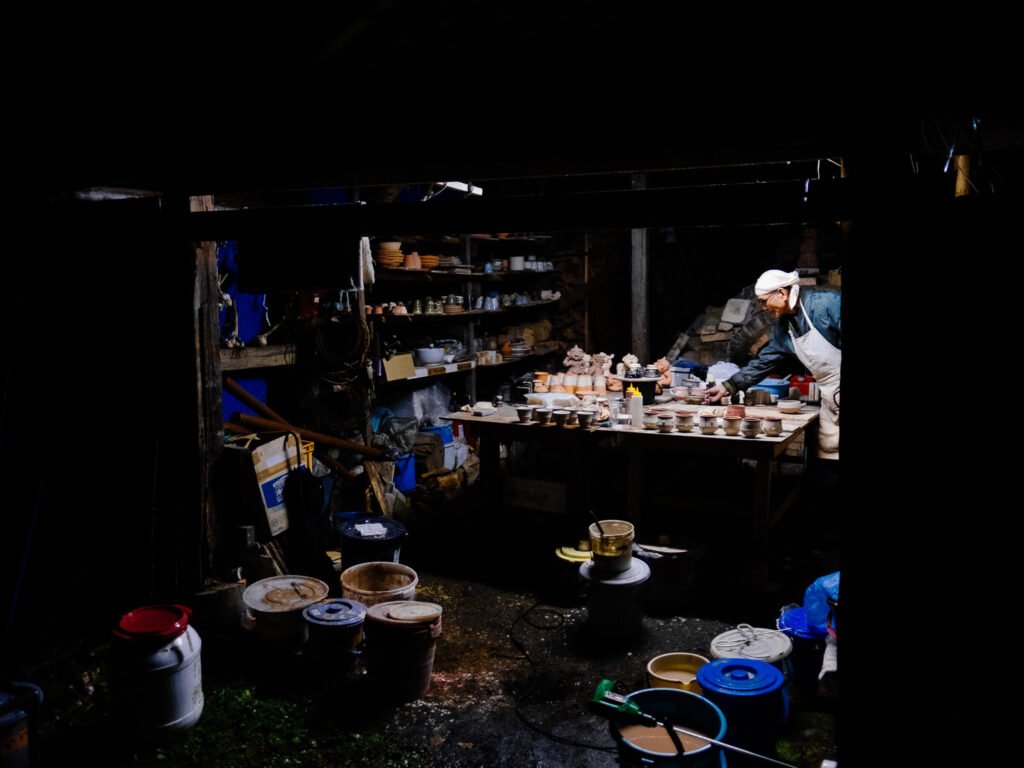
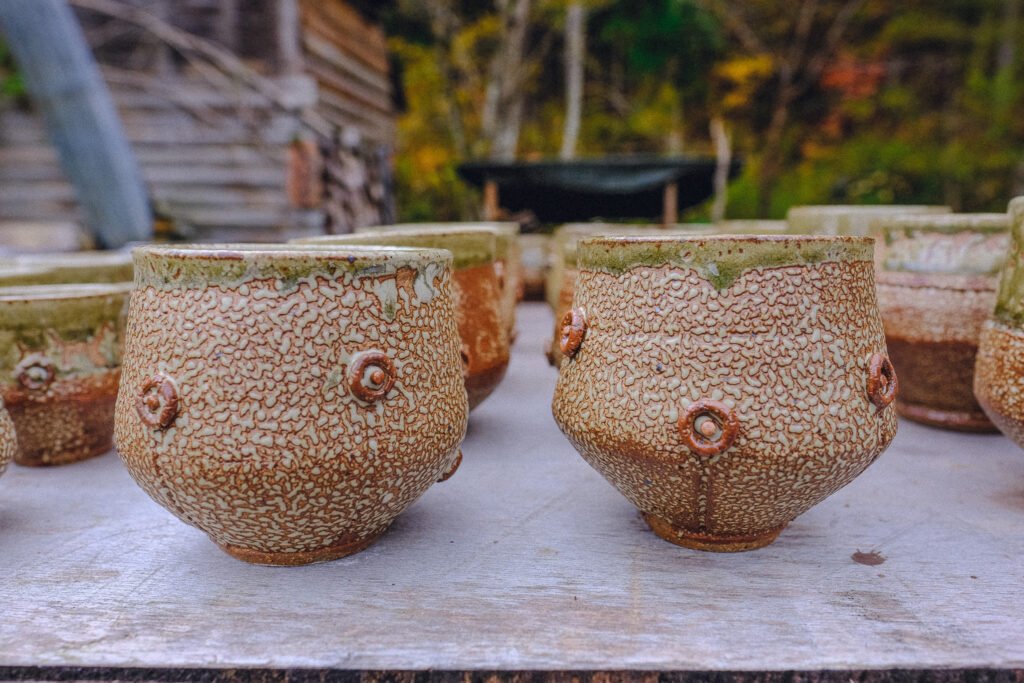
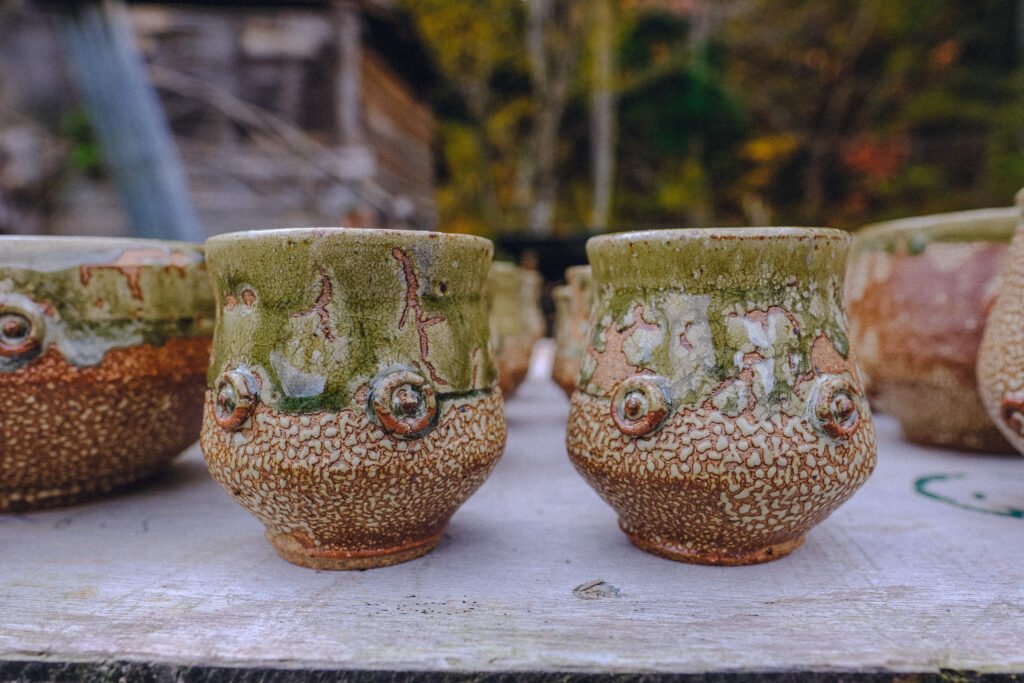
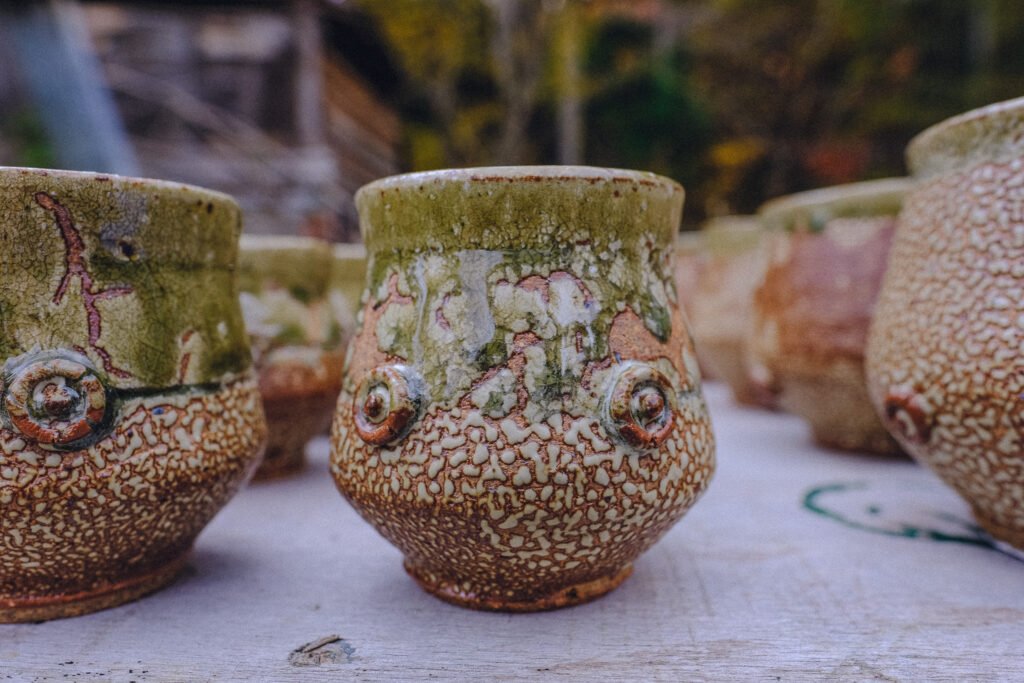
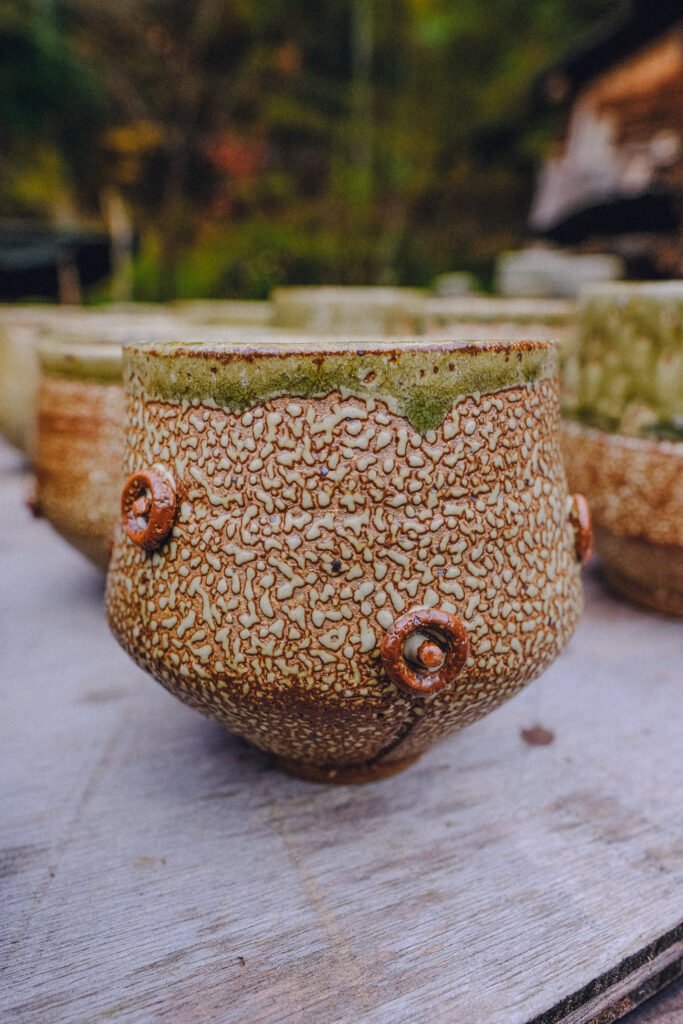
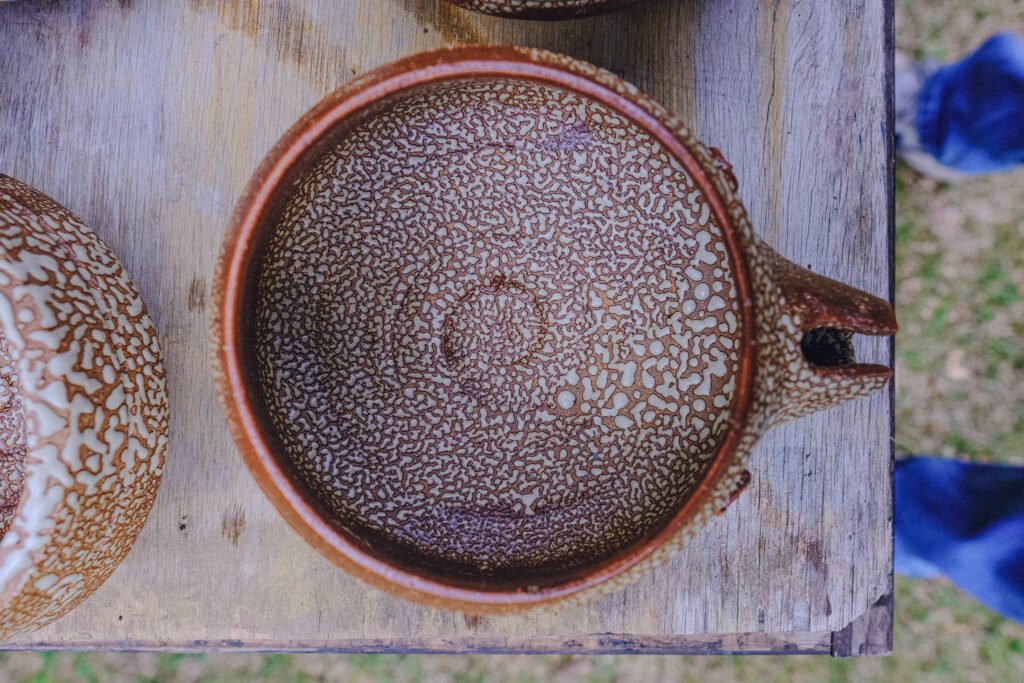
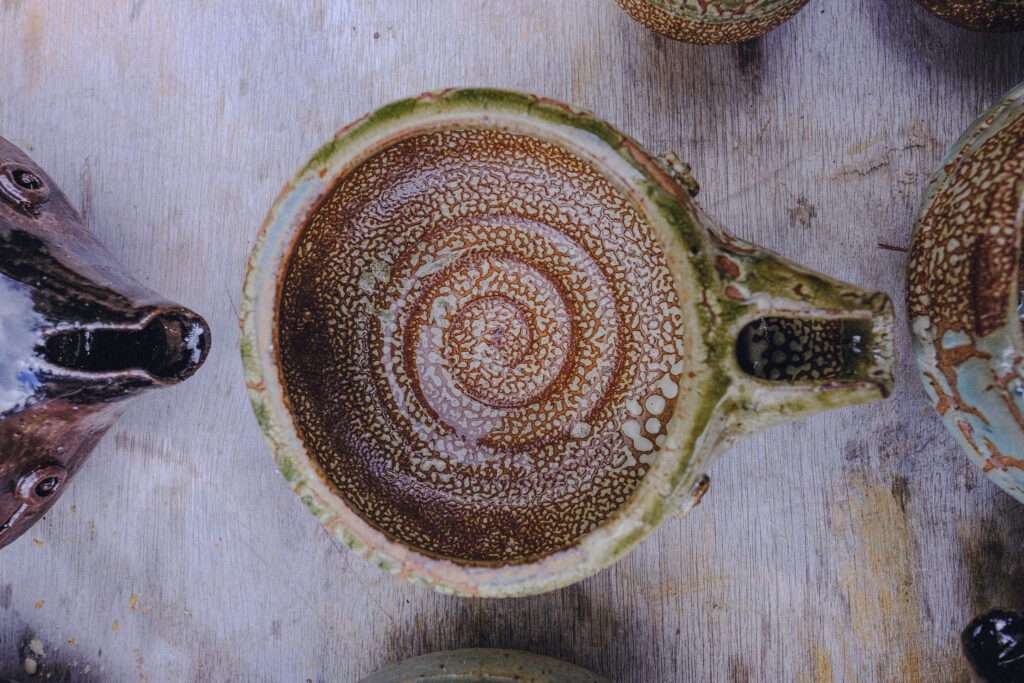
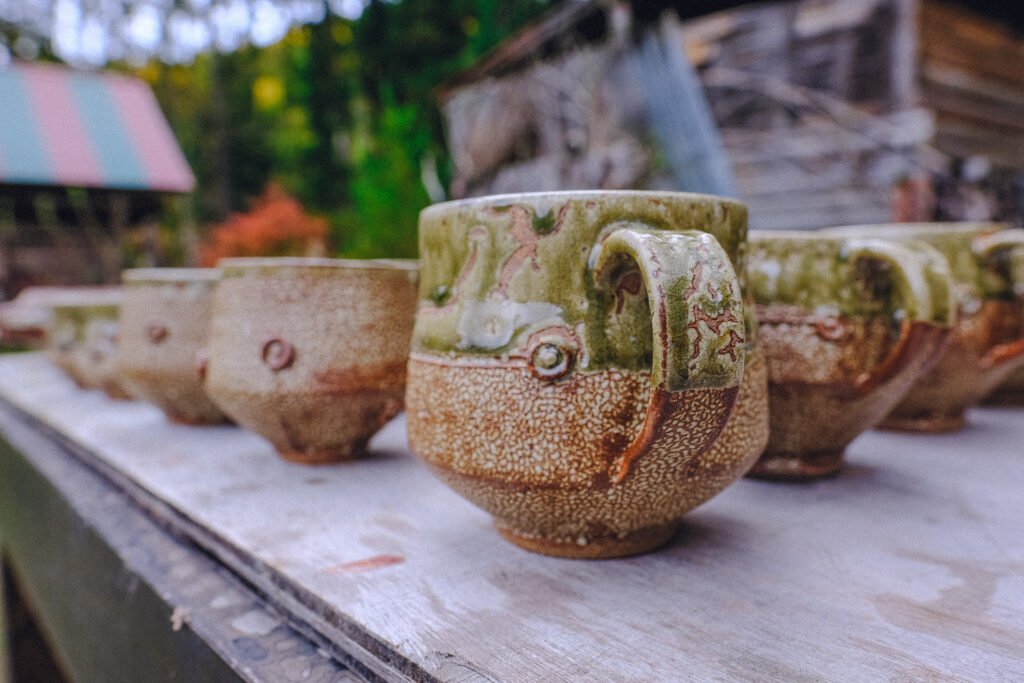
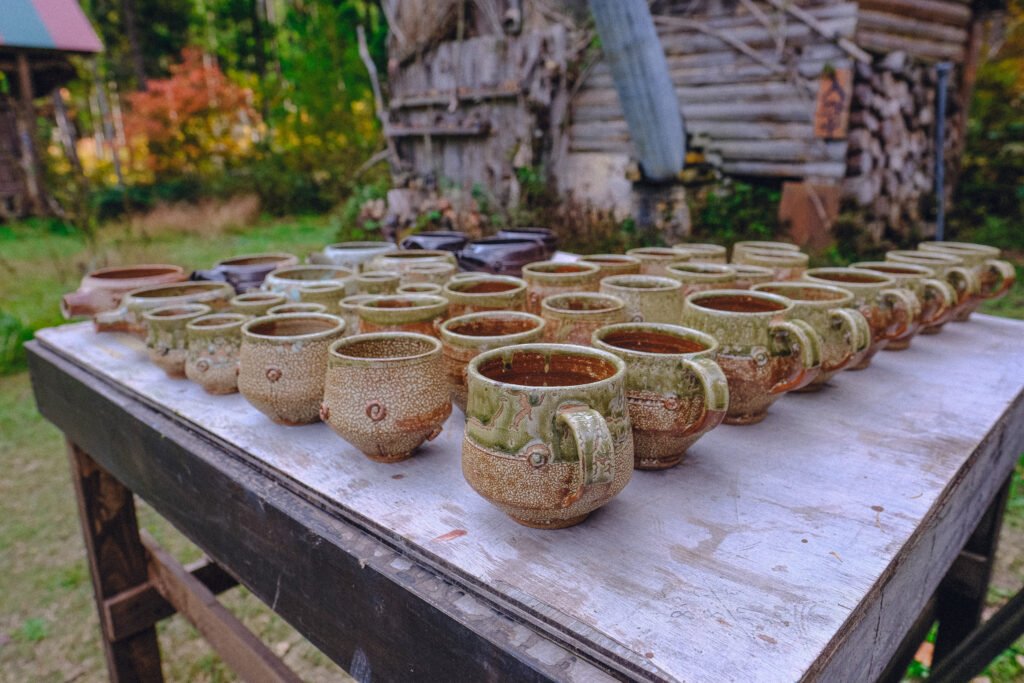
    I had a few choices on how to glaze these pieces: I could play it safe with a nice, stable glaze, or I could take a risk and try some of the wild glazes Kamaji had quarantined in the back of his studio. I didn’t travel all that way to play it safe. For the cups, I used a gloopy, crawling white glaze as the base and a glassy green glaze on the top rim. Since the cups were all for a bulk order for a Tokyo-area café, I kept them consistent with the same glaze combination. The katakuchi chawan, however, were meant to be sold here on the site, so I got a bit more experimental with some one-off glaze combos.
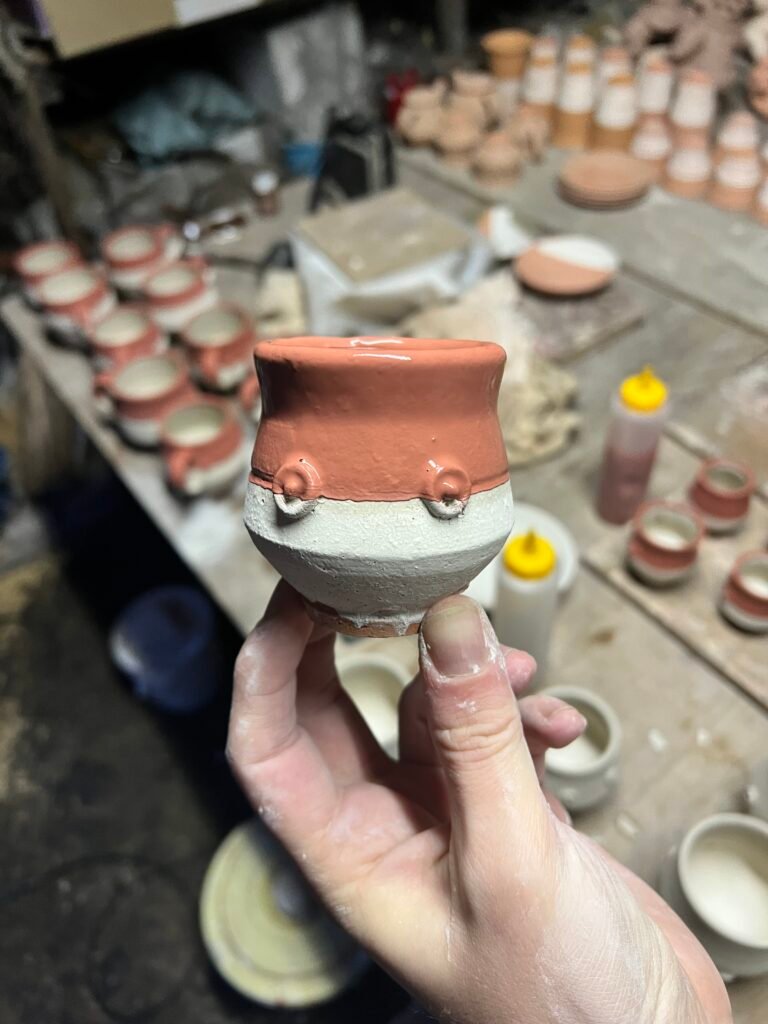
    I really can’t understate how awful it was to glaze under cold rain. I could barely feel my fingers, and the pieces stayed wet for hours due to the humidity, slowing down the entire process. I absolutely hate having to work when the conditions are that bad and would’ve much preferred to wait for a sunny day—but we didn’t have the luxury of time. After loading my pieces into the kiln, I had a knot in my stomach. After working so hard to create this collection, it didn’t feel good to place them in the kiln still wet, and with an unpredictable glaze combination to boot.

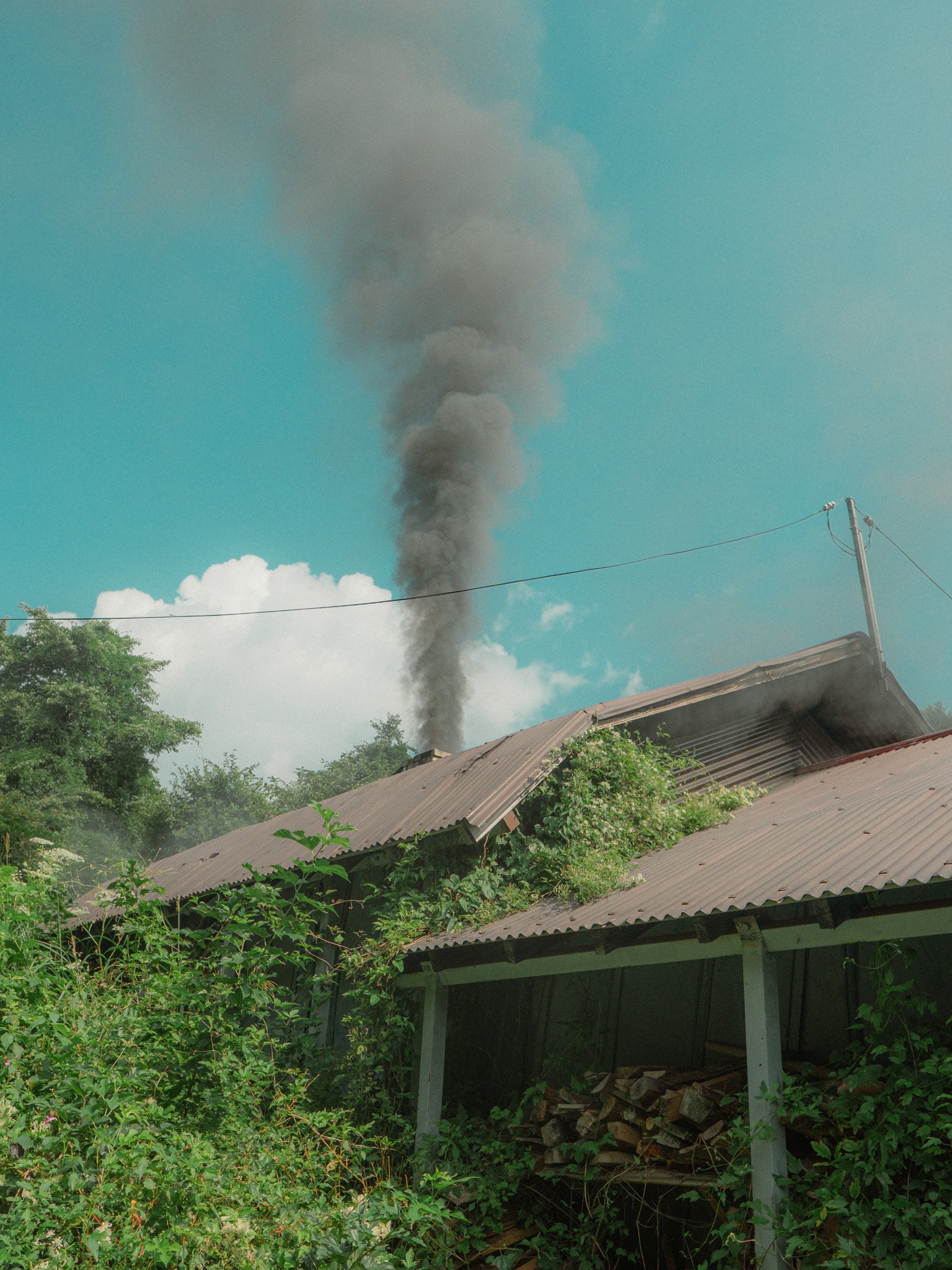
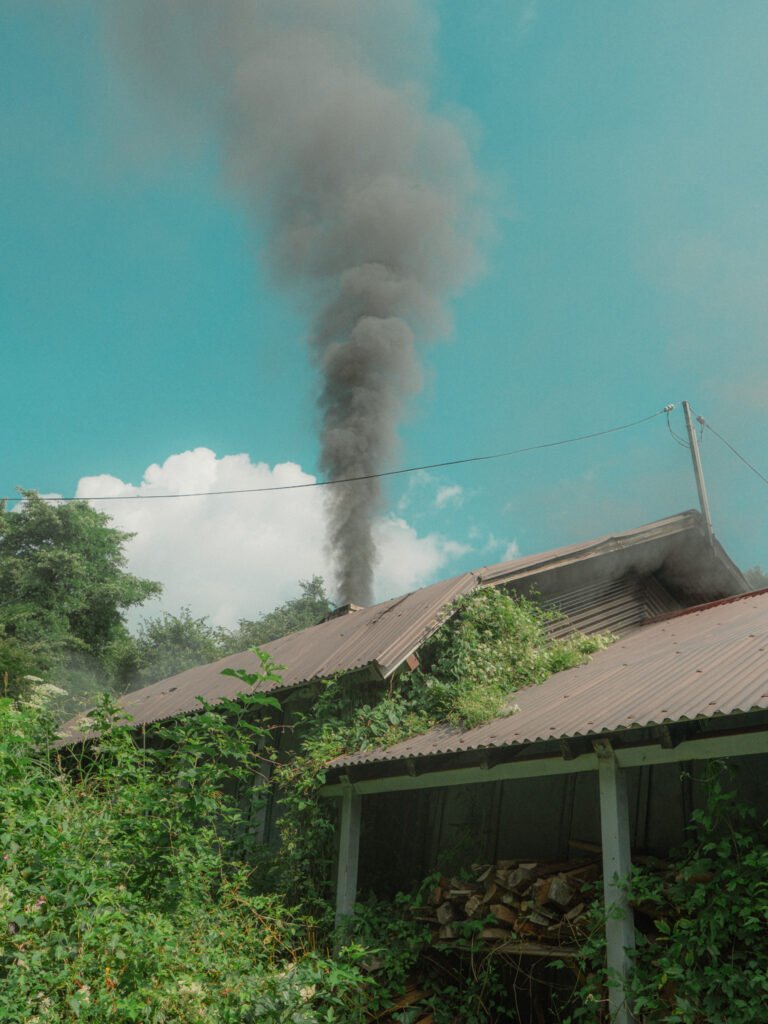
    That night, I could barely sleep from the anxiety of wondering whether I’d ruined the entire collection. It didn’t help that when I did finally fall asleep, a stinkbug landed in my (presumably) open mouth and I woke up choking. I’m pretty sure I swallowed it, by the way. Eventually, I gave up on the prospect of sleep and made my way downstairs to light the kiln. This was going to be a reduction firing to ~1260°C over the course of about 12 hours, with an extended hold at peak temperature to help the green glaze run through the crevices of the white glaze below while it was still molten.
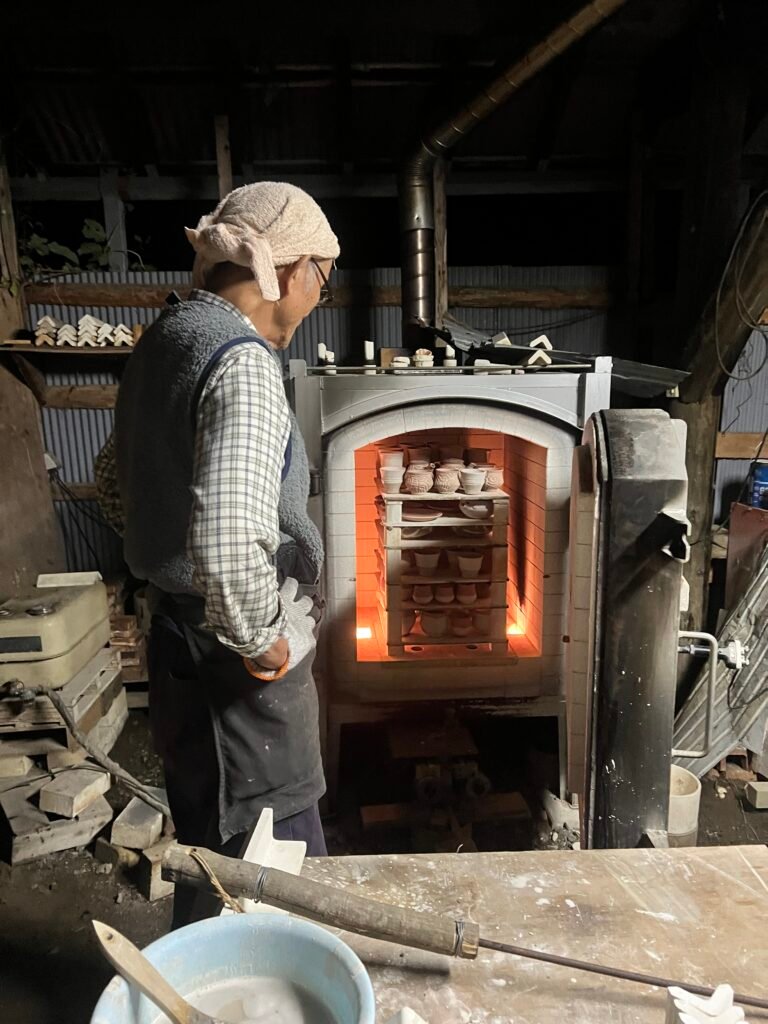
    As the kiln was firing, Kamaji put me to work chopping red pine wood for his next anagama firing. That became the rhythm of day two: chop wood for an hour, check the kiln, jot down the temperature, adjust the airflow, repeat. The autumn air was crisp and delicious, with a faint smell of smoke drifting from the wood stove in the house to my right and the wood-burning bathhouse to my left. The kiln finished firing in the late afternoon, and since I’d barely slept the night before, I knocked out soon afterwards.
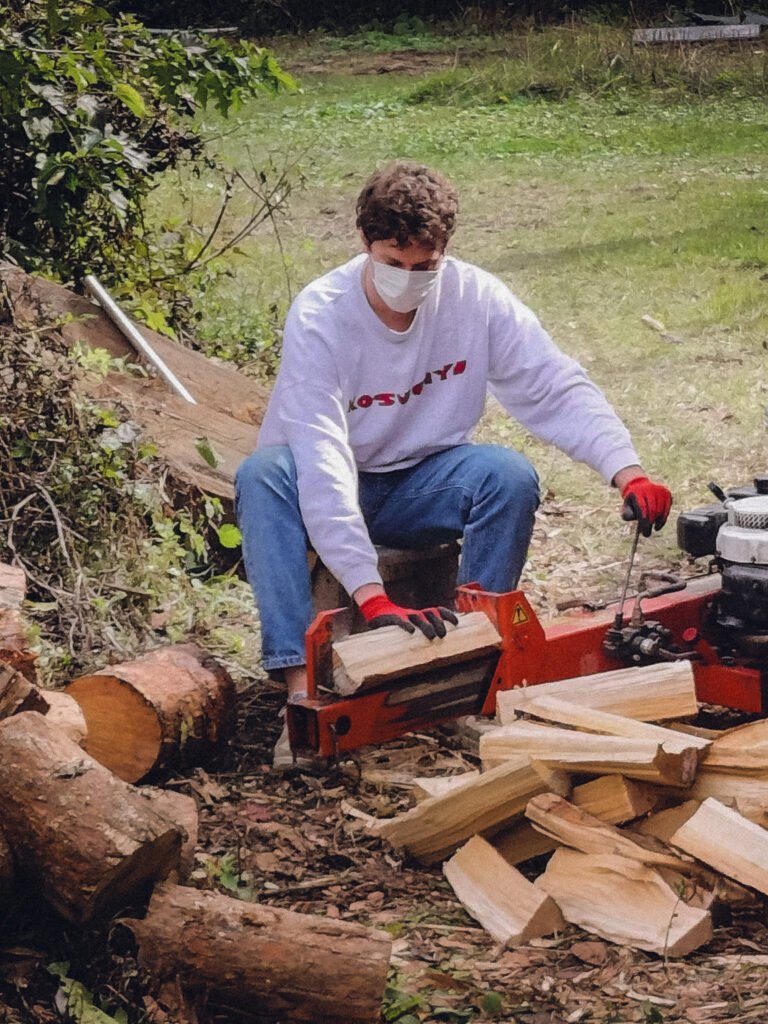
    To nobody’s surprise, day three also consisted of a ton of wood chopping. I was happy to have something to keep my mind busy as the kiln temperature slowly declined. By early afternoon, it had cooled to a reasonable 40°C, and we were finally at the best part. Opening a kiln always feels like Christmas morning, but I’d never had such a quick turnaround between glazing, loading, and cracking it open.
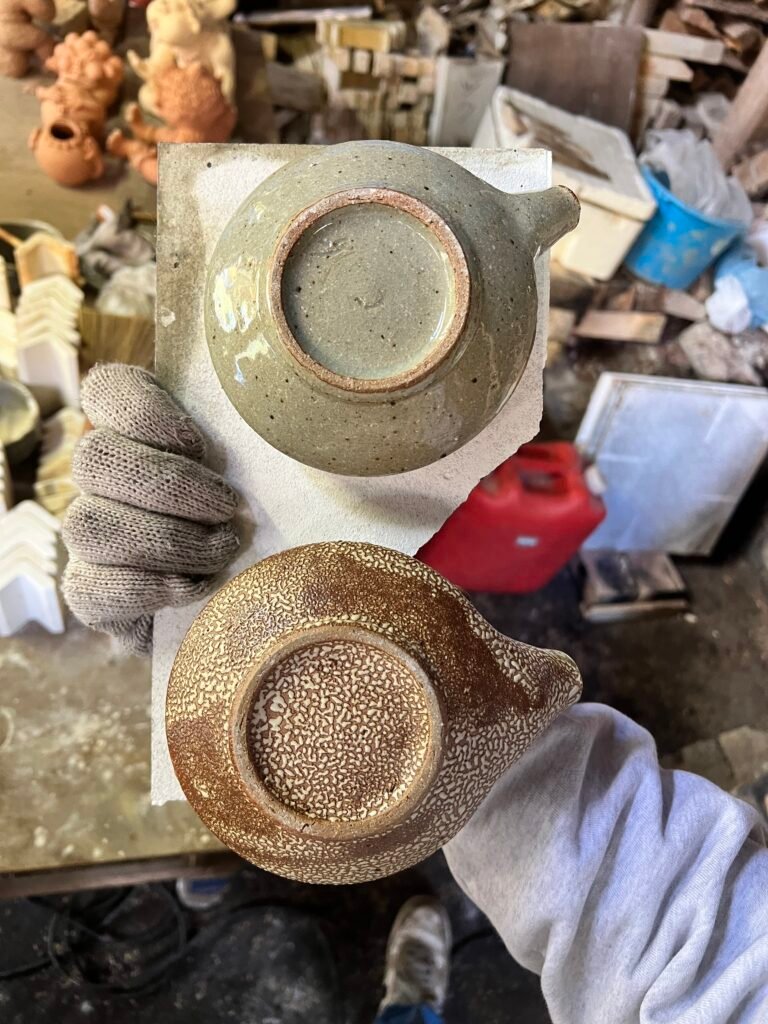
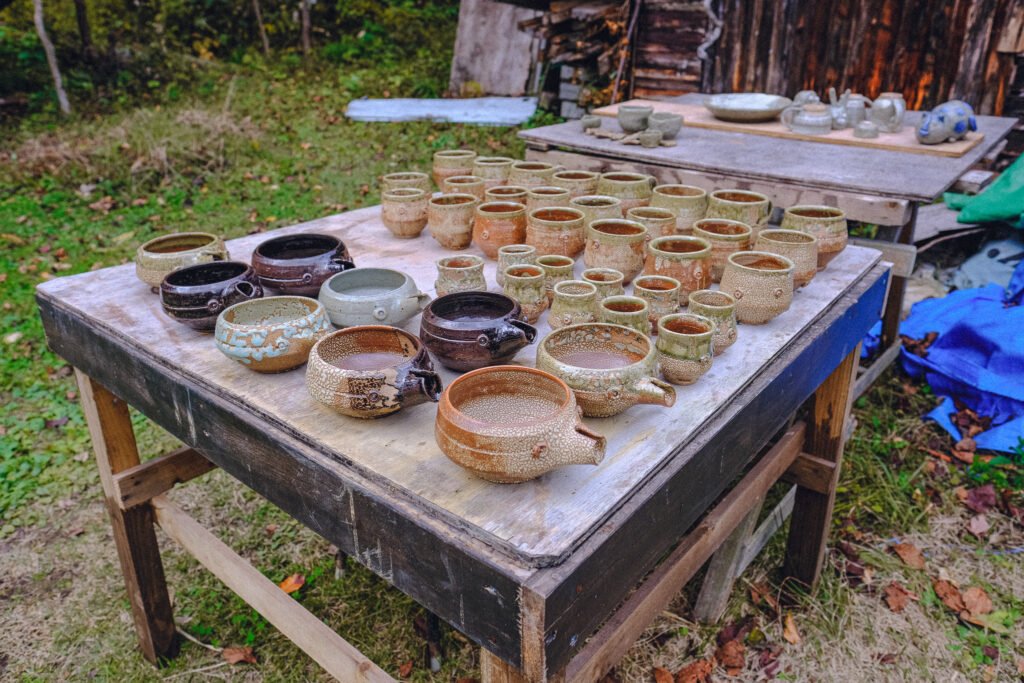
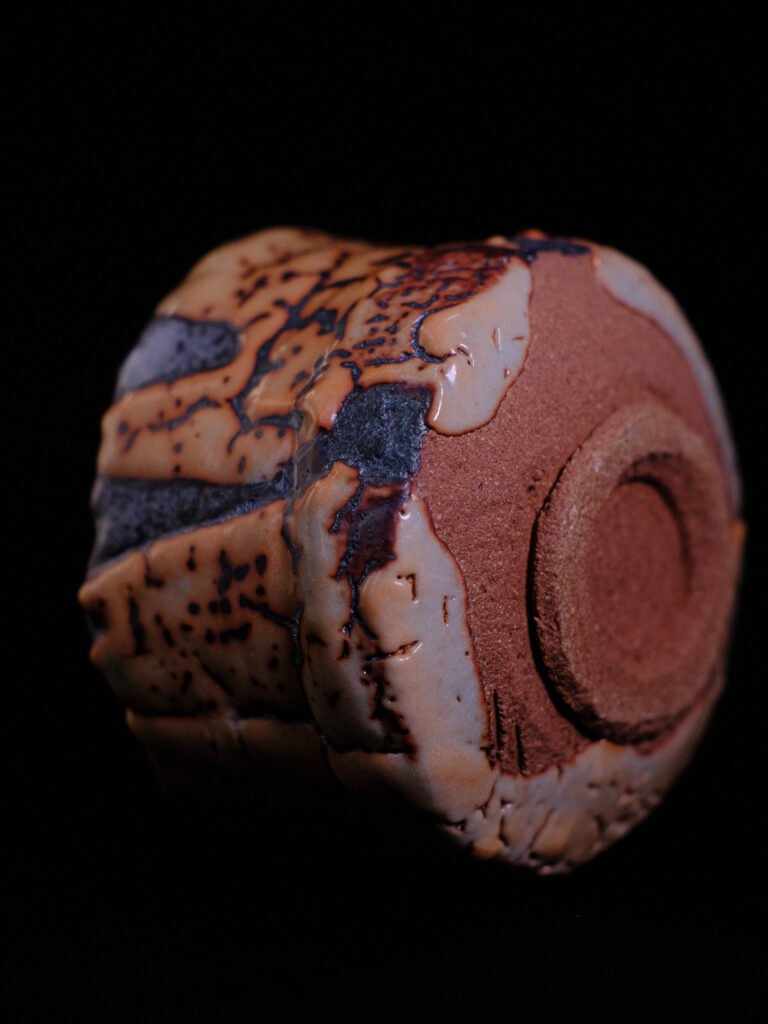
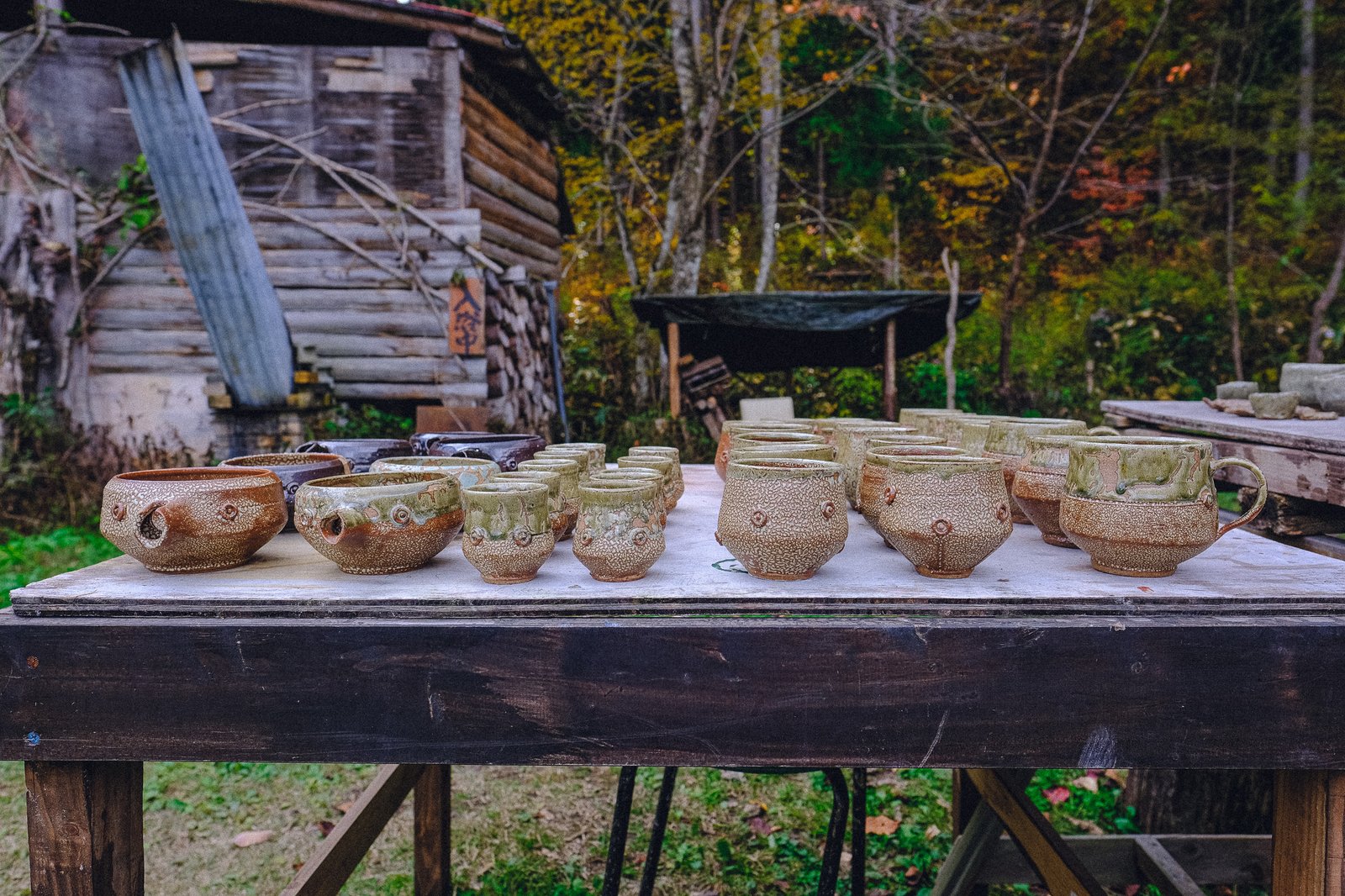
    Unfortunately, one of the kiln shelves cracked during the firing, fusing to two of my katakuchi chawan—of course, my two favorite ones—and rendering them as rejects. Whatever, we’ll call it a sacrifice to the kiln gods. In exchange, every single one of the cups from this firing turned out breathtaking. All of my anxieties about the glazing and firing vanished instantly: they were fired beautifully, with greenish-blue deposits of glaze running through a finely crawling white surface that was addictive to run your hands over. Every single piece turned out stunning. I’ll quit running my mouth and let you see the results for yourselves:
    After polishing the bottoms of the pieces and loading them into my empty suitcase to take back to Tokyo, we still had a bit of daylight left before my train. Kamaji took me for a drive up the mountain to get a good view of the autumn 景色 (scenery), and we were greeted with this gorgeous sight.
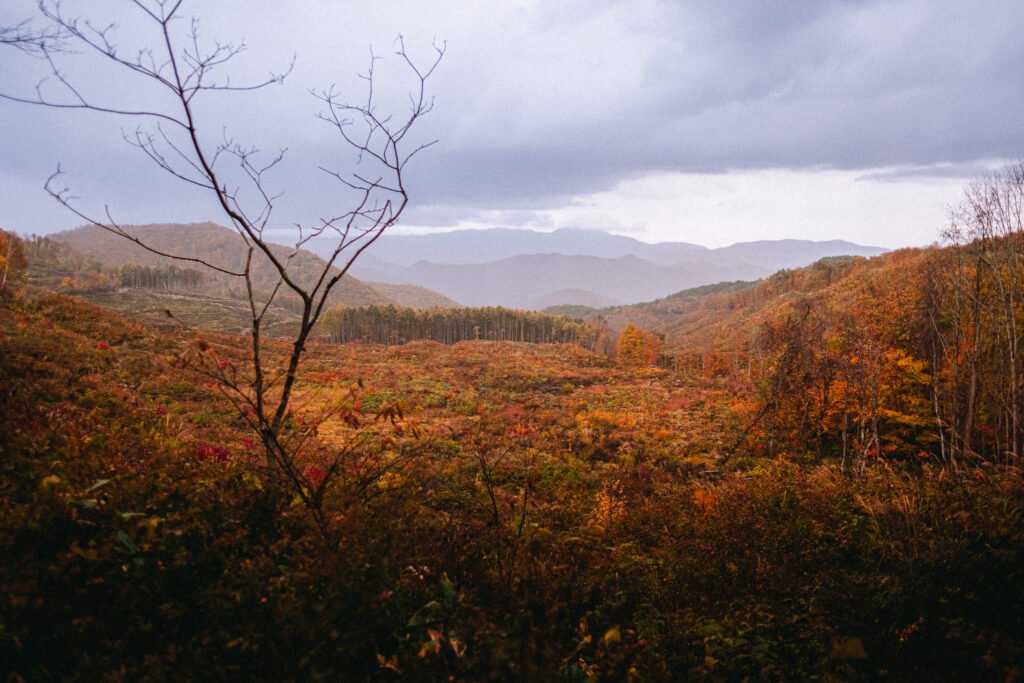
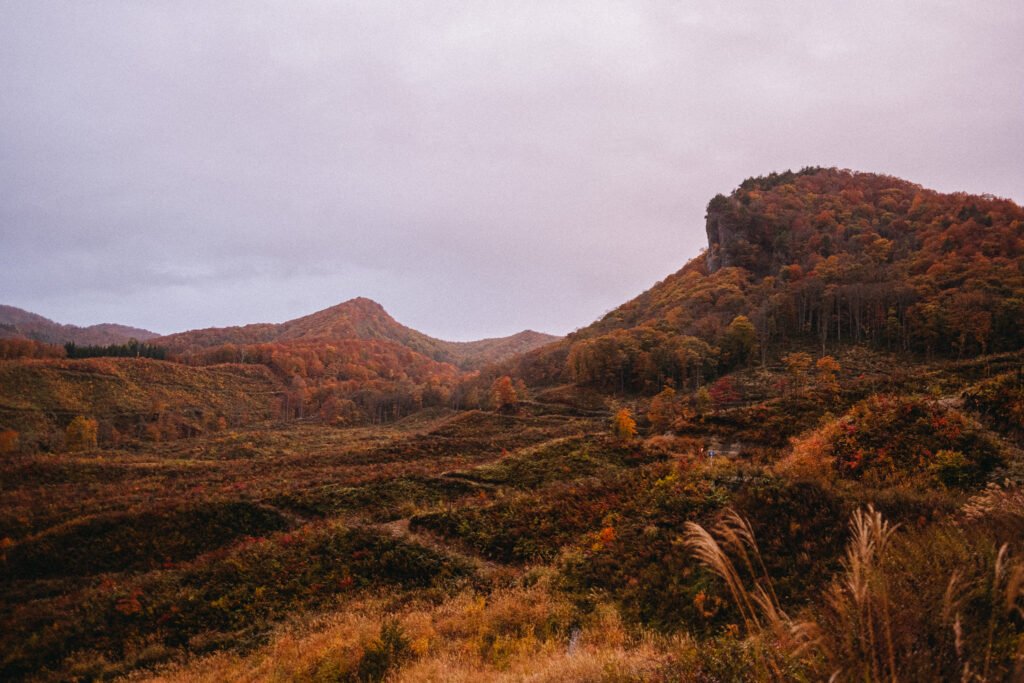
    Not long after, I was on the train heading home, suitcase full of still-warm pottery. Everything arrived safely, and I’ve been sorting and photographing the best pieces ever since. Once I’m done, they’ll be listed on the shop page. The rest will find their way into a very special coffee shop nearby, so keep an eye out. You’ll be seeing these pieces in action soon!
  • Creating the Fukushima Collection: Part One

    Creating the Fukushima Collection: Part One

    If you read my last post, then you’re probably familiar with Kamaji, the master of Mumongama kiln in Fukushima. Before I dive into the meat of this post, I think it’s time to give him a proper introduction. His name is Takashi Imamura, and in my humble opinion, he is the definition of a craftsman. That is to say, he’s not flashy with showing off his prowess, he simply makes for the sake of making and is always willing to teach the next generation. You can check out his works on his homepage here.

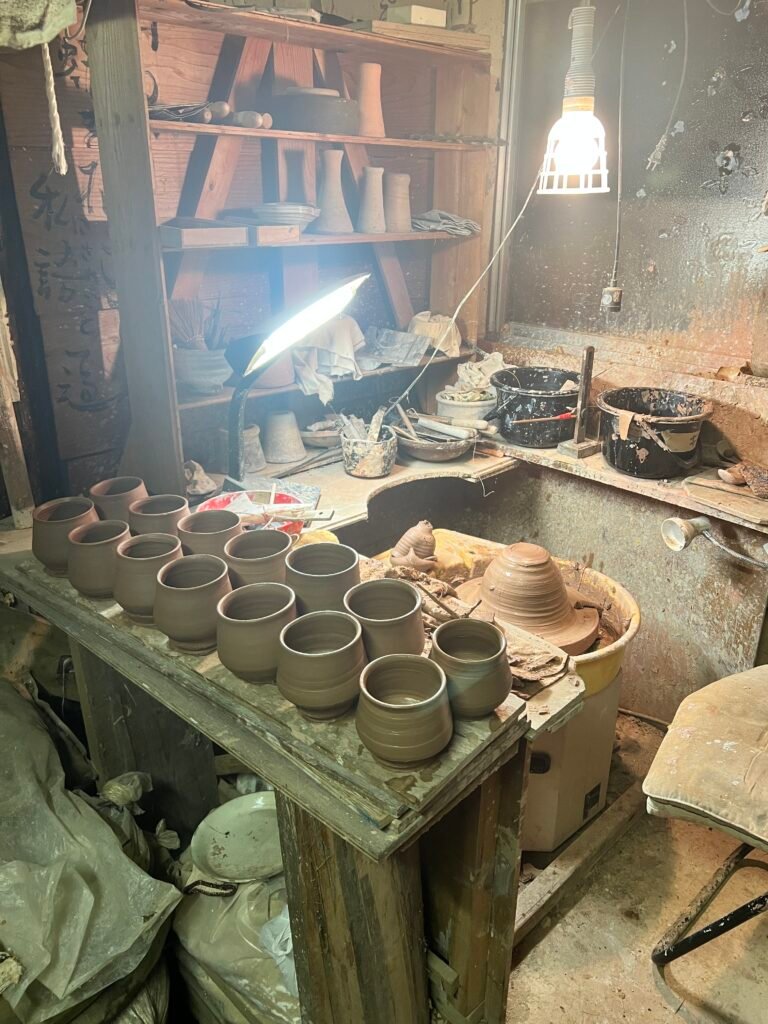
    During my last stay at Imamura-sensei’s place for this year’s anagama firing, he kept scolding me (kindly) for little flaws he saw in my work. Admittedly, most of them were due to the time constraints of getting all of my pieces trimmed and ready for the anagama firing, but he still insisted that I come and stay with him for a bit to make a new body of work under his supervision. Even though I started off on the potter’s wheel ten years ago, recently I’ve been focusing more on hand-built chawan (tea bowls), and I could feel my skills beginning to atrophy. I had a long weekend this month, so I figured I’d make the (long) journey out to Minami-aizu, Fukushima and take Imamura-sensei up on his offer.

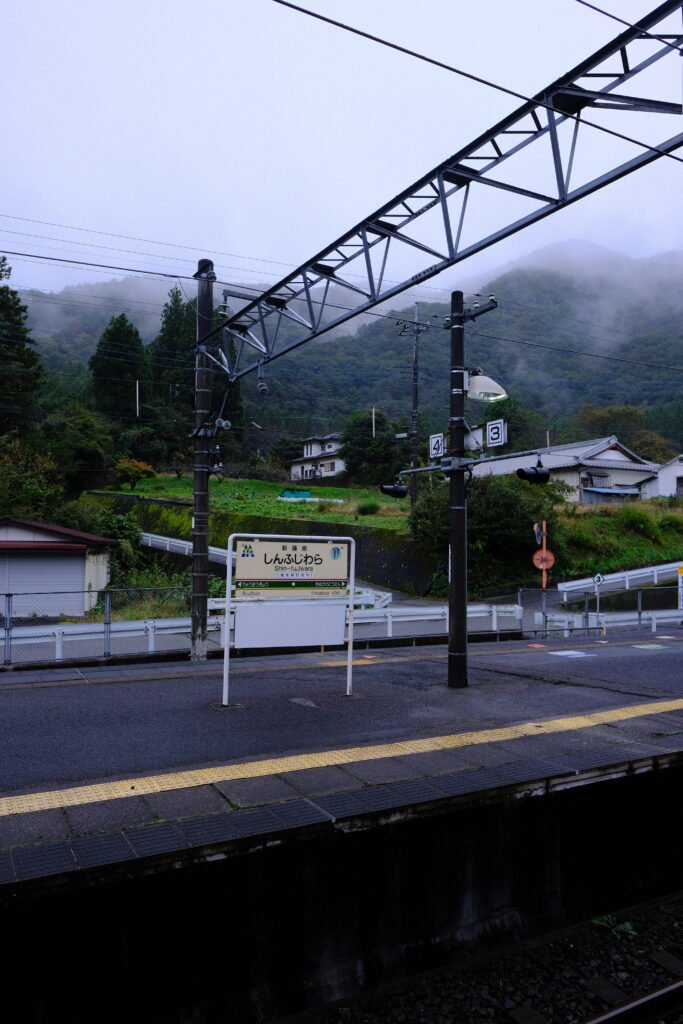
    The trip was a tough one. I had planned to take a one-shot train from Asakusa to Aizu-kogen-ozeguchi, but I soon found out that everyone else in the city had decided to take advantage of the beautiful fall weather and the long weekend, and seats were completely booked. Then it began to rain on my head. After soaking myself thoroughly in Asakusa for a few hours waiting for the next available train, I began my slow trek north towards Fukushima. I stopped by Nikko on the way and had a transit in Shin-Fujiwara, where the most precious pair of grandmas struck up a conversation with me and treated me to brown sugar candy while we waited for the train.

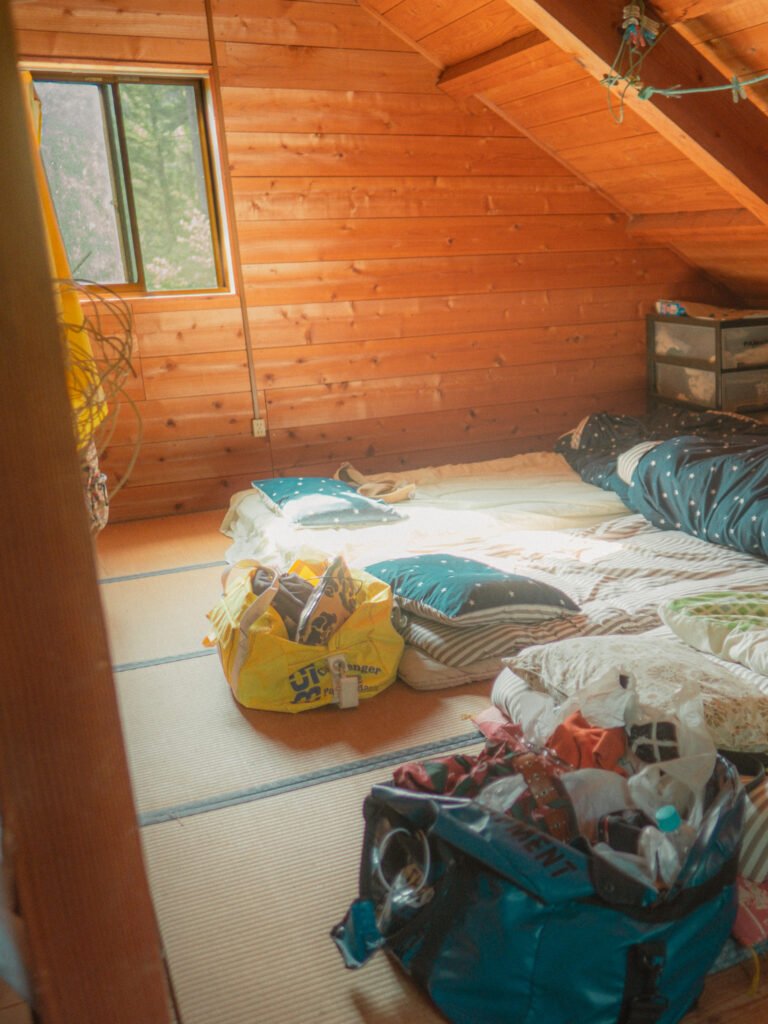
    I arrived in the late afternoon on Saturday to a warm meal from Imamura-sensei’s lovely wife, Keiko. They set me up with a futon in the attic of their wooden cabin, although I wouldn’t be getting much sleep in the coming days. I should add at this point that the entire place was absolutely covered in stinkbugs. Like, biblical-tempest levels of insects. One landed on my face on the first night and squirted stink all over me, and I made a point to stay in the studio as late as possible for the remaining days.

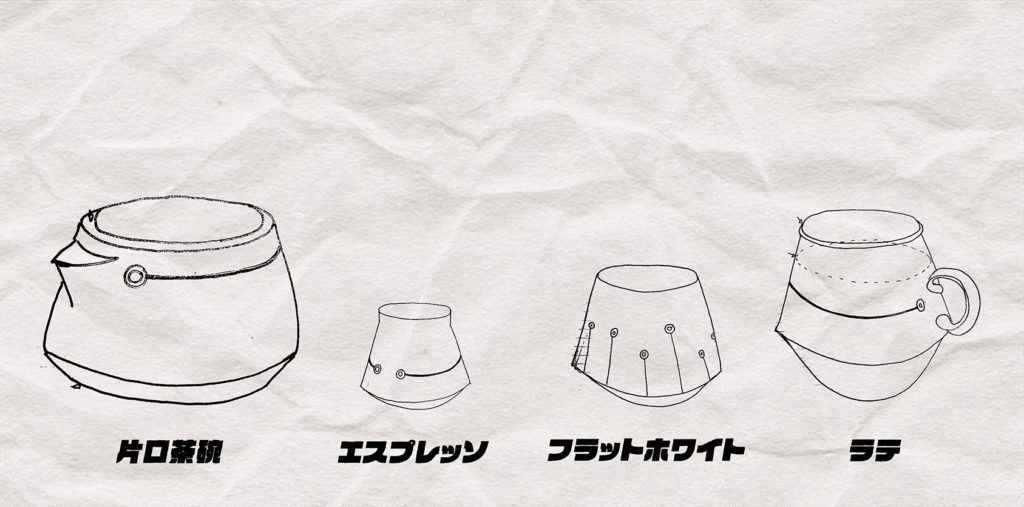
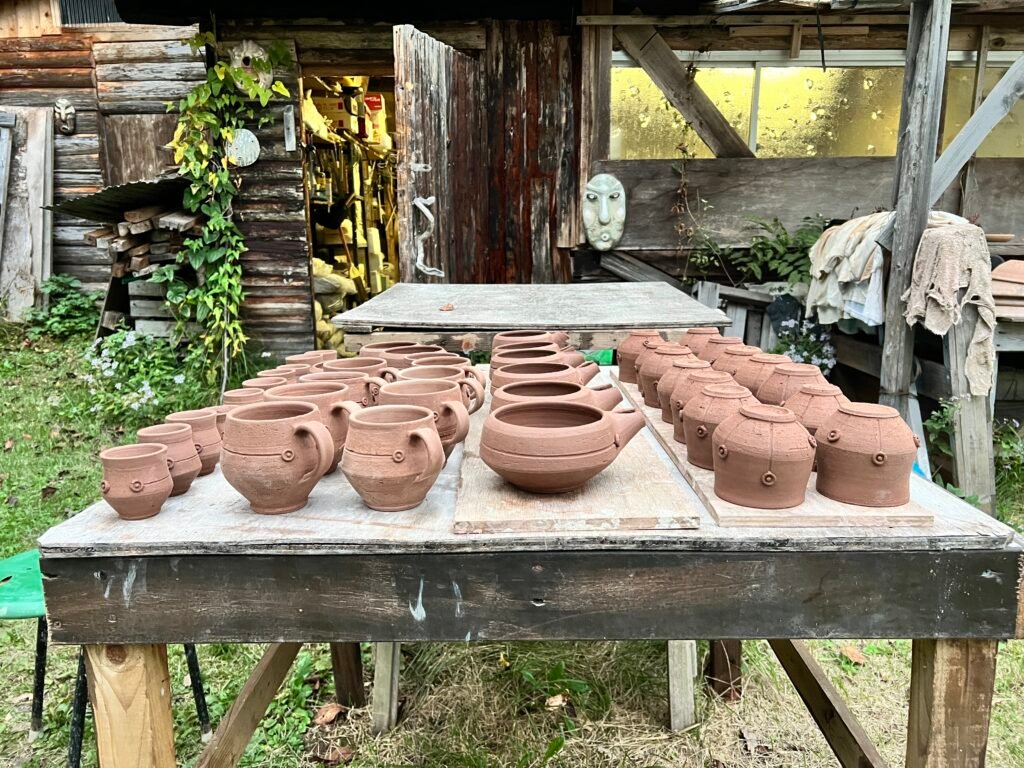
    I had gone in with some sketches of the items I wanted to make for this collection. A collection of coffee cups for a cafe, spouted tea bowls for an upcoming project, and a fun take on a travel mug that I didn’t get around to making on this trip. I viewed this as a checkpoint in my pottery journey; what I’ve learned in my past two years in Japan, and how I can apply it to the style I hold from my roots in America. In particular, I wanted to showcase the skills that I’ve picked up from my two teachers: V. Chin and Akashi Dai, reinterpreted through my own personal lens.

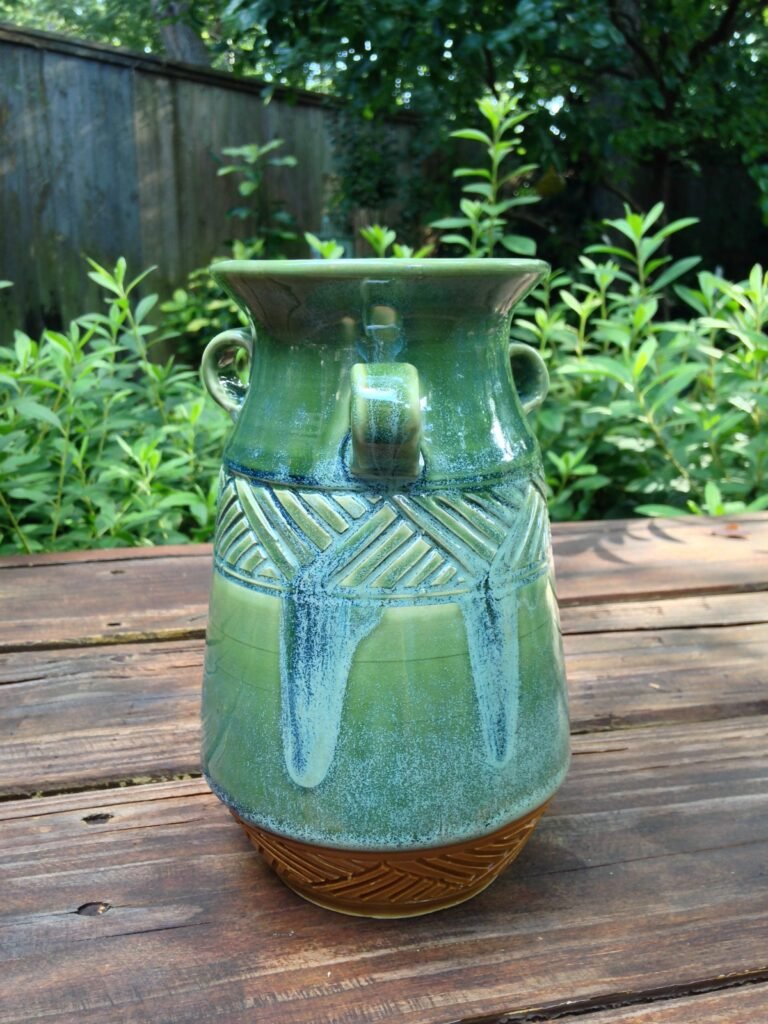
    Work produced under V. Chin in 2016

    My earlier works from my time with V. Chin were light, symmetrical, and often carved or altered in some way. I still think that the pieces from this time are some of the most beautiful I’ve ever put out.

    Work produced under Dai-sensei in 2025

    When I transitioned to Dai-sensei’s studio in 2019, I began to experiment more with forms that were antithetical to those that I’d made before: rough, asymmetrical, organic.

    Now I felt ready to reincorporate those aspects that I loved from my earlier pieces, the meticulously carved elements and sharper forms, while showcasing my love of rough Japanese clay and my embrace of throwing marks, spiraling curves, and hearty pots with a bit of wobble.

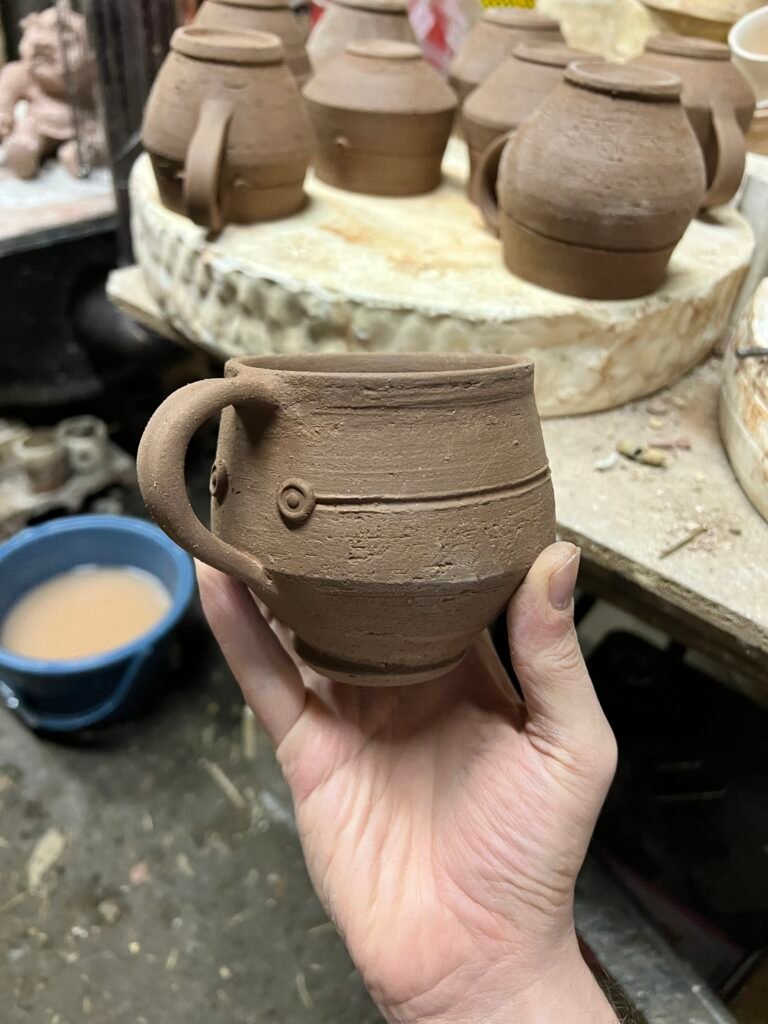
    That’s not to say that these pieces don’t have plenty of me in them; I’ve put my love for coffee on display for these pieces, designing the internal curve of the cups and the angle of the rims to carry the aroma of coffee like a snifter glass and provide a killer canvas for some latte art.

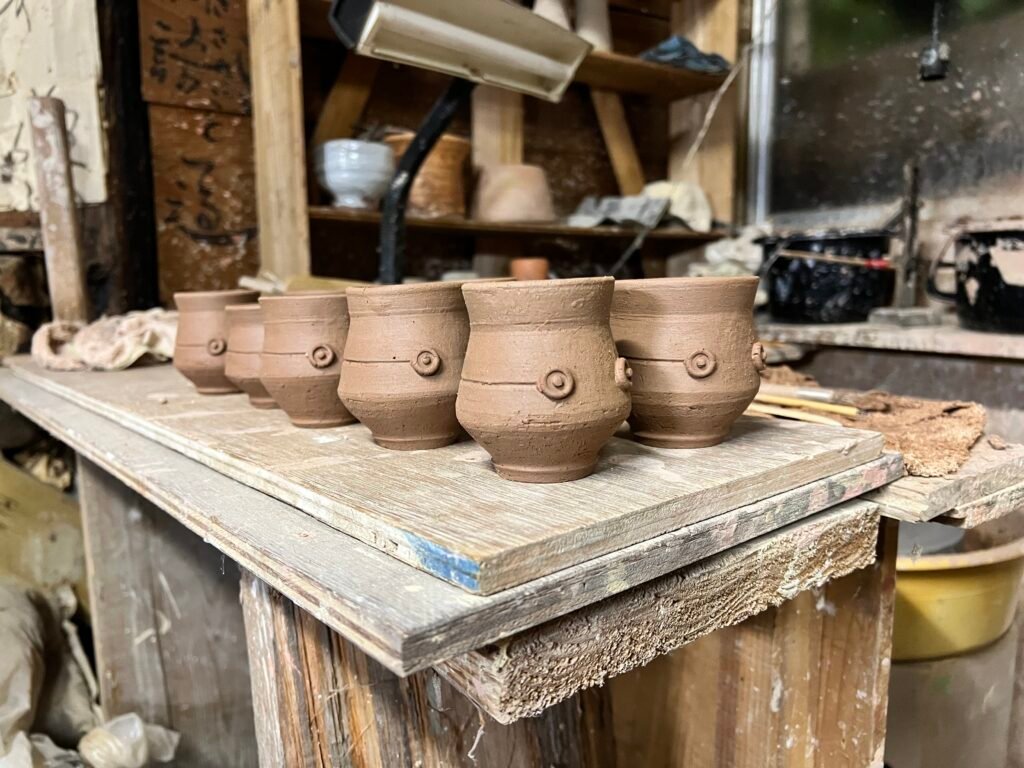
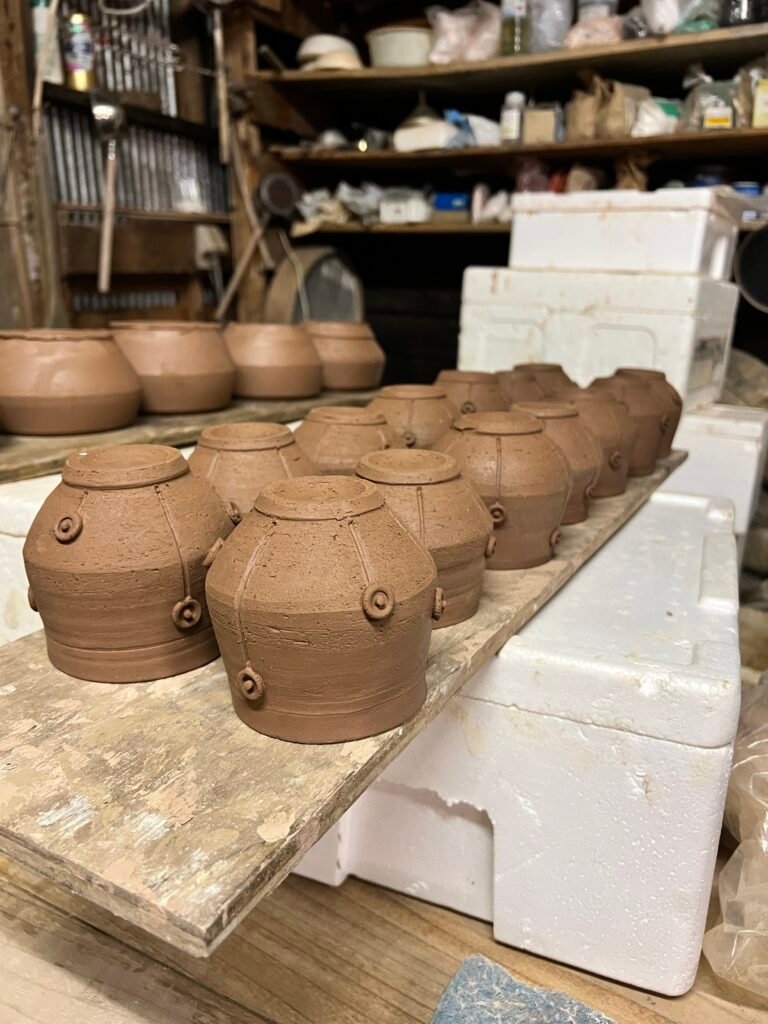
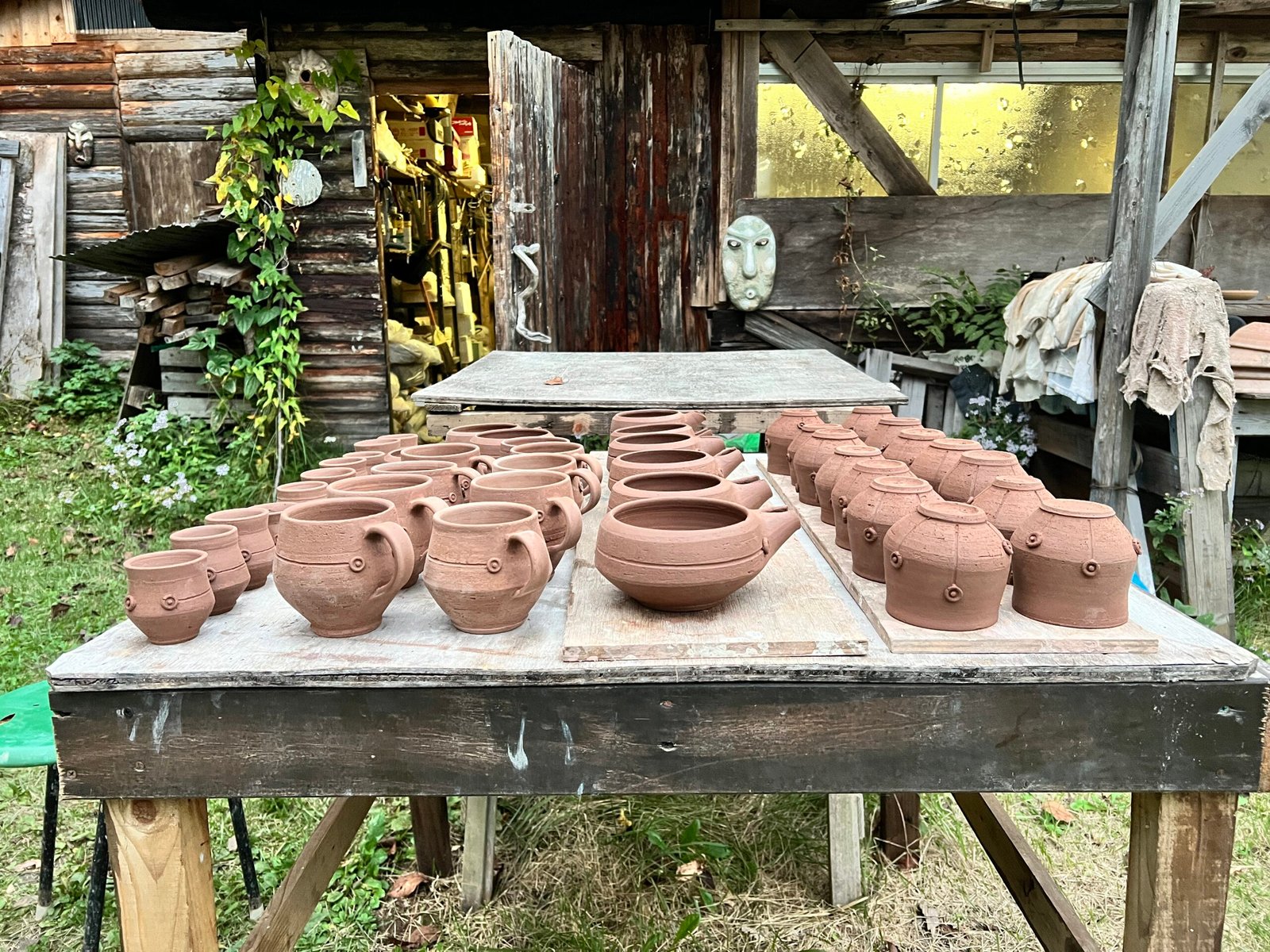
    I’ve also poured a bit of my Lebanese heritage into the visual design of the pieces, with the shapes of the espresso cups and the symmetrical poppy-like sections on the flat white cups both being inspired by the Turkish Coffee cups of my youth. In addition, the button-like ornamentation that I learned from V. Chin is being applied in this instance as a representation of the evil eye charms we’d often have hanging around my house. To put it simply, these pieces represent the current breadth of my toolbox at this point in my journey.

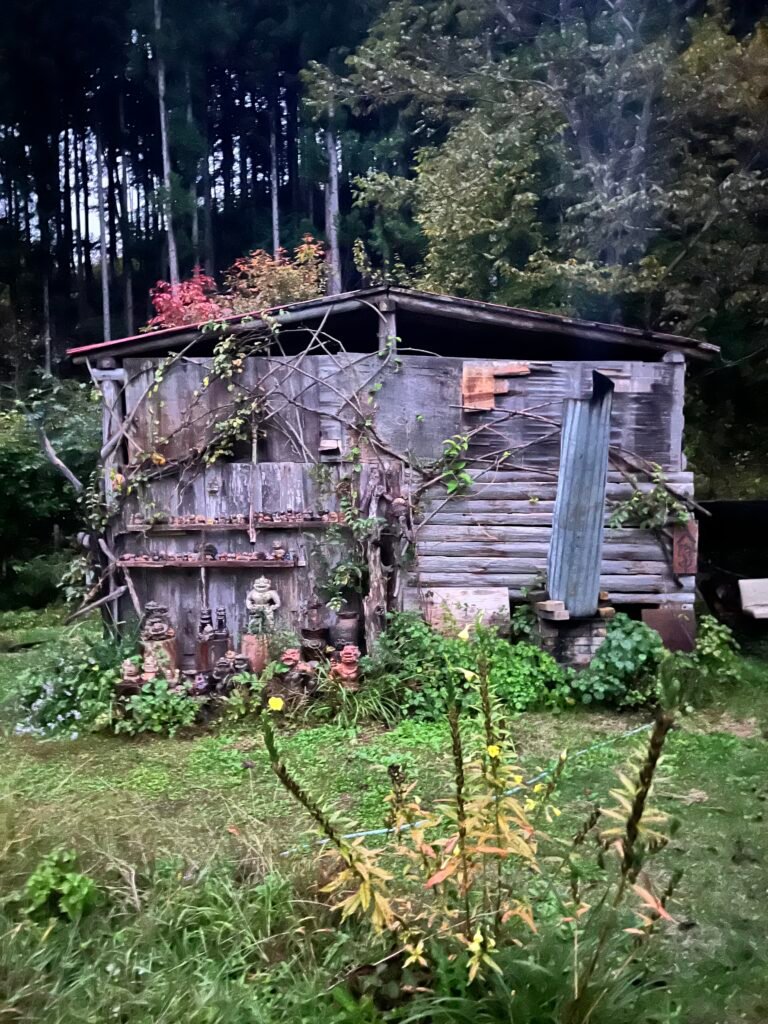
    Working in this studio was a dream. Crisp fall air, green grass and pine trees, stink bugs, a wood-burning hinoki bathtub under the stars, intermittent home-cooked meals, stink bugs, you get the idea. There was absolutely no cell phone service on the mountain, so it was a bit of a digital detox as well. Imamura-sensei and Keiko-san have never experienced a two hour doomscrolling session, so I don’t think they fully understood why I was so relieved to be stripped of my ability to use the internet.

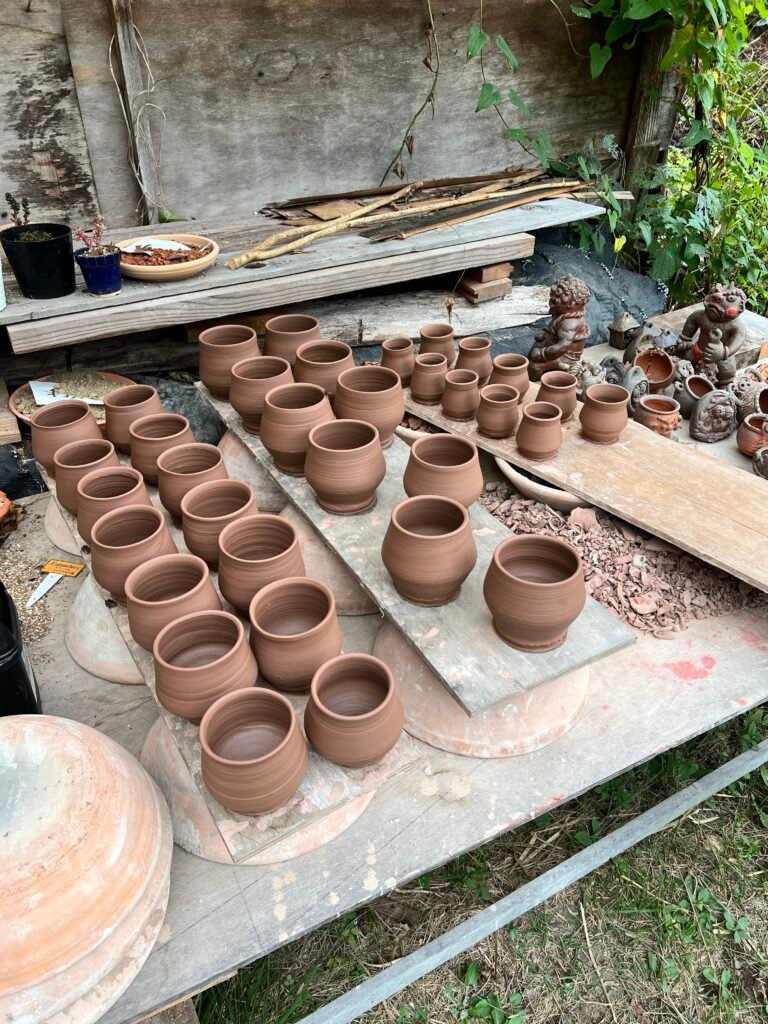
    By the end of my stay, this is what I managed to produce. In some ways, it’s a pretty solid haul. But I’m a bit of a pessimist about these things, so I’m holding my breath until they all pass through the bisque firing safely and we can move on to glaze day. The turnaround should be pretty quick; I’m hoping to be back up to glaze by the end of October or the beginning of November at the latest. Once snow starts to fall, Imamura-sensei and Keiko-san will pack their essentials and retreat to their second home in the city for the winter, so we can’t afford to dilly-dally.

    Some of the pieces will inevitably find their way into the store page on this site, and I’ll let you know when that is. Until then, keep your fingers crossed that they survive the coming weeks!

    うまく焼き上がるといいね!

  • Hello World/Anagama 2025

    Hello World/Anagama 2025

    Welcome to my first journal post! I’ll be periodically posting my musings on here, perhaps to no readership for the foreseeable future! If you asked me to tell you honestly what I’ve been up to recently, this post would be about building this website, practicing kanji, and a few intermittent bouts of Silksong. That doesn’t make for a great first post though, so I’d like to jot down some reflections on my recent trip to Fukushima for my third annual anagama firing with my teacher, Dai-sensei.

    but kevin, just what the hell is an anagama?

    You ask. For a very brief (and frankly inadequate) explanation: the word “anagama” is comprised of two kanji: 穴 (ana), which means “hole” in this case, and 窯 (kama), which means “kiln.” Basically, an anagama is a type of wood-burning kiln that has been used in Japan for well over 1,000 years; when the kiln reaches its maximum heat (usually around 1300 celsius/2400 fahrenheit) thermal expansion causes the bricks that comprise the kiln to swell. To mitigate this expansion, the anagama is built inside of a hole inset in the ground so that the earth itself can press against the bricks and hold them in place during the firing. This in turn creates a vacuum inside the kiln leading to a vortex of flame and ash that usually result in gorgeous, if unpredictable, pieces.

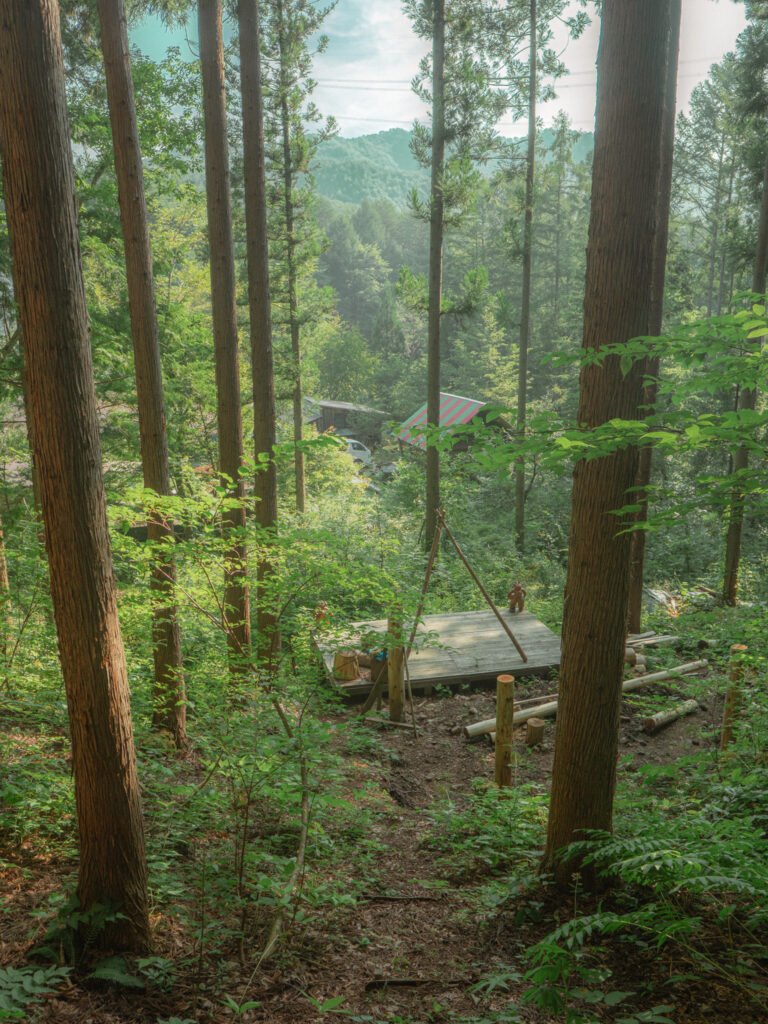
    In any case, every year for the past three years, I’ve joined Dai-sensei and his cohort of well-seasoned potters for their trip to Fukushima, where one of the few anagama kilns that survived the 2011 Töhoku earthquake still billows smoke deep in the forested mountains. The kiln is called 無文窯 (mumongama), referencing a collection of 13th century zen buddhist riddles known as “the gateless gate,” and the master of the kiln is a man I affectionately call “Kamaji,” the name of the weird spider-guy who stokes the kiln in Spirited Away. You can guess the parallels for yourself.

    For my first two years, I always allocated most of my clay towards making large lighting fixtures for my apartment that were either too impractical or too expensive to be sold in normal stores or galleries, leaving me with only enough clay to scrap together a small sake flask or some tchotchke from the trimmings. This time, I went in with a mission to produce a more comprehensive set of smaller items: cortado sets with saucers, vases, sake ware, bowls, the like.

    I’ll spare you the nitty-gritty details, but the firing takes three whole days. Those days aren’t spent passively twiddling our thumbs while the kiln churns along in the background; the beast needs to be fed chopped wood constantly, day and night, in order to reach the white-hot temperatures needed to turn ash and stone into molten glaze. It’s Japanese tradition to offer the god of the kiln an offering of sake, rice, and salt to keep him satiated throughout the firing. It’s also Japanese tradition to get sloshed off of this same sake while sitting in front of the kiln, watching in anticipation as the thermocouple rises, drops, and rises again with each insertion of wood. Needless to say we respected both traditions, though it’s hard to keep enough sake on hand to sustain 72 hours of constant indulgence.

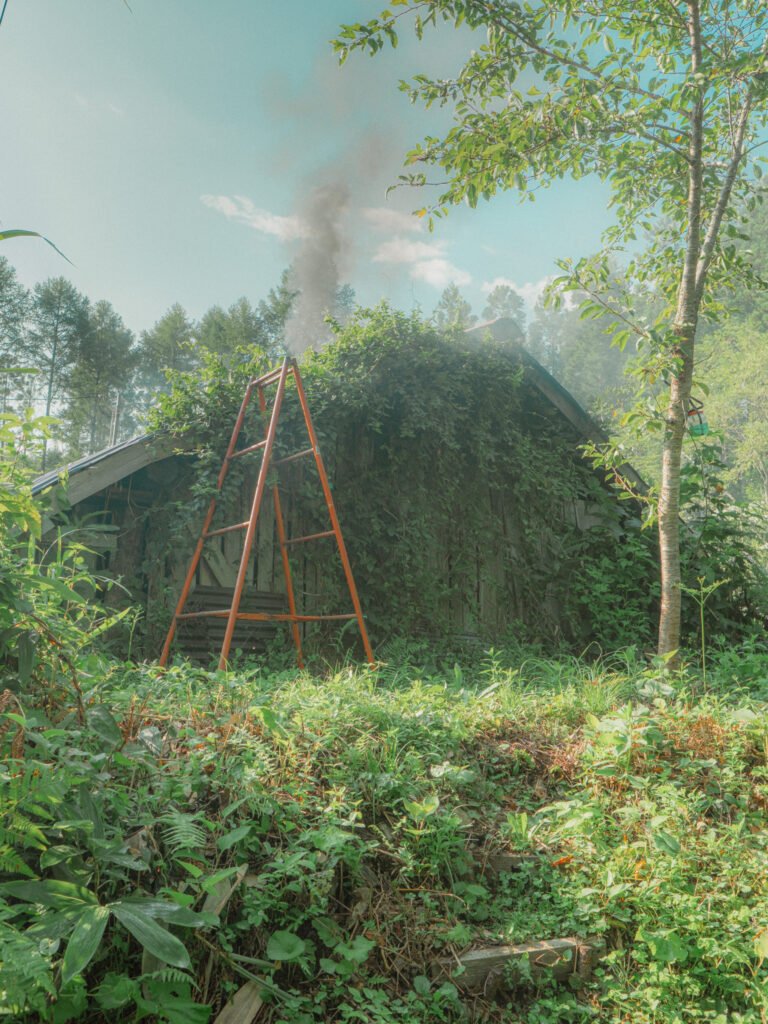
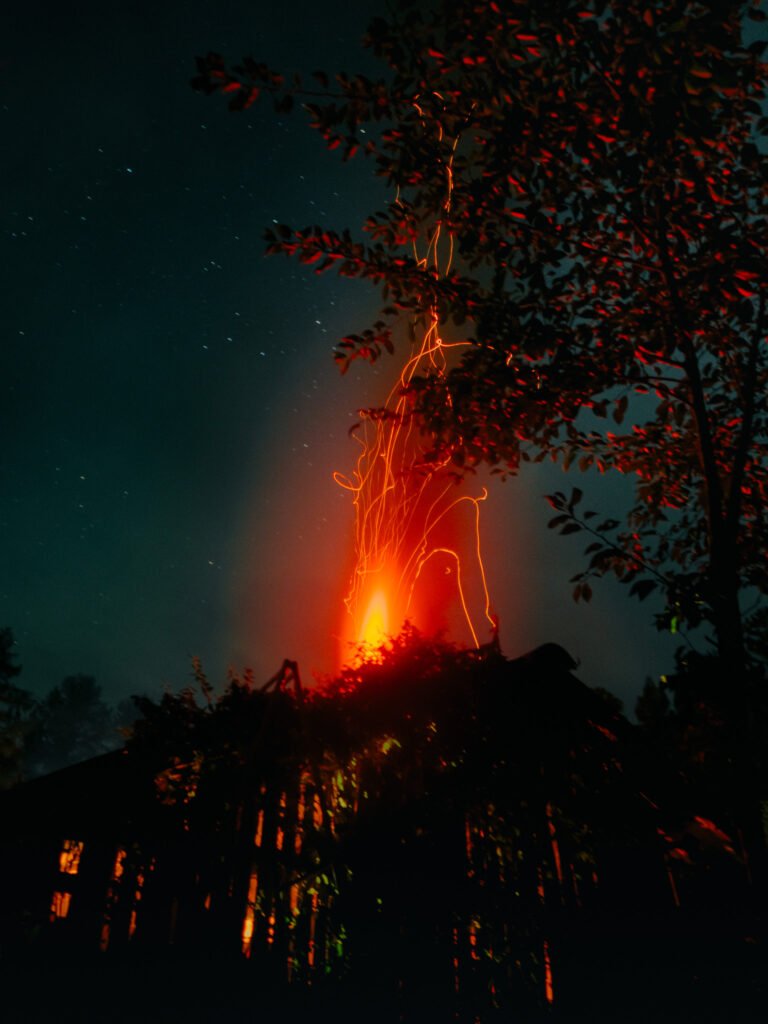
    It’s no exaggeration to say that the kiln resembles an angry dragon at this point, blowing plumes of smoke and flame out from two holes above the opening after fresh wood has been thrown into its maw. I’m always amazed at how sensitive the kiln is; a seemingly imperceptible difference in the timing and placement of wood can mark the difference between the heat steadily climbing and falling suddenly. Of course, experience comes with age, and I was about 30 years behind my companions.

    After three days of battling singed arm hairs, enormous beetles, and a pincer-attack of oppressive heat from the sun above and the kiln below, we sealed up the entrance of the beast and allowed the temperature to gradually fall over the next week. The results of an anagama firing are always highly dependent on where pieces are placed in the kiln, and I’m pretty happy to say that this year produced a winning bunch.

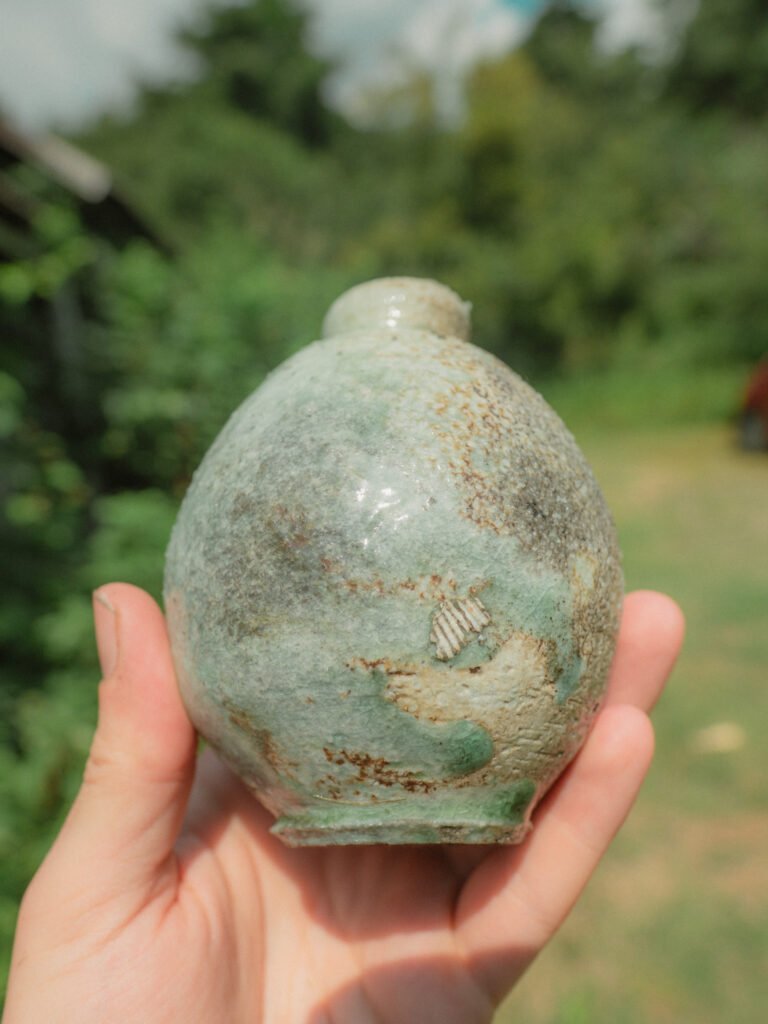
    I haven’t had time to take a proper photo shoot of the pieces; once I do, you’ll likely find them in my portfolio (and perhaps the store?) For now, you can check the gallery above to see some of the sights of the kiln, as well as the sole hikidashi tokkuri (sake flask) that I pulled out of the kiln at peak temperature. Remember to tap the pictures in the gallery to view their uncropped version!

    If you read this far, take care of yourself and see you next time.

    Kevin