If you read my last post, then you’re probably familiar with Kamaji, the master of Mumongama kiln in Fukushima. Before I dive into the meat of this post, I think it’s time to give him a proper introduction. His name is Takashi Imamura, and in my humble opinion, he is the definition of a craftsman. That is to say, he’s not flashy with showing off his prowess, he simply makes for the sake of making and is always willing to teach the next generation. You can check out his works on his homepage here.
During my last stay at Imamura-sensei’s place for this year’s anagama firing, he kept scolding me (kindly) for little flaws he saw in my work. Admittedly, most of them were due to the time constraints of getting all of my pieces trimmed and ready for the anagama firing, but he still insisted that I come and stay with him for a bit to make a new body of work under his supervision. Even though I started off on the potter’s wheel ten years ago, recently I’ve been focusing more on hand-built chawan (tea bowls), and I could feel my skills beginning to atrophy. I had a long weekend this month, so I figured I’d make the (long) journey out to Minami-aizu, Fukushima and take Imamura-sensei up on his offer.
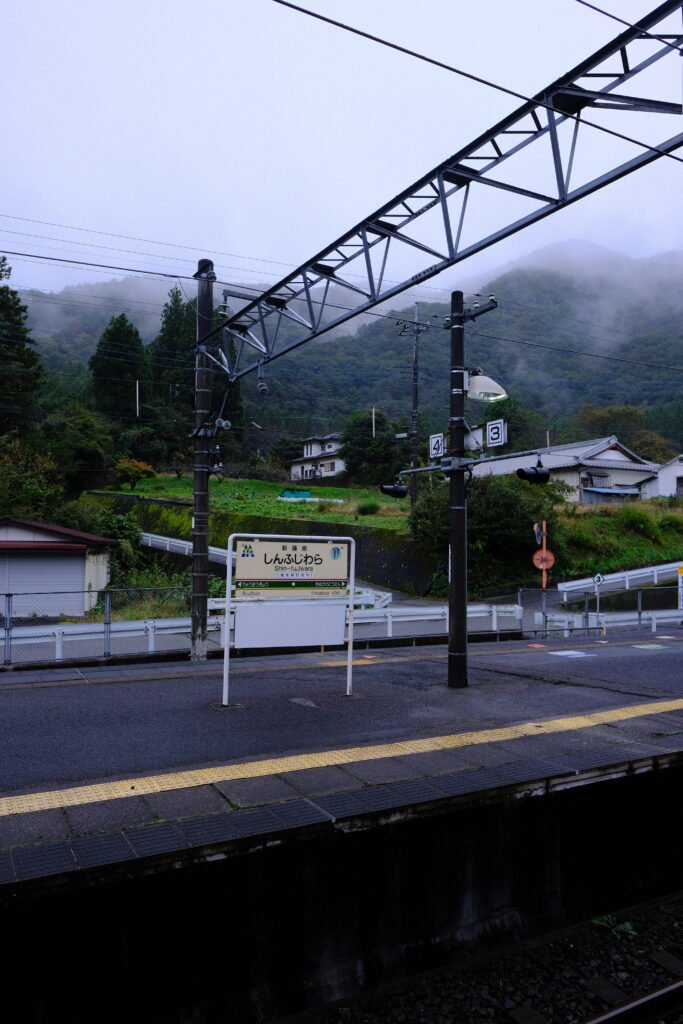
The trip was a tough one. I had planned to take a one-shot train from Asakusa to Aizu-kogen-ozeguchi, but I soon found out that everyone else in the city had decided to take advantage of the beautiful fall weather and the long weekend, and seats were completely booked. Then it began to rain on my head. After soaking myself thoroughly in Asakusa for a few hours waiting for the next available train, I began my slow trek north towards Fukushima. I stopped by Nikko on the way and had a transit in Shin-Fujiwara, where the most precious pair of grandmas struck up a conversation with me and treated me to brown sugar candy while we waited for the train.
I arrived in the late afternoon on Saturday to a warm meal from Imamura-sensei’s lovely wife, Keiko. They set me up with a futon in the attic of their wooden cabin, although I wouldn’t be getting much sleep in the coming days. I should add at this point that the entire place was absolutely covered in stinkbugs. Like, biblical-tempest levels of insects. One landed on my face on the first night and squirted stink all over me, and I made a point to stay in the studio as late as possible for the remaining days.
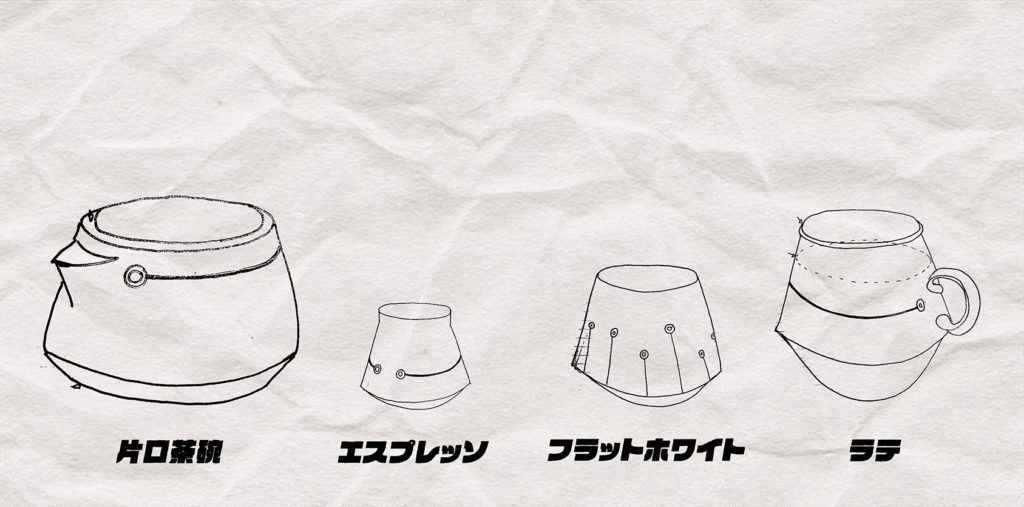
I had gone in with some sketches of the items I wanted to make for this collection. A collection of coffee cups for a cafe, spouted tea bowls for an upcoming project, and a fun take on a travel mug that I didn’t get around to making on this trip. I viewed this as a checkpoint in my pottery journey; what I’ve learned in my past two years in Japan, and how I can apply it to the style I hold from my roots in America. In particular, I wanted to showcase the skills that I’ve picked up from my two teachers: V. Chin and Akashi Dai, reinterpreted through my own personal lens.
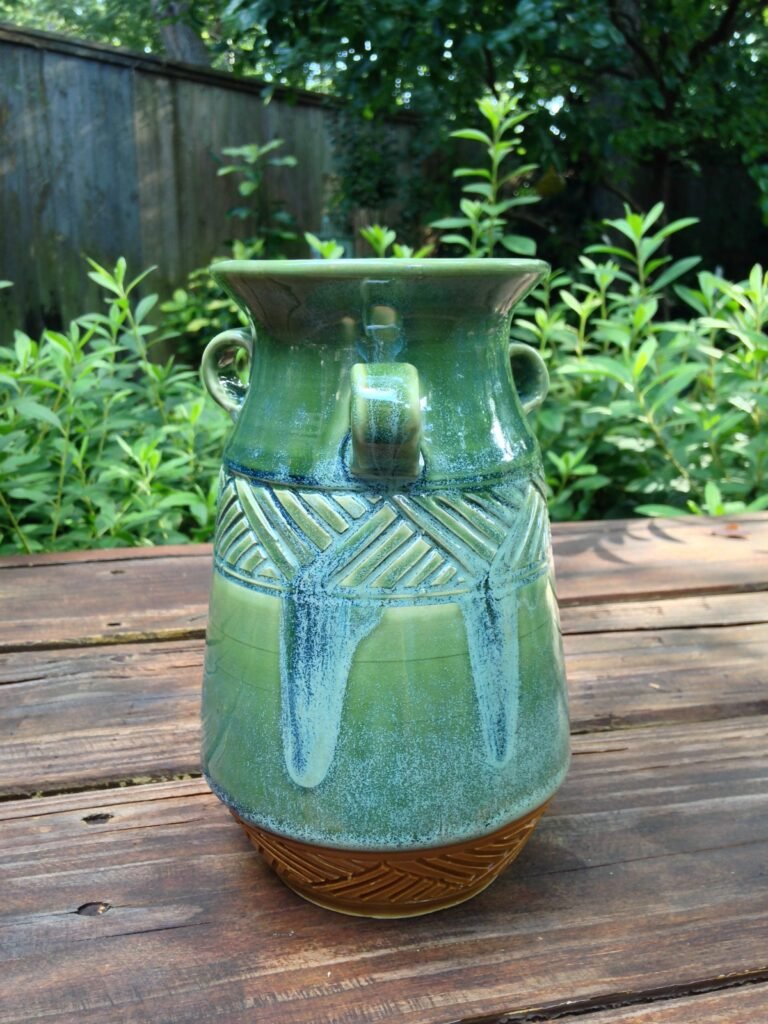
Work produced under V. Chin in 2016
My earlier works from my time with V. Chin were light, symmetrical, and often carved or altered in some way. I still think that the pieces from this time are some of the most beautiful I’ve ever put out.
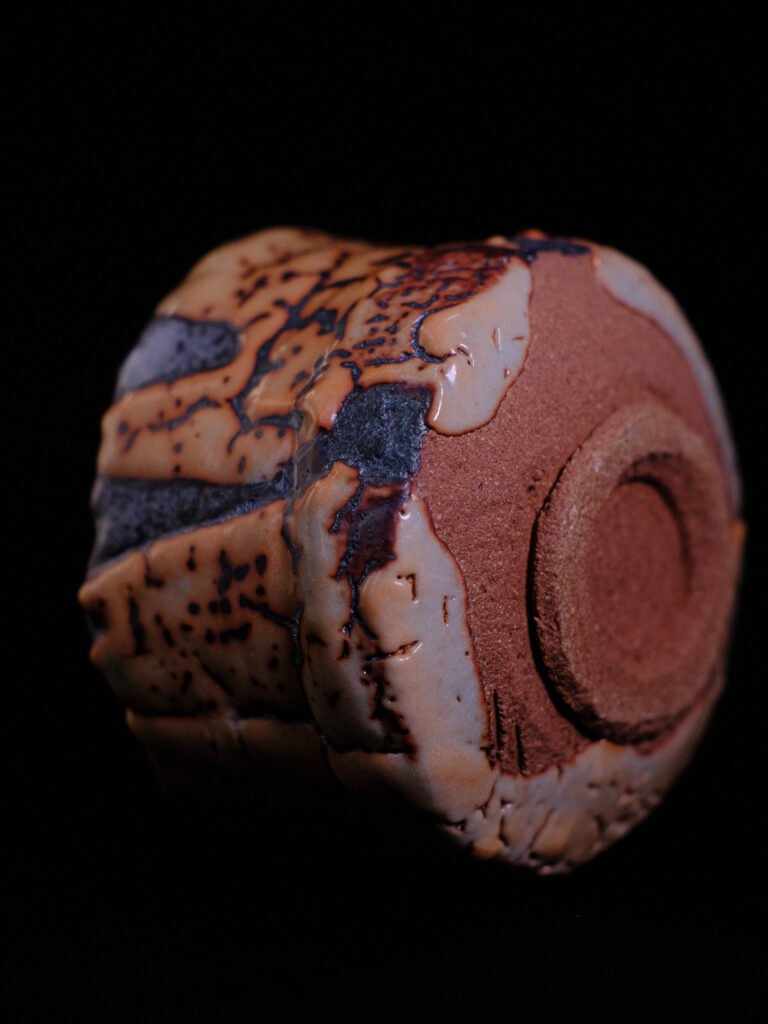
Work produced under Dai-sensei in 2025
When I transitioned to Dai-sensei’s studio in 2019, I began to experiment more with forms that were antithetical to those that I’d made before: rough, asymmetrical, organic.
Now I felt ready to reincorporate those aspects that I loved from my earlier pieces, the meticulously carved elements and sharper forms, while showcasing my love of rough Japanese clay and my embrace of throwing marks, spiraling curves, and hearty pots with a bit of wobble.
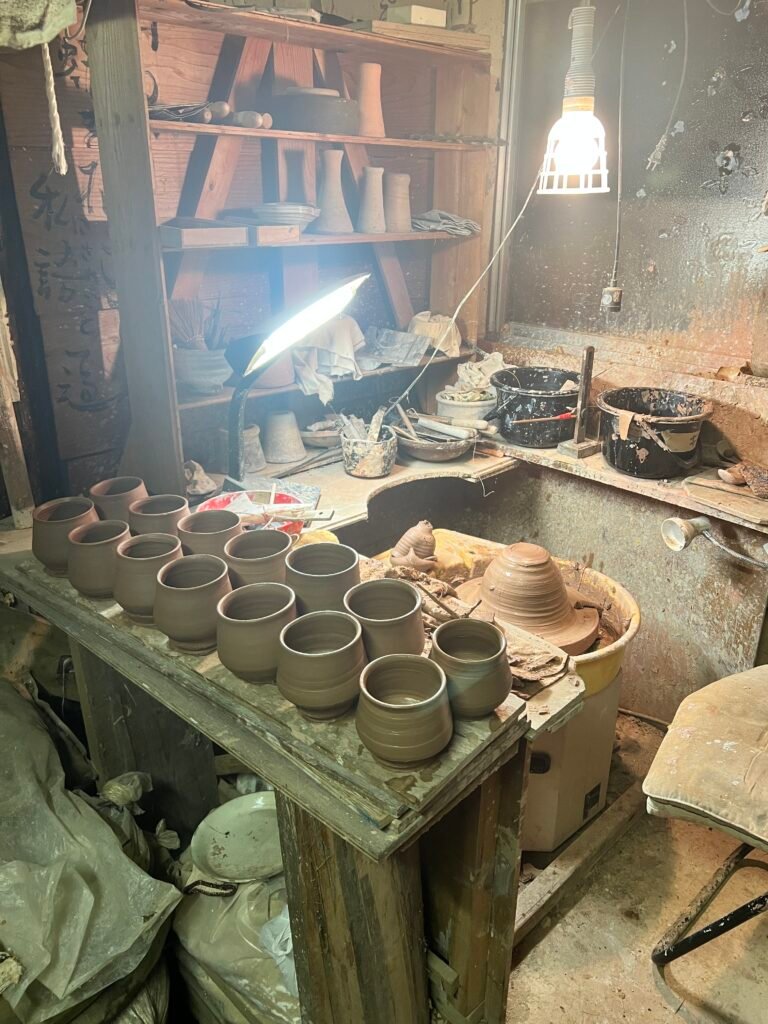
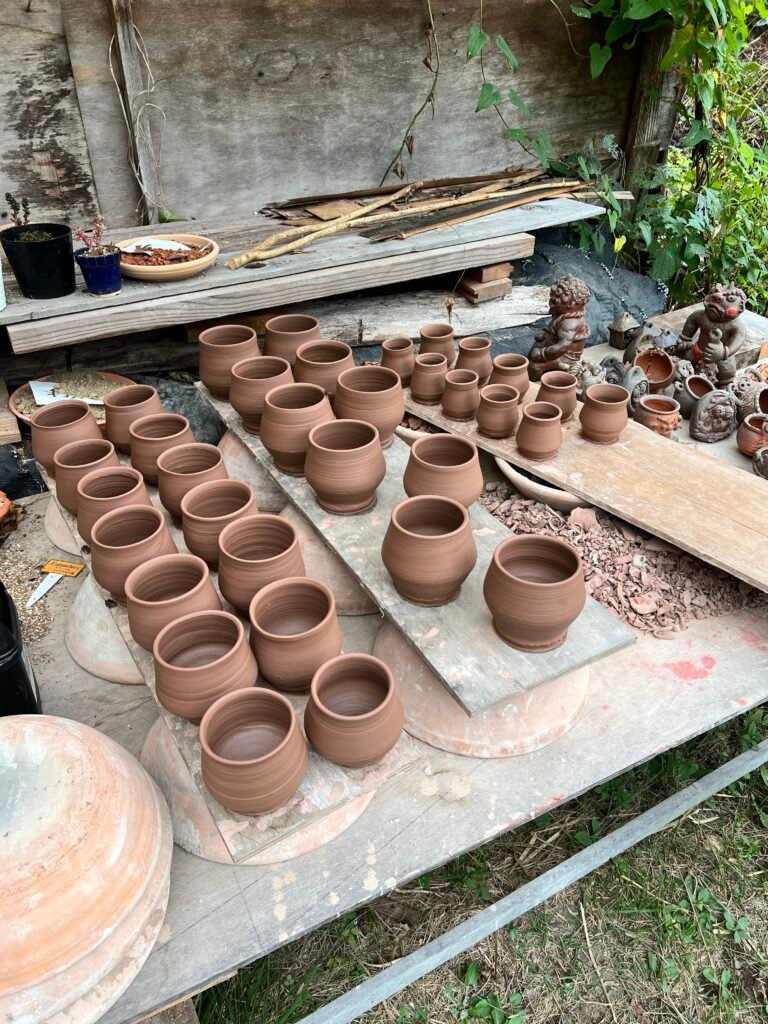
That’s not to say that these pieces don’t have plenty of me in them; I’ve put my love for coffee on display for these pieces, designing the internal curve of the cups and the angle of the rims to carry the aroma of coffee like a snifter glass and provide a killer canvas for some latte art.
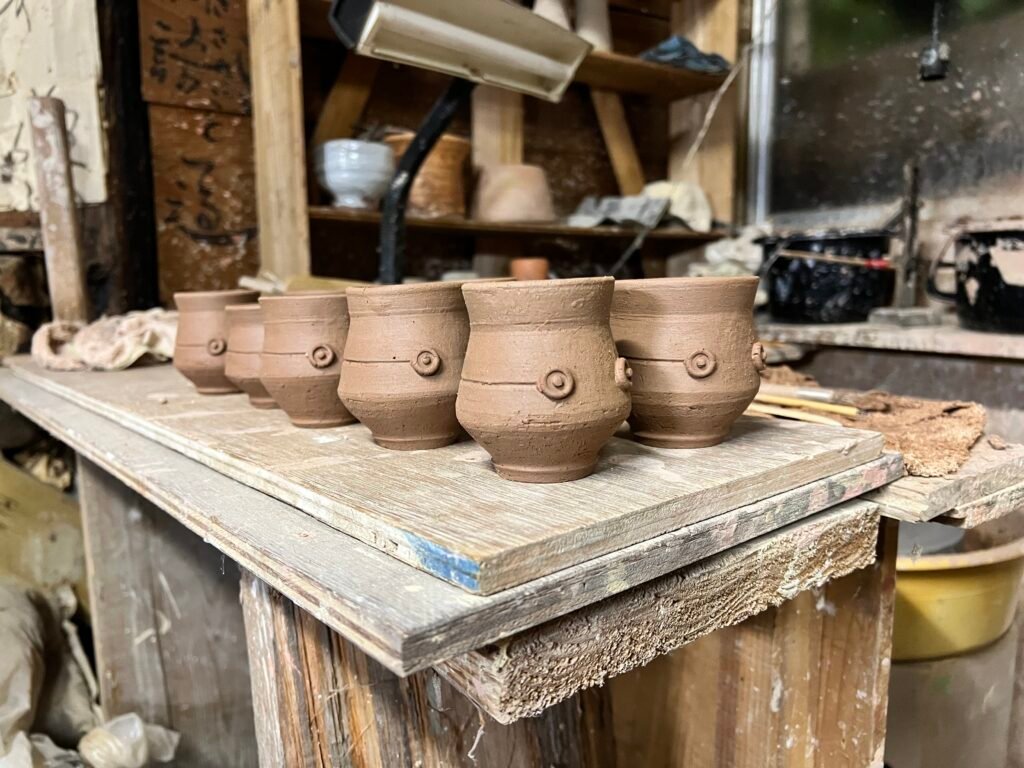
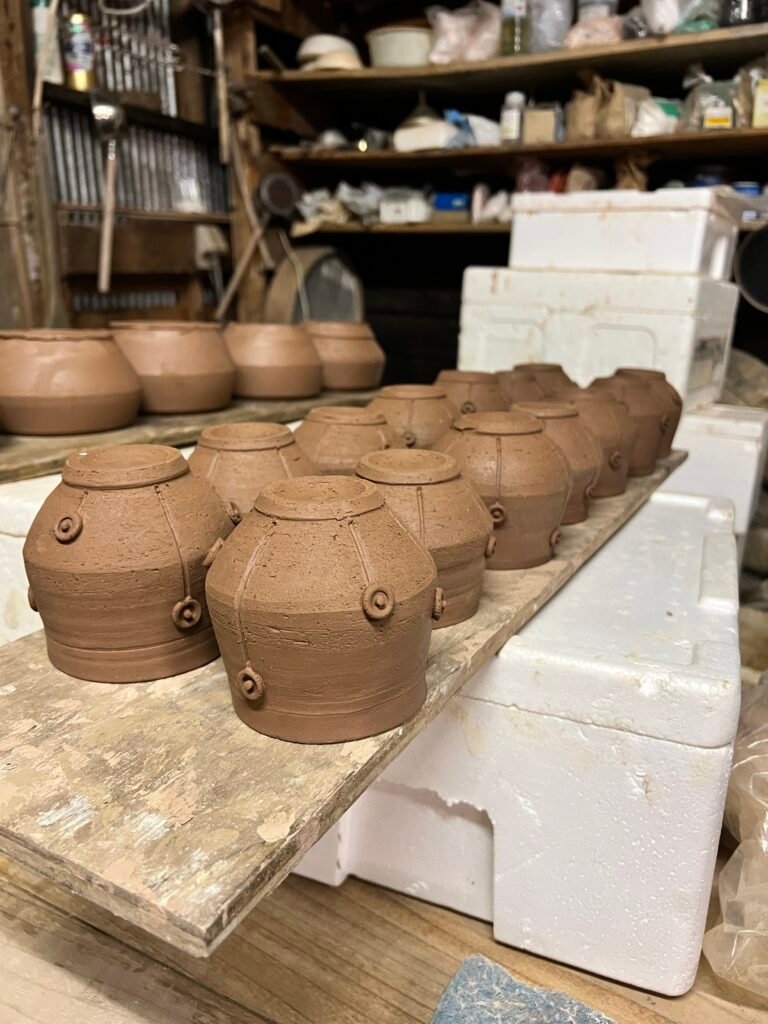
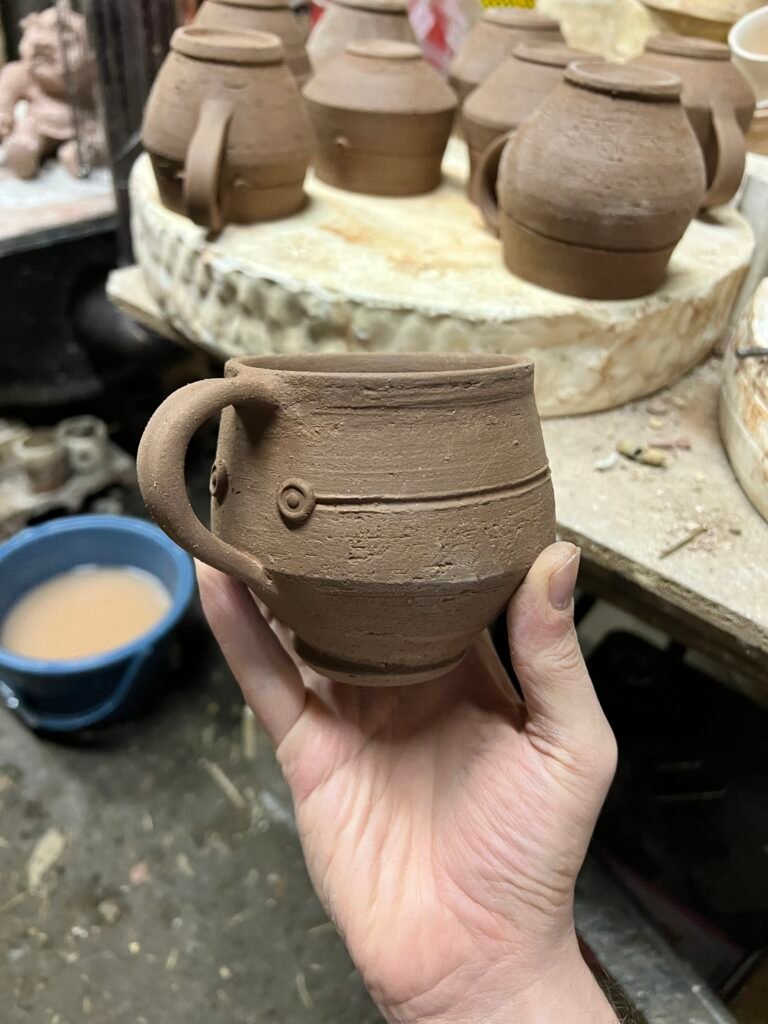
I’ve also poured a bit of my Lebanese heritage into the visual design of the pieces, with the shapes of the espresso cups and the symmetrical poppy-like sections on the flat white cups both being inspired by the Turkish Coffee cups of my youth. In addition, the button-like ornamentation that I learned from V. Chin is being applied in this instance as a representation of the evil eye charms we’d often have hanging around my house. To put it simply, these pieces represent the current breadth of my toolbox at this point in my journey.
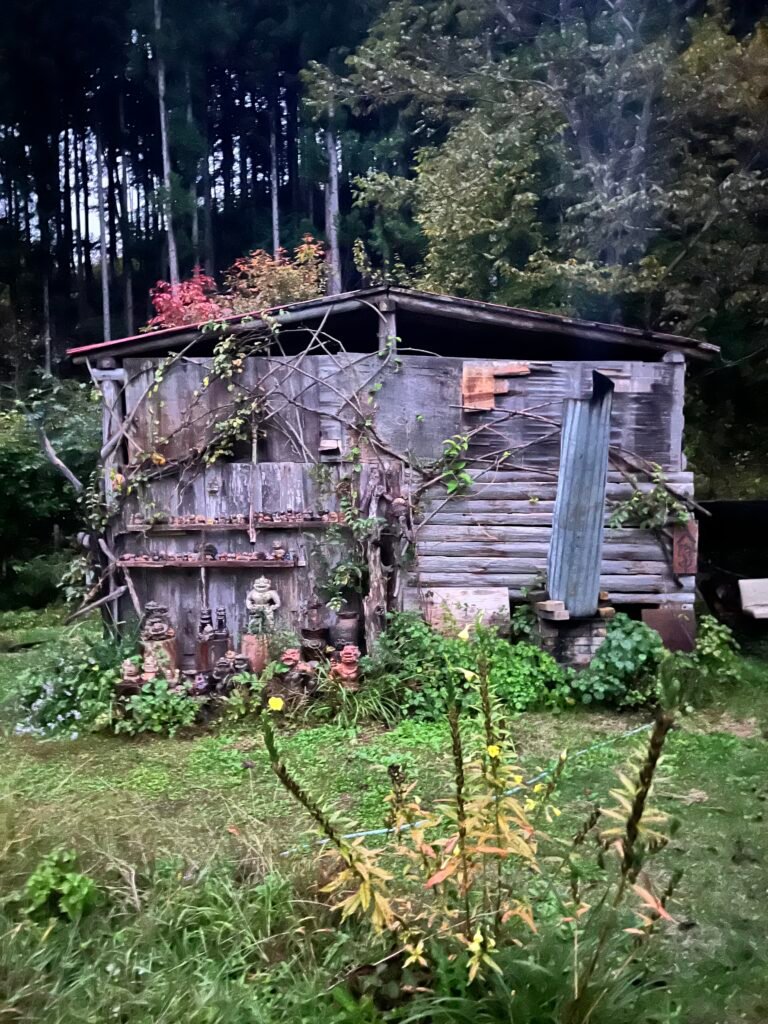
Working in this studio was a dream. Crisp fall air, green grass and pine trees, stink bugs, a wood-burning hinoki bathtub under the stars, intermittent home-cooked meals, stink bugs, you get the idea. There was absolutely no cell phone service on the mountain, so it was a bit of a digital detox as well. Imamura-sensei and Keiko-san have never experienced a two hour doomscrolling session, so I don’t think they fully understood why I was so relieved to be stripped of my ability to use the internet.
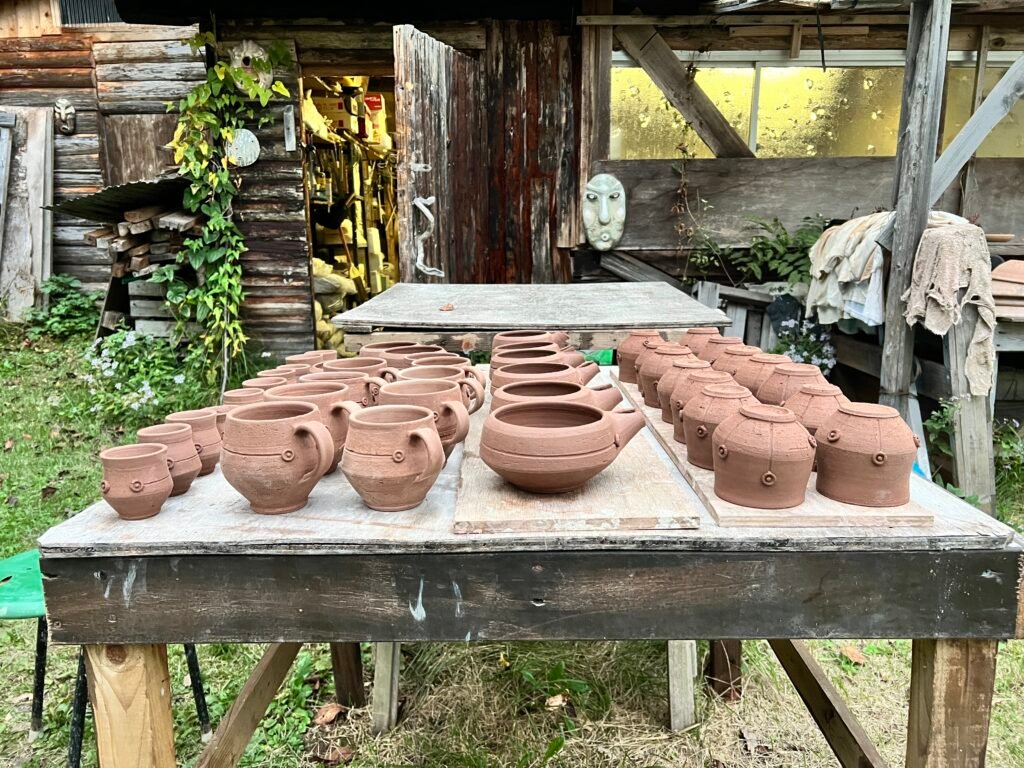
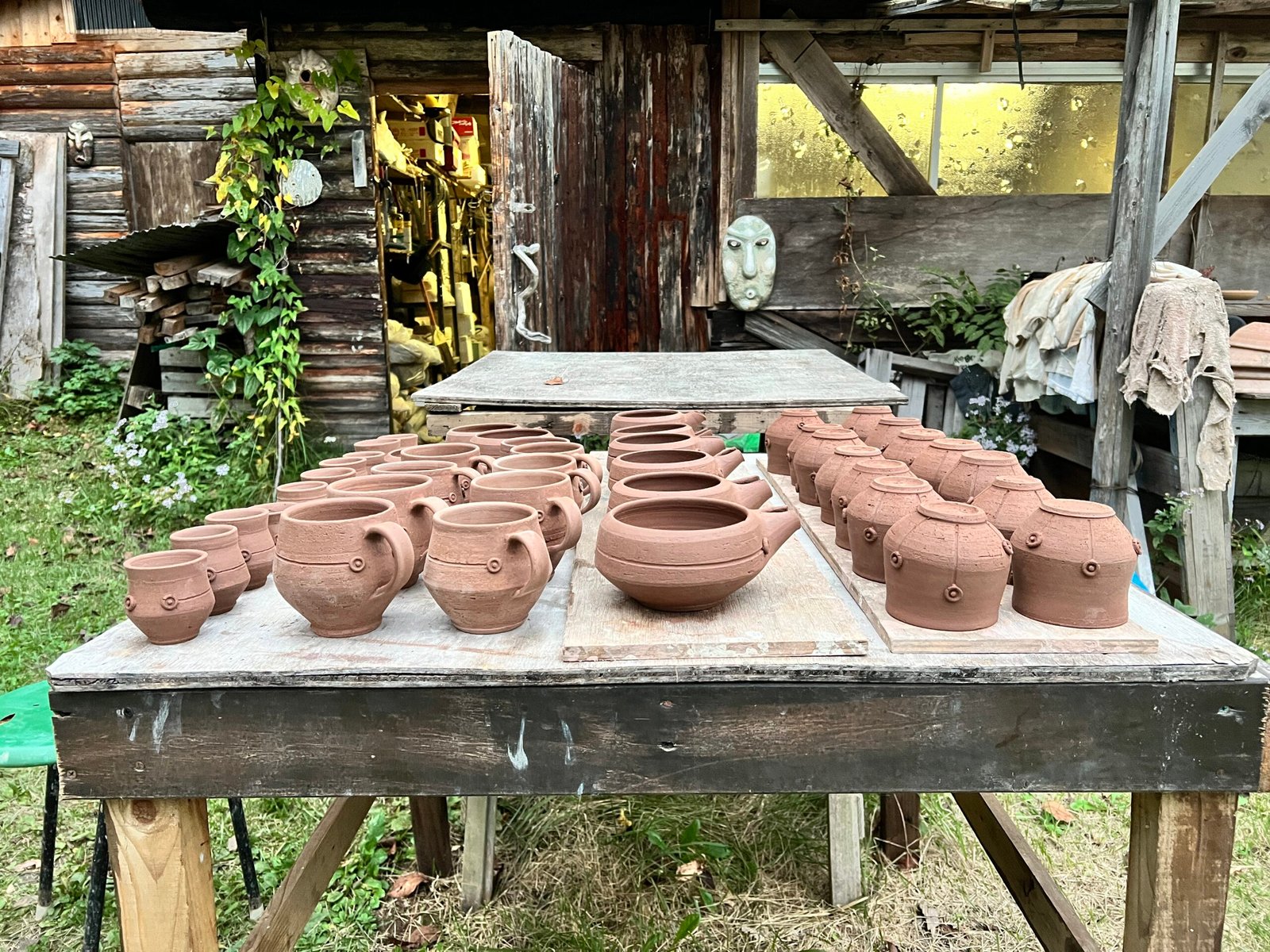
By the end of my stay, this is what I managed to produce. In some ways, it’s a pretty solid haul. But I’m a bit of a pessimist about these things, so I’m holding my breath until they all pass through the bisque firing safely and we can move on to glaze day. The turnaround should be pretty quick; I’m hoping to be back up to glaze by the end of October or the beginning of November at the latest. Once snow starts to fall, Imamura-sensei and Keiko-san will pack their essentials and retreat to their second home in the city for the winter, so we can’t afford to dilly-dally.
Some of the pieces will inevitably find their way into the store page on this site, and I’ll let you know when that is. Until then, keep your fingers crossed that they survive the coming weeks!
うまく焼き上がるといいね!


Leave a Reply